
Real Impact, Low Cost: Practical Home Decor Ideas That Actually Work
A rainy Saturday finds you pulling a mismatched set of vintage picture frames from the attic, arranging them on the hallway wall, and instantly feeling the room shift.
If you love that quick lift without breaking the bank, this list gathers eleven tried‑and‑true budget home decor ideas that actually work.
You’ll see how strategic lighting, thrifted textiles, and clever repurposing can turn ordinary corners into conversation starters.
Every tip includes where to find the pieces, a rough cost estimate, and a quick step‑by‑step to get it done.
Because style doesn’t have to wait for a payday, these ideas let you experiment now and add layers over time, keeping the look fresh and personal.
1. Thrift Store Treasures & Smart Upcycling
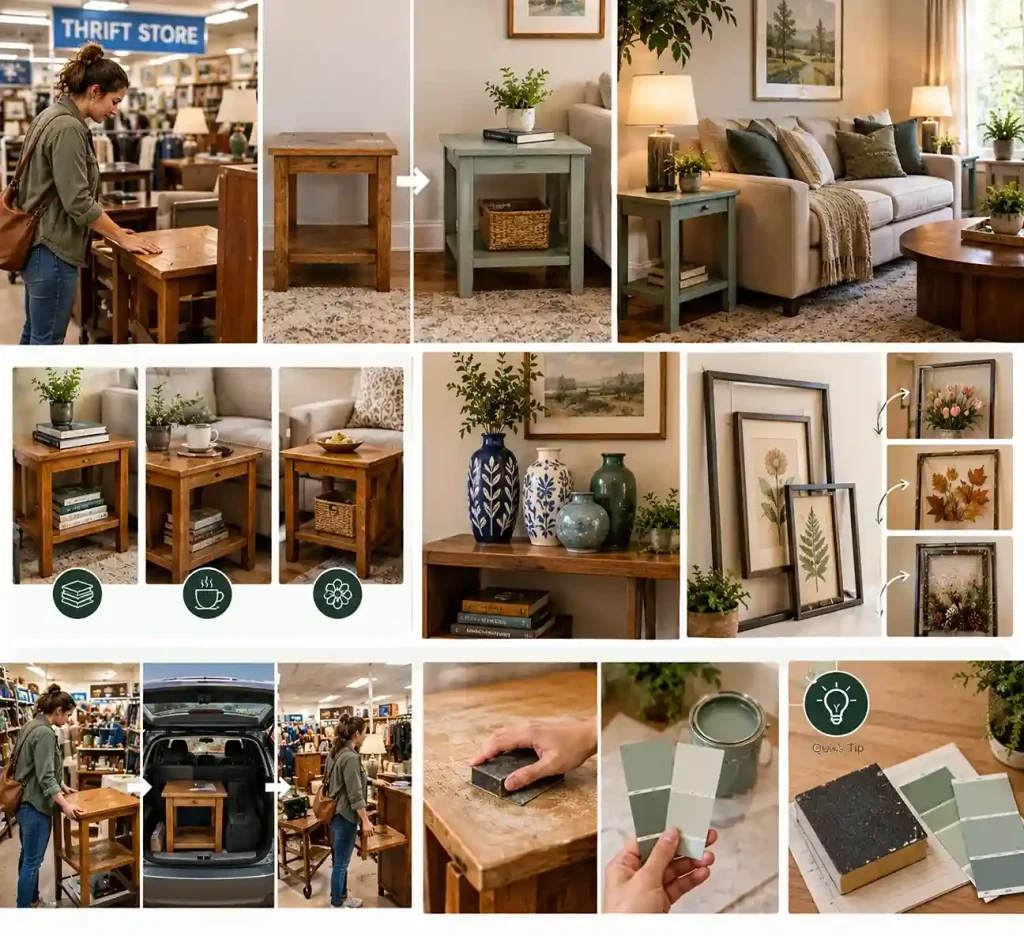
Solid oak side tables found in a local thrift shop can become the anchor of a small living room when sanded and painted.
The dense grain hides dents, so one coat of chalk paint restores smoothness.
Before you grab a piece, decide if it will hold books, drinks, or just act as a visual break. A clear function stops you from piling on items that never get used.
A set of hand‑painted ceramic vases can be grouped on a reclaimed pine console for instant color.
Sturdy metal frames, stripped of glass, become perfect seasonal artwork holders without wall damage.
The downside is time; finding a quality oak table often means driving to three stores over two weekends. Patience pays off, but schedule constraints can turn the hunt into a frustrating chore.
Bring a sandpaper block and a paint chip to each store so you can test finish on the spot
2. DIY Wall Art: Personalized & Affordable
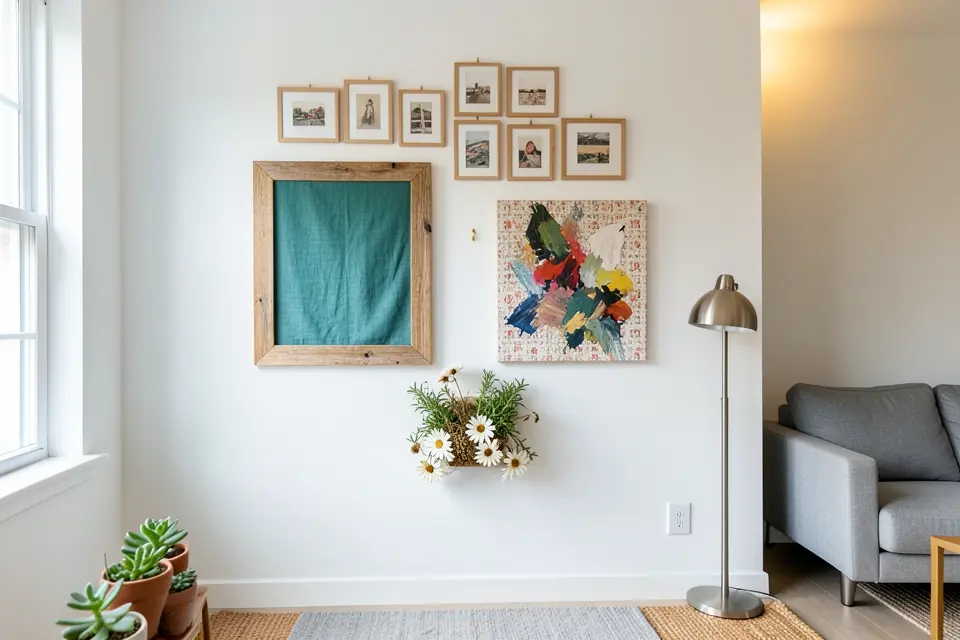
A swath of teal linen, neatly stretched behind a reclaimed pine frame, anchors a modest living‑room wall with subtle texture.
The soft hue catches daylight, creating a calm focal point without overwhelming the space.
Cut a 12‑by‑12‑inch piece of patterned cotton or leftover acrylic onto a board, then add bold brush strokes for a quick abstract.
Press rosemary sprigs or dried daisies between books, mount the flat herbarium with removable adhesive strips, and you get a garden‑inspired accent that won’t damage walls.
Without a quality frame or a disciplined layout, the piece can drift toward amateurish clutter, especially when multiple elements compete for attention.
Measure your wall space before cutting any material to avoid waste and ensure a perfect fit.
Alternative: Purchase a set of pre‑framed vintage postcards and arrange them in a grid; the ready‑made frames keep the look polished while staying budget‑friendly.
3. Strategic Lighting: Beyond the Overhead Fixture
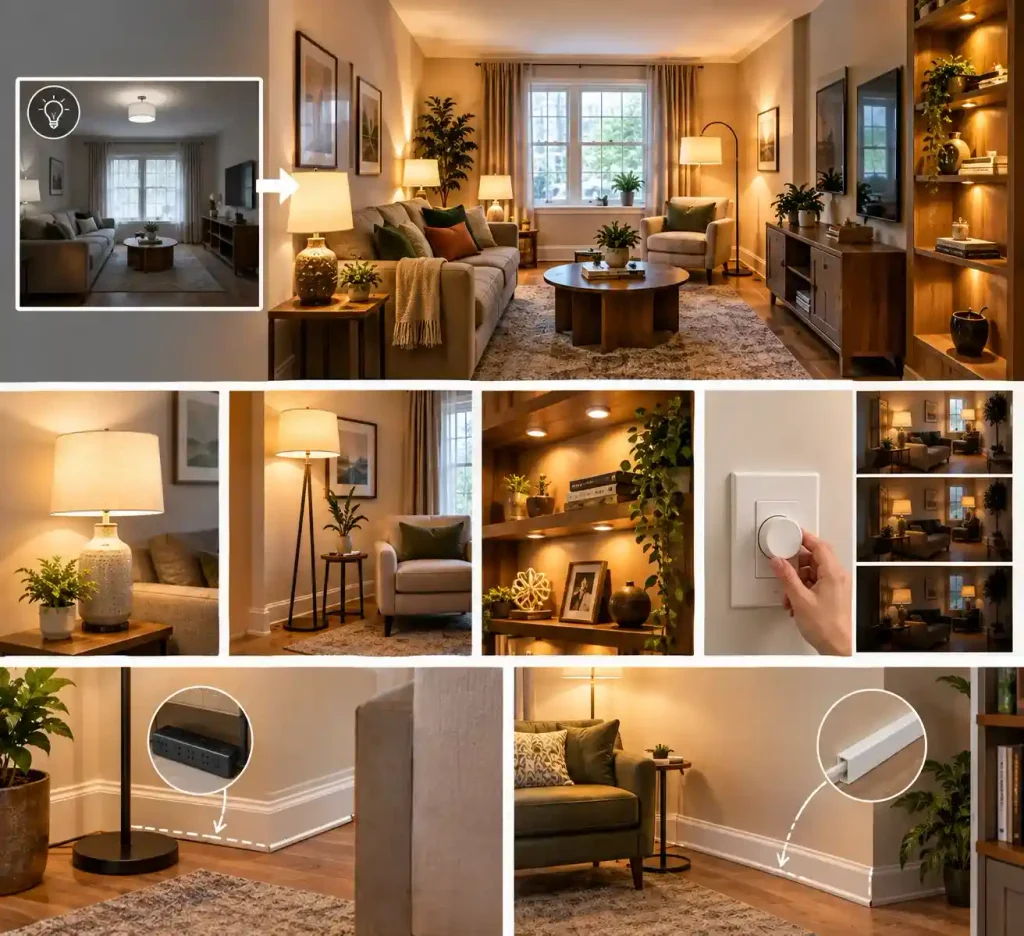
When a room feels flat because the only light comes from a single ceiling fixture, the space can feel dull and uninviting. Renters and small‑space dwellers often face this issue.
Swap the lone fixture for a mix of table lamps, floor lamps, and puck lights on shelves.
Choose models with dimmers so you can raise brightness for work or lower it for a relaxed vibe. Puck lights add sparkle inside display cabinets without extra wiring.
Because each lamp needs its own outlet, renters must plan for cord placement and may need a power strip.
Hiding cords behind furniture or using a cord cover keeps the look tidy, but the visual challenge of multiple cables remains.
Place a slim surge protector behind a floor lamp and run its cord along the base to hide it
Install a 2‑ft cord concealer along the baseboard near the reading chair to keep the lamp’s power line invisible.
4. Rearrange & Declutter: The Free Makeover
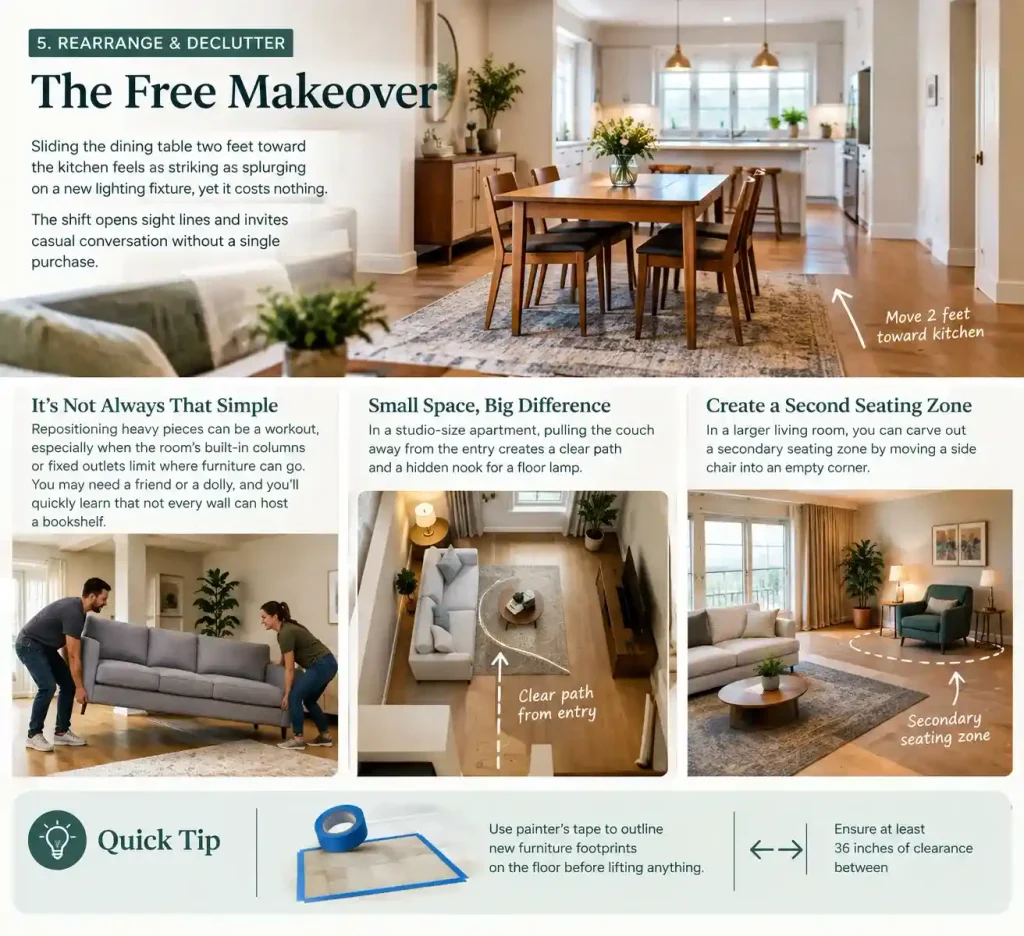
Sliding the dining table two feet toward the kitchen feels as striking as splurging on a new lighting fixture, yet it costs nothing.
The shift opens sight lines and invites casual conversation without a single purchase.
Repositioning heavy pieces can be a workout, especially when the room’s built‑in columns or fixed outlets limit where furniture can go.
You may need a friend or a dolly, and you’ll quickly learn that not every wall can host a bookshelf.
In a studio‑size apartment, pulling the couch away from the entry creates a clear path and a hidden nook for a floor lamp.
In a larger living room, you can carve out a secondary seating zone by moving a side chair into an empty corner.
Use painter’s tape to outline new furniture footprints on the floor before lifting anything.
Ensure at least 36 inches of clearance between pieces so traffic flows smoothly.
5. Greenery on a Dime: Propagate & Repot
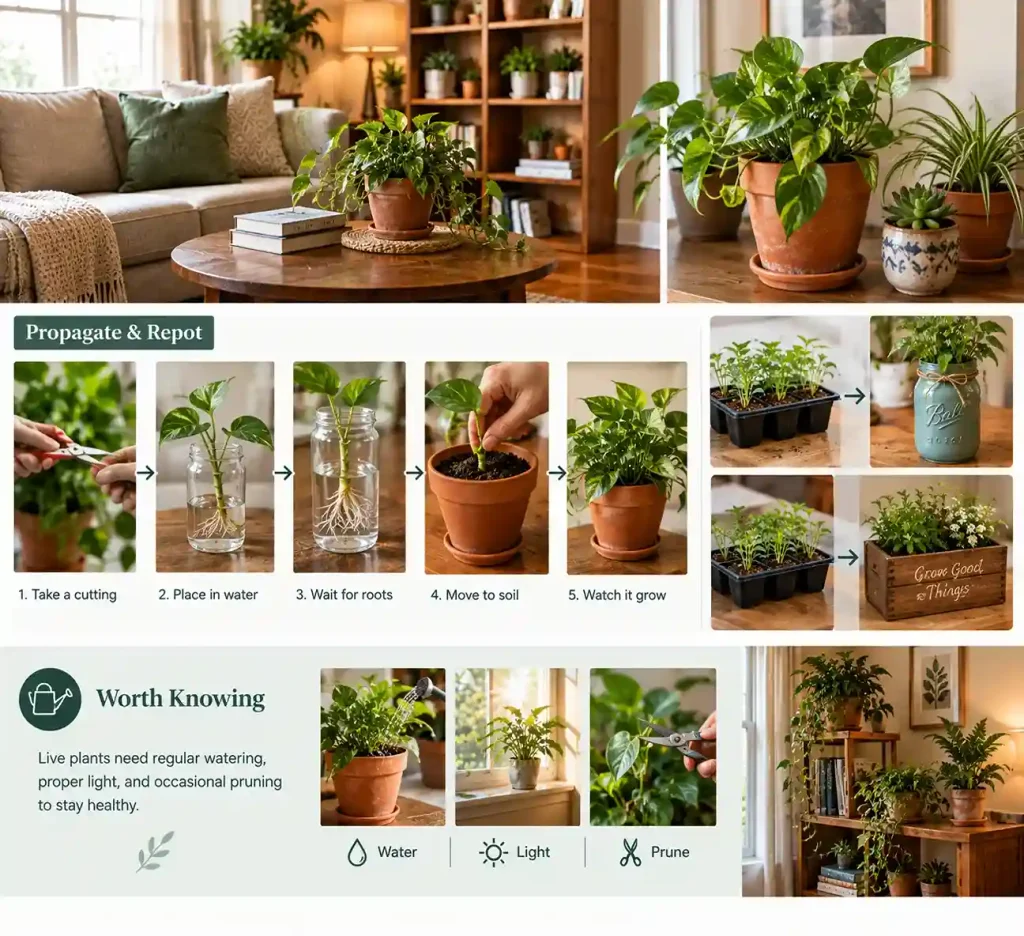
A plain terracotta pot, its porous surface breathing life into cuttings, offers a cheap canvas for indoor greenery. Its earthen hue blends with any wall, keeping the look cohesive.
Snip a 4‑inch tip from a friend’s pothos or spider plant, then place the node in water until roots appear.
When roots reach a few centimeters, move the cutting into the terracotta and watch it fill the pot in weeks.
Nursery seedlings come in plastic trays; replace the tray with a painted mason jar or reclaimed wooden box for texture. The new container becomes a focal point, keeping the plant affordable.
Live plants need regular watering, proper light, and occasional pruning to stay healthy.
6. Textile Swap-Outs: Pillows, Throws, & Curtains
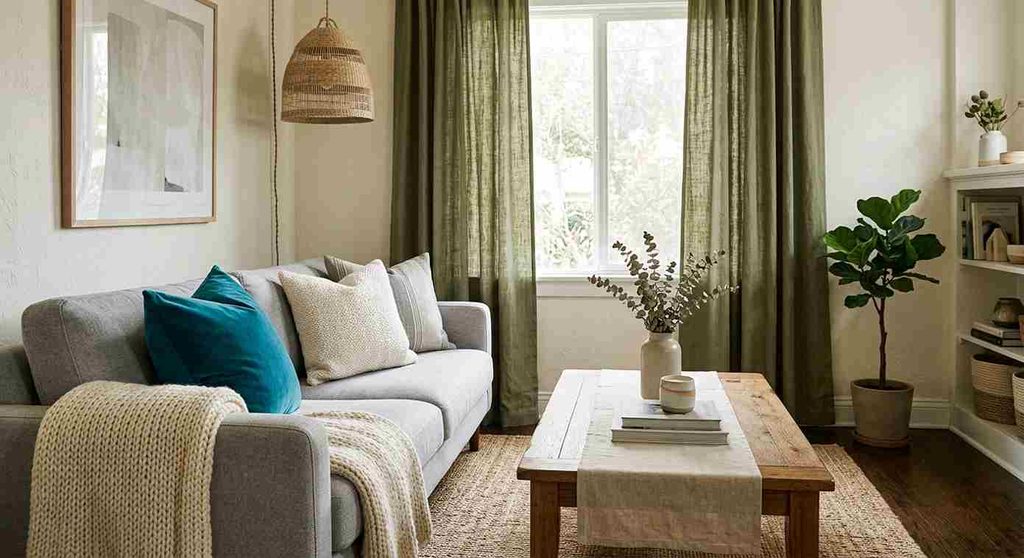
A teal pillow cover tucked into a light gray sofa beside a cream throw lifts the vibe instantly. The color pop and soft texture add depth without moving any furniture.
Budget hunts often reveal ultra‑cheap pillowcases made from low‑grade polyester. Those fibers pill quickly, attract pet hair, and feel rough to the touch.
Cotton blends with a tight weave stay smoother and last longer.
Expect tighter lint rollers and spot‑cleaning to keep synthetics looking fresh.
Swap covers instead of whole pillows to keep costs low.
Choose reversible covers for two looks at the price of one.
Chunky knit throws are in this season, adding tactile warmth. Match them with curtain panels in muted earth tones to echo the palette.
Add a 12‑inch linen runner to the coffee table for subtle texture.
7. Hardware Upgrades: A Small Change, A Big Difference
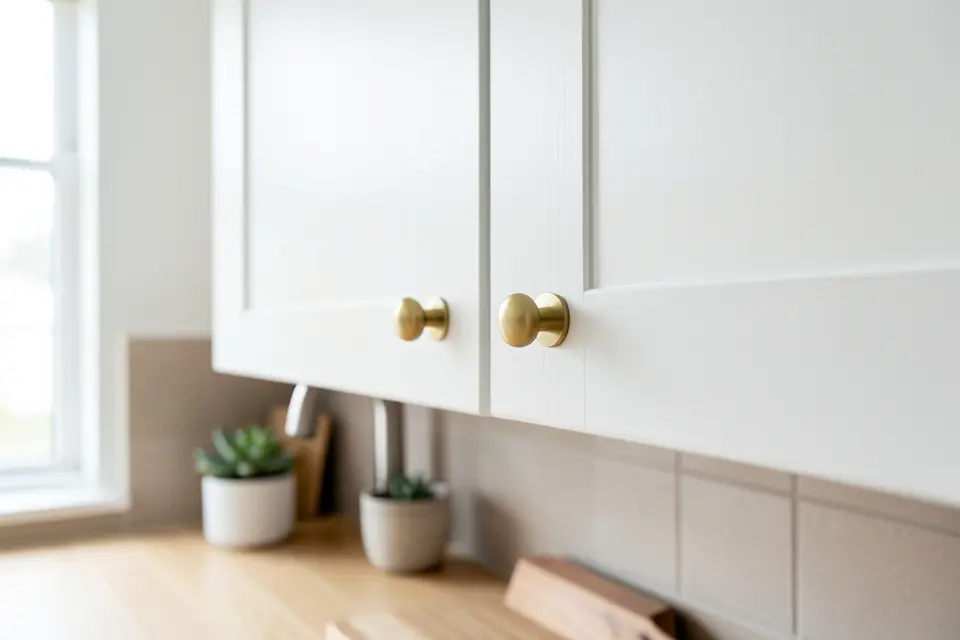
Fit a 1‑inch satin‑brass ball pull into the pre‑drilled 12‑mm holes of your kitchen cabinets to instantly lift the look.
The larger profile catches the eye and signals a higher‑end finish without replacing the whole door.
A set of twelve pulls typically runs $15‑$30, far cheaper than a cabinet refacing. Because the hardware sits on the surface, the change is reversible, and the original knobs can be stored for later.
Keep the old screws; they often fit the new pulls and save a trip to the hardware store.
Renters love this swap because it avoids paint or new holes, making it landlord‑friendly.
Just verify the new pulls match the existing hole spacing, or you’ll face tedious wood‑filling and refinishing later.
8. Mirrors for Space & Light
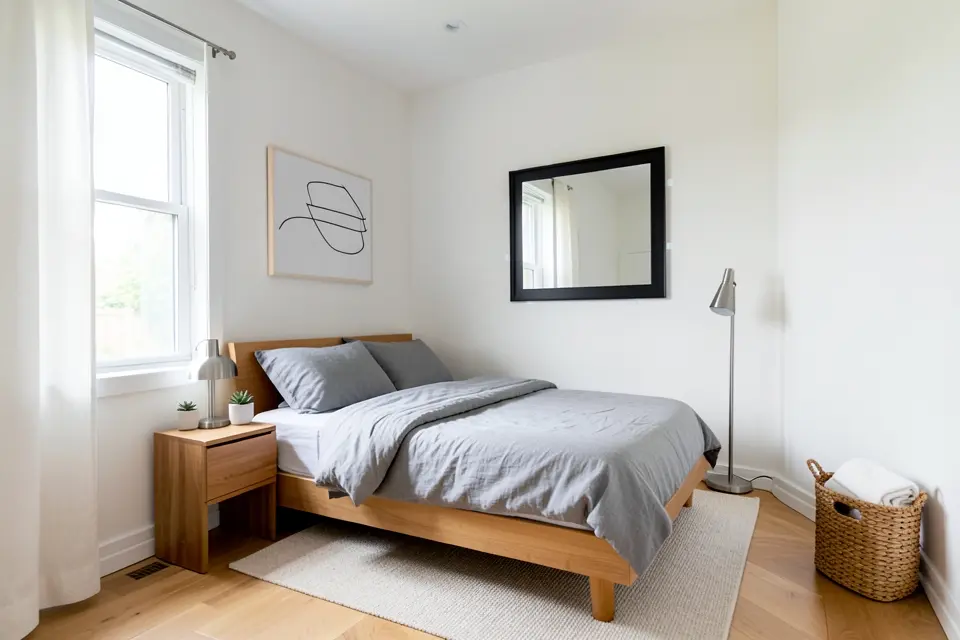
In a studio’s tiny sleeping nook, a 30‑by‑40‑inch mirror placed opposite the window pushes the walls outward.
The glass bounces daylight across the room, making the space feel brighter and deeper. A thrift‑store frame painted matte black adds visual interest without breaking the budget.
Renters love this trick because an unframed mirror can be hung with adhesive strips, leaving no holes in the drywall.
If you opt for a larger, statement piece, remember it weighs over 30 pounds and must be anchored to studs or use heavy‑duty drywall anchors to avoid accidents.
Heavy mirrors can sag over time if not secured, so check the mounting hardware annually for wear.
Hang the mirror at eye level on the far wall to double the perceived depth of a 10‑foot room.
9. Area Rugs: Defining Zones Affordably
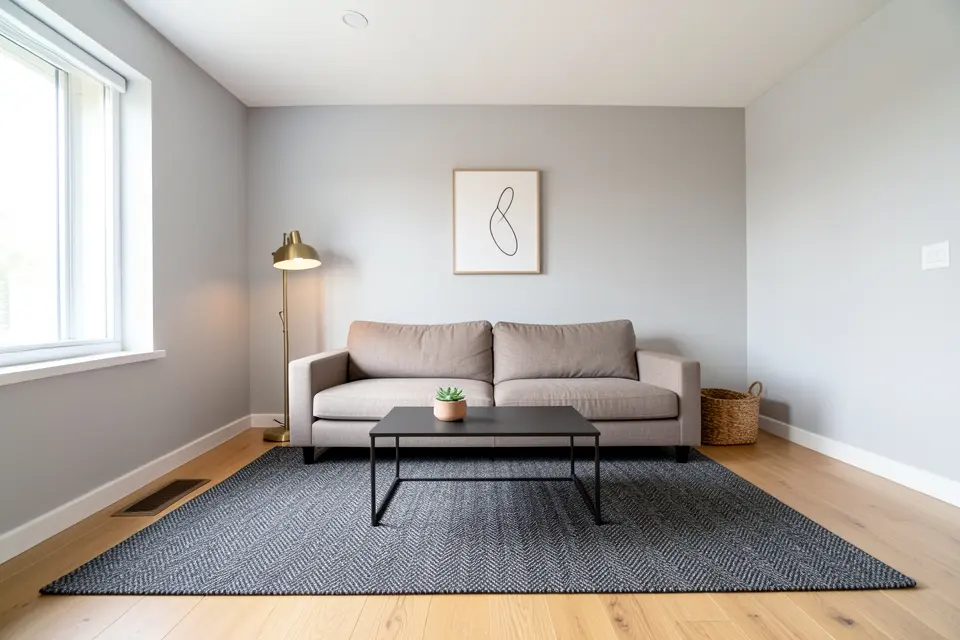
A charcoal-gray rug with a subtle chevron pattern anchors the sofa, drawing the eye to the coffee table. The muted tones keep the room feeling airy while the texture adds depth.
You can find similar designs for $30‑$70 at discount retailers, especially during end‑of‑season sales. If a large rug exceeds your budget, layer two 3‑by‑5 ft rugs for a bigger look.
Measure the seating area; the rug should extend at least 18 inches beyond each furniture piece to define the zone. A rug that is too small makes the arrangement look fragmented.
Inexpensive rugs often slip on smooth floors and need a rubber pad, and they usually require spot‑cleaning rather than deep shampooing like premium wool.
Place a thin, low‑profile non‑slip pad under the rug before arranging furniture to keep it steady.
This approach works well for first‑time renters who want style without a long‑term commitment.
10. Baskets for Stylish Storage
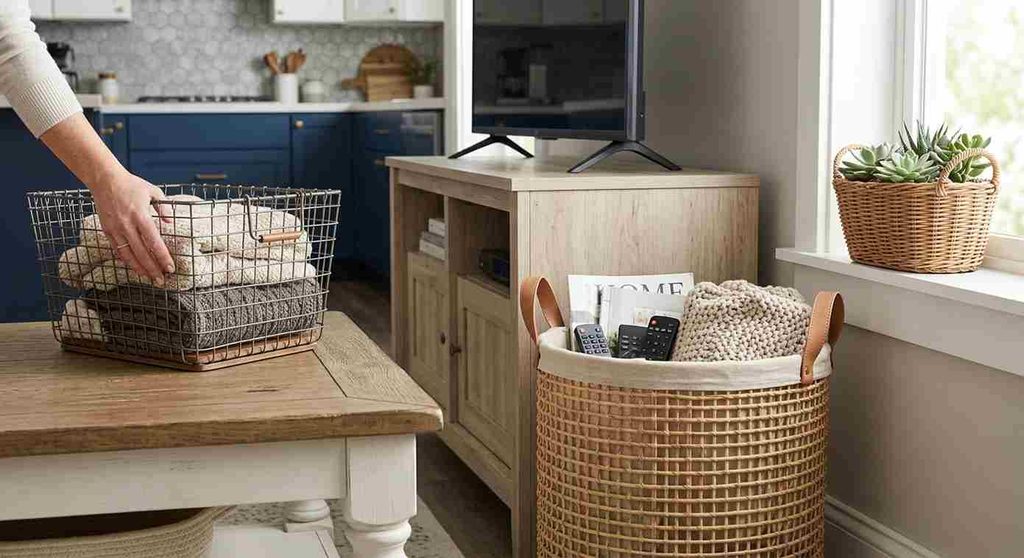
Woven rattan baskets add a natural texture that softens hard surfaces. Their open weave lets light filter through, so a corner feels larger and lighter.
Place a medium basket on a coffee table to hide blankets that would otherwise spill onto the floor.
A larger floor basket near a media console can corral magazines, remotes, and kids’ toys in one tidy pile.
You’ll find rattan options for $12‑$25 and wire styles for $8‑$18 at discount and big‑box retailers.
Both blend with modern or rustic rooms, but baskets lack lids or solid closures, so they can collect internal dust and still expose chaotic clutter if they are overfilled.
Even a small wicker basket on a windowsill works as a decorative planter for succulents, adding green without a heavy pot.
Add a thin fabric liner inside the basket to catch dust and keep the contents neat while preserving the basket’s texture.
Your Next Room Refresh
Remember to anchor each room with one standout piece, repeat a color or material to tie the look together, and keep accessories light so your new focal points shine.
A set of new drawer pulls or a handful of thrifted cushions can be the spark that pulls everything into harmony.
Mixing textures, like a woven rug under a sleek metal lamp, adds depth without spending a fortune.
With these low‑cost tweaks, you can see real change without a full makeover. Save these ideas for your next weekend project and watch your home feel brand new.
Frequently Asked Questions
What is the cheapest way to decorate a house?
The cheapest way to decorate a house is by utilizing what you already own through rearranging and decluttering, incorporating free natural elements, and undertaking DIY projects with inexpensive materials like paint or fabric scraps.
What are some budget-friendly decor ideas?
Budget-friendly decor ideas include repainting furniture, strategic lighting with affordable lamps, updating textiles like throw pillows, finding second-hand pieces to upcycle, and using plants propagated from cuttings.
How can I make my home look expensive on a budget?
To make your home look expensive on a budget, focus on cohesive color palettes, good lighting design, updated hardware, clutter-free surfaces, and added texture through textiles, since these elements often contribute more to perceived value than individual costly items.
What are common mistakes to avoid when decorating on a budget?
Common mistakes include buying too many small, unrelated items that create clutter, purchasing trend-driven pieces that quickly feel dated, and neglecting the power of proper lighting and decluttering before investing in new decor.
Are DIY decor projects always cheaper than buying?
DIY decor projects are often cheaper than buying, but it depends on the project’s complexity, material costs, and your existing tools; always calculate material costs and assess your time commitment to ensure it’s truly cost-saving.