Practical Home Design Ideas: Room-by-Room Approaches That Work
On a breezy Saturday morning, you pull open the sliding glass doors to a living room where a deep‑blue sofa faces a woven jute rug, and the sunlight catches the brass floor lamp. The space feels lived‑in, yet it still has room for fresh ideas.
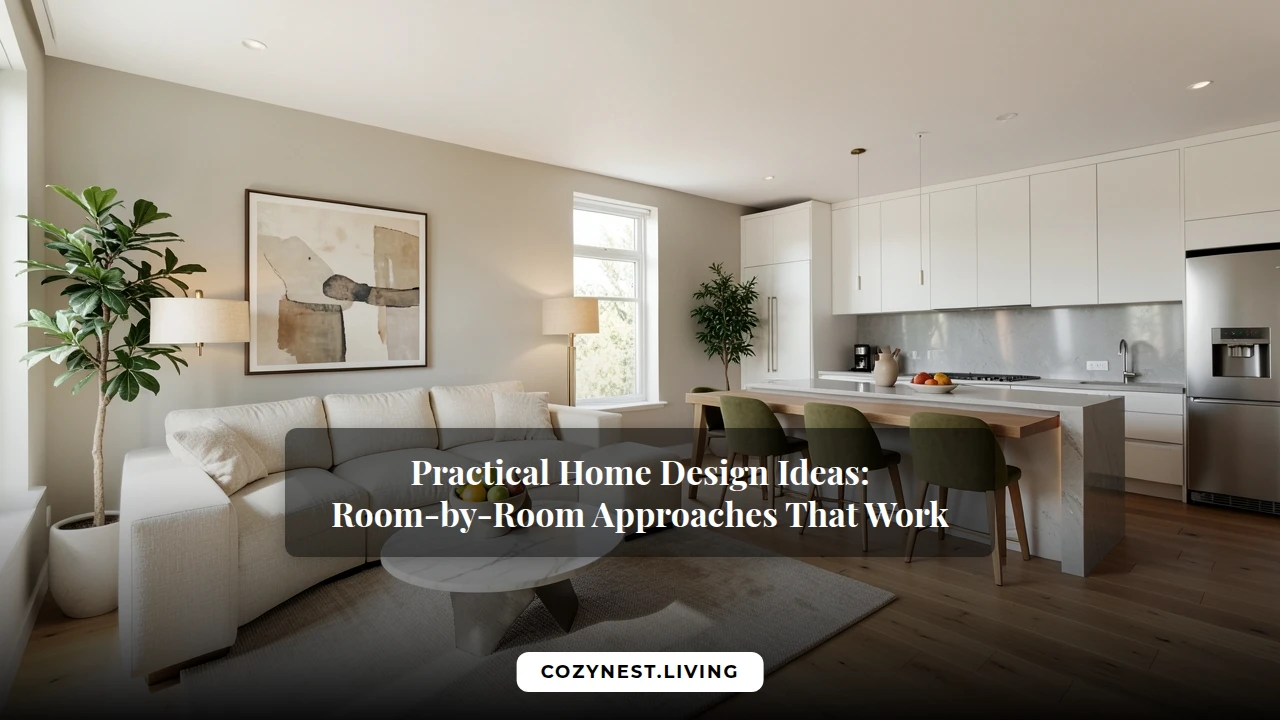
This guide walks you through practical design ideas for every room, from a layered living room layout to a calming bedroom palette, a functional kitchen workflow, a spa‑inspired bathroom, a hallway that showcases art, a focused home office, a welcoming dining area, an inviting entryway, a playful kids’ room, and a cozy outdoor patio. Each tip is easy to apply and works with what you already have, so you can start seeing results right away.
Living Room: Focus on Durable Comfort and Clear Pathways
When a coffee spill slides across the couch, the fabric shows the mark within minutes. That quick stain reveals whether your upholstery can survive daily life.
Performance fabrics such as solution-dyed polyester or microfiber resist stains and wear. The trade‑off is fewer options for buttery silk feels or subtle linen textures.
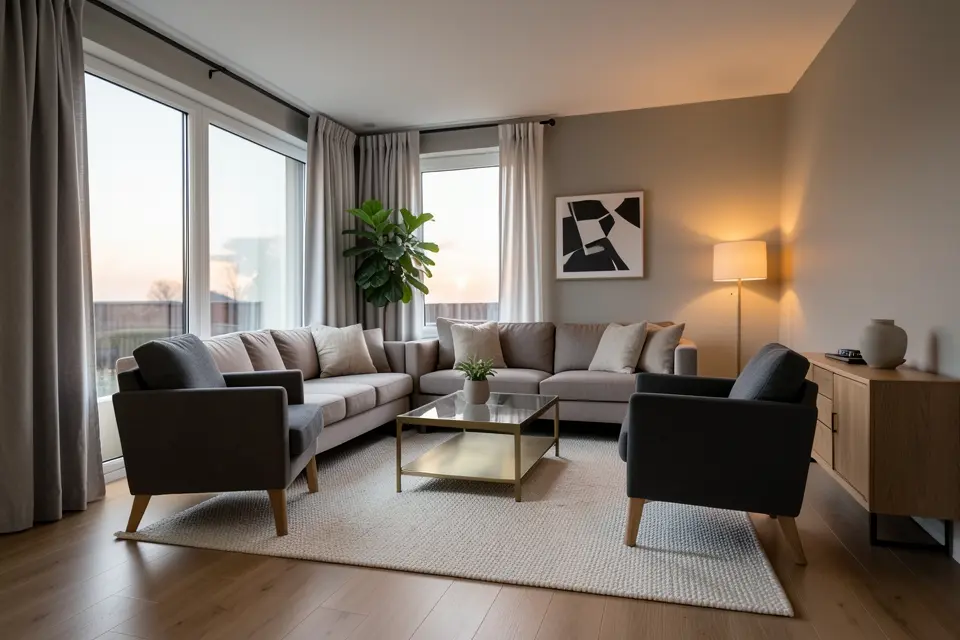
Arrange sofas and chairs in a U‑shape to face each other, which invites conversation. Leave at least 36 inches between pieces so anyone can walk through easily.
Watch the east wall in morning light and the north side at dusk before choosing paint. A warm greige stays balanced in bright and dim conditions.
Choose a fabric with a 300+ rub count for high‑traffic seating.
Vacuum the upholstery weekly and spot‑clean with a mild detergent to preserve performance.
Kitchen: Design for Workflow and Smart Storage
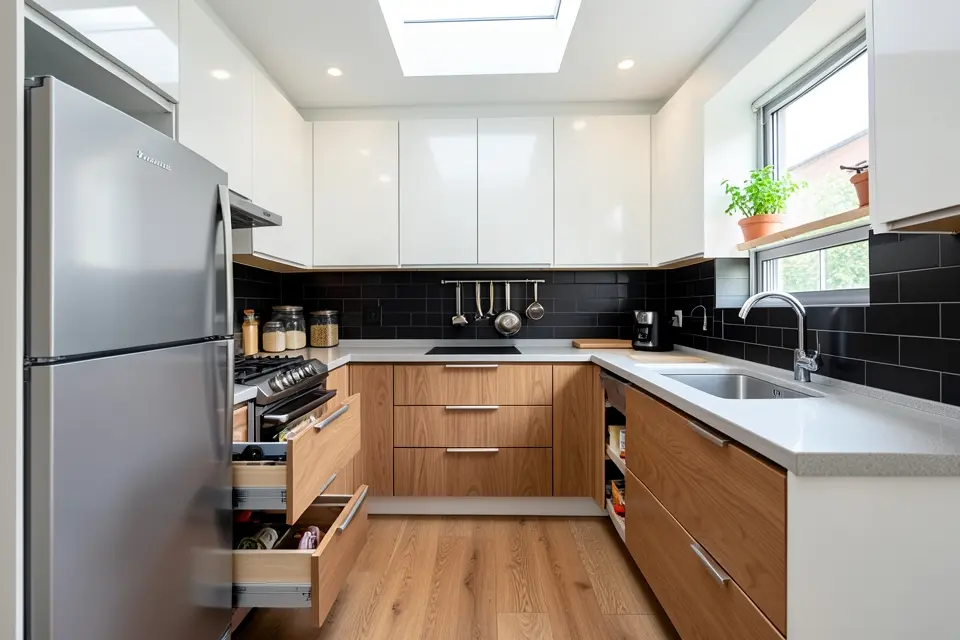
Installing deep custom drawers under the countertop lets you slide pots and pans straight from the stove to storage without a detour.
The extra depth holds larger cookware that standard shallow drawers simply cannot accommodate.
Pull-out pantry organizers line the wall between the refrigerator and sink, keeping dry goods within arm’s reach while preserving the work triangle’s efficiency.
Their vertical glide system reduces bending and speeds up ingredient retrieval.
These upgrades raise cabinet costs noticeably, often adding several hundred dollars per linear foot.
A professional installer guarantees precise alignment; a DIY approach can cut labor fees but may require extra time for accurate measurements.
Measure the full height of your tallest pot before ordering drawers to avoid a costly re‑order
Deep drawers collect more crumbs, so a weekly vacuum with a narrow nozzle keeps the slides from grinding
Alternative: Choose shallow, modular drawer units that sit on existing cabinets; they cost less, are easy to install, and can be moved when you relocate.
Bedroom: Prioritize Sleep and Discreet Storage
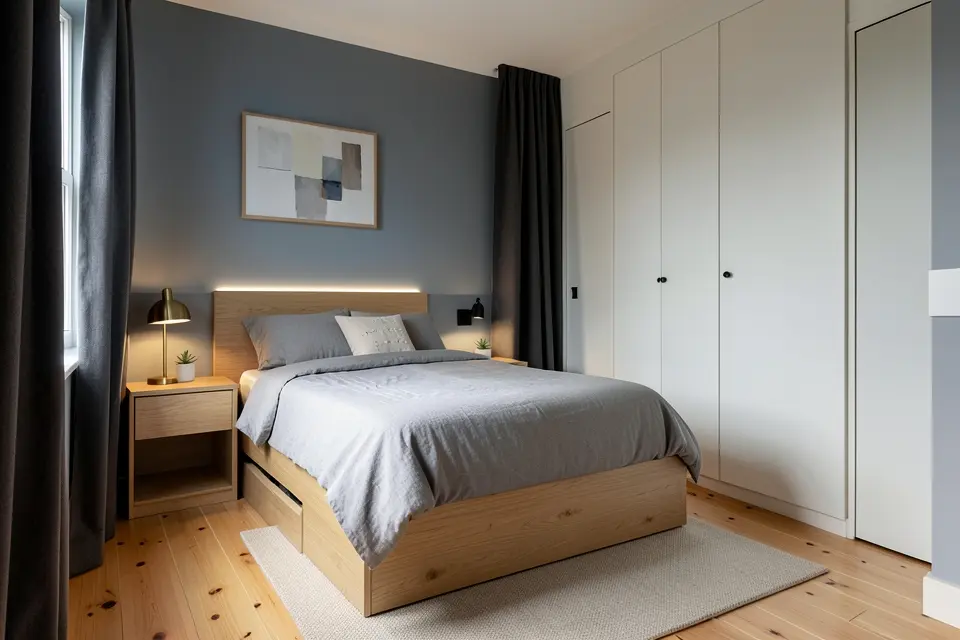
A soft, dove‑gray duvet draped over a low‑profile platform bed sets a tranquil tone. The muted fabric echoes the calm you want before sleep.
Keep walls in muted blues or warm greys to avoid visual clutter. Install a dimmable bedside lamp and a pair of blackout curtains to control brightness at night.
Under‑bed drawers slide silently, holding linens without crowding the floor. Custom built‑in wardrobes line the opposite wall, providing shelves and hanging space that hide clutter.
These solutions excel at organization but lock the layout, making future furniture moves nearly impossible.
If you rent, choose a freestanding wardrobe with adjustable shelves instead of permanent fixtures. A set of rolling storage bins can slip under the bed and be taken when you move.
In a compact bedroom, limit the wardrobe depth to 18 inches to preserve walking space. A platform bed with built‑in drawers replaces a separate chest, freeing up floor area.
Place a narrow LED strip behind the headboard to add soft illumination without taking up surface space
Add a single, matte-finish wall hook near the door for a quick place to hang a robe or bag.
Bathroom: Easy Maintenance and Layered Lighting
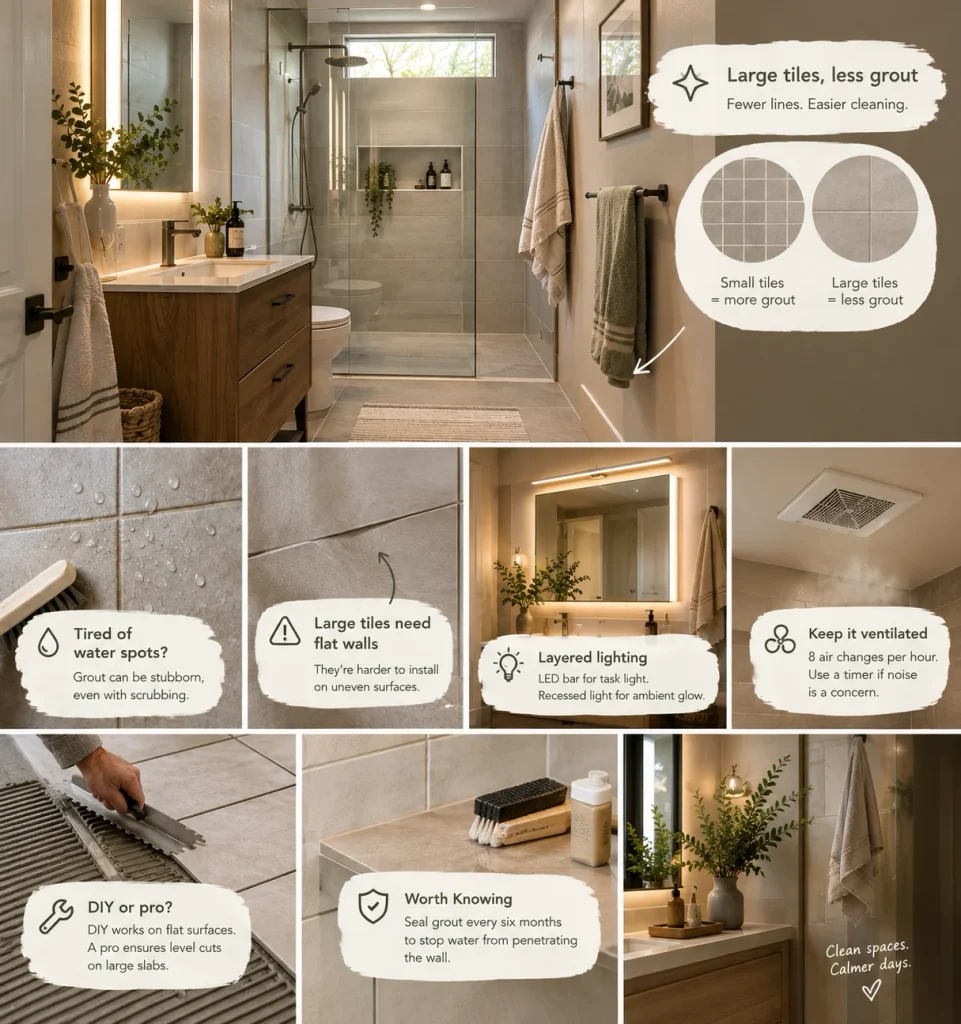
Stubborn water spots on grout make daily cleaning feel endless. Even light scrubbing leaves soap film that attracts mildew.
Large-format tiles shrink grout lines, so wiping takes seconds. The trade‑off is they are tough to install on uneven walls; any dip creates visible lippage.
Fit a narrow LED bar around the mirror for focused task light. Pair it with a recessed ceiling lamp for gentle ambient glow.
A vent rated for 8 air changes per hour removes moisture before mold forms. If noise is a concern, choose a fan with a built‑in timer to run after showers.
DIY tiling works on a flat surface, but a pro ensures level cuts on large slabs.
Seal grout every six months to stop water from penetrating the wall.
Dining Area: Seating Comfort and Versatile Lighting
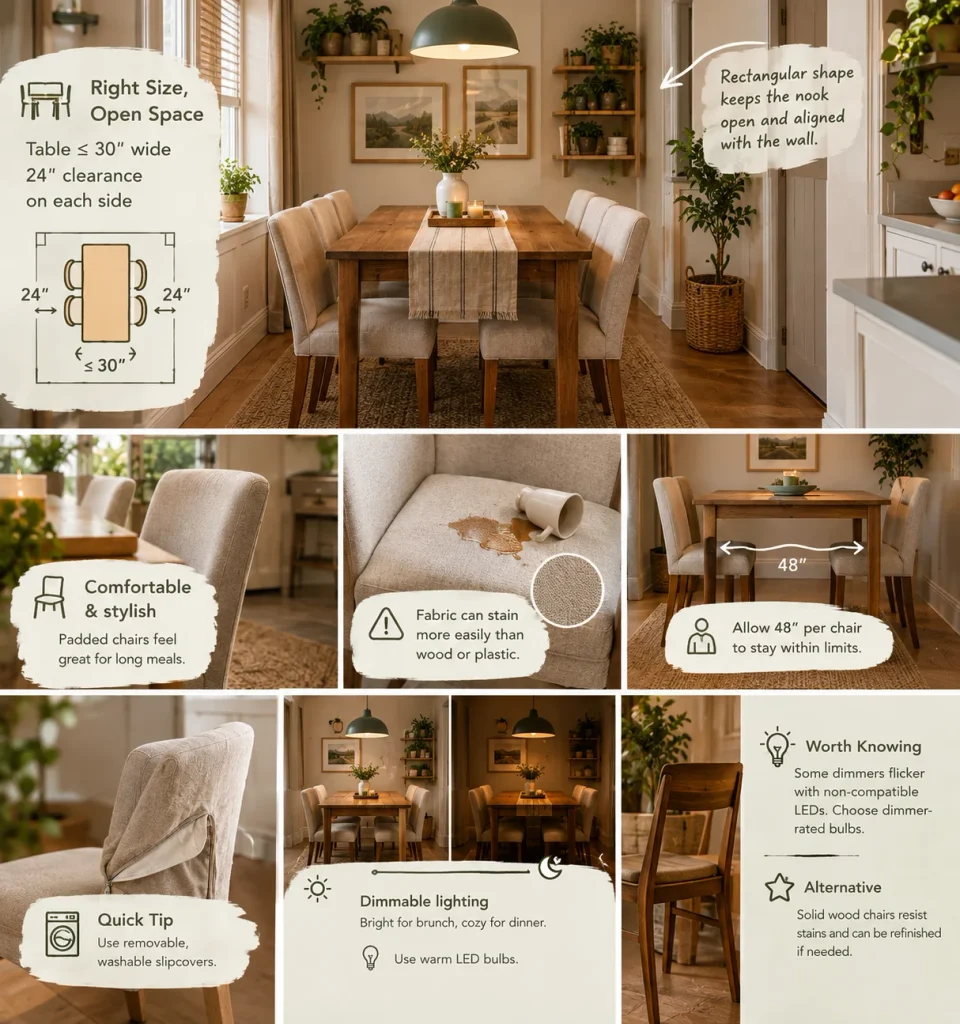
In a compact dining nook, choose a table no wider than 30 inches and leave 24 inches of clearance on each side so the room stays open. A rectangular shape aligns with the wall and avoids crowding.
Padded upholstered chairs keep guests comfortable during long meals.
Their fabric, however, soaks up spills and can stain permanently compared with wood or plastic options. Check the room’s length and allow 48 inches per chair to stay within limits.
Choose chairs with removable, washable slipcovers to protect against stains.
Install a dimmable overhead fixture to shift from bright brunch lighting to a low‑key dinner glow. Use a warm LED bulb for energy efficiency.
Some dimmers flicker with non‑compatible LEDs, so choose dimmer‑rated bulbs.
Alternative: Opt for solid wood chairs with a clear finish; they resist stains and can be refinished if the finish wears.
Home Office: Ergonomics and Focused Zones
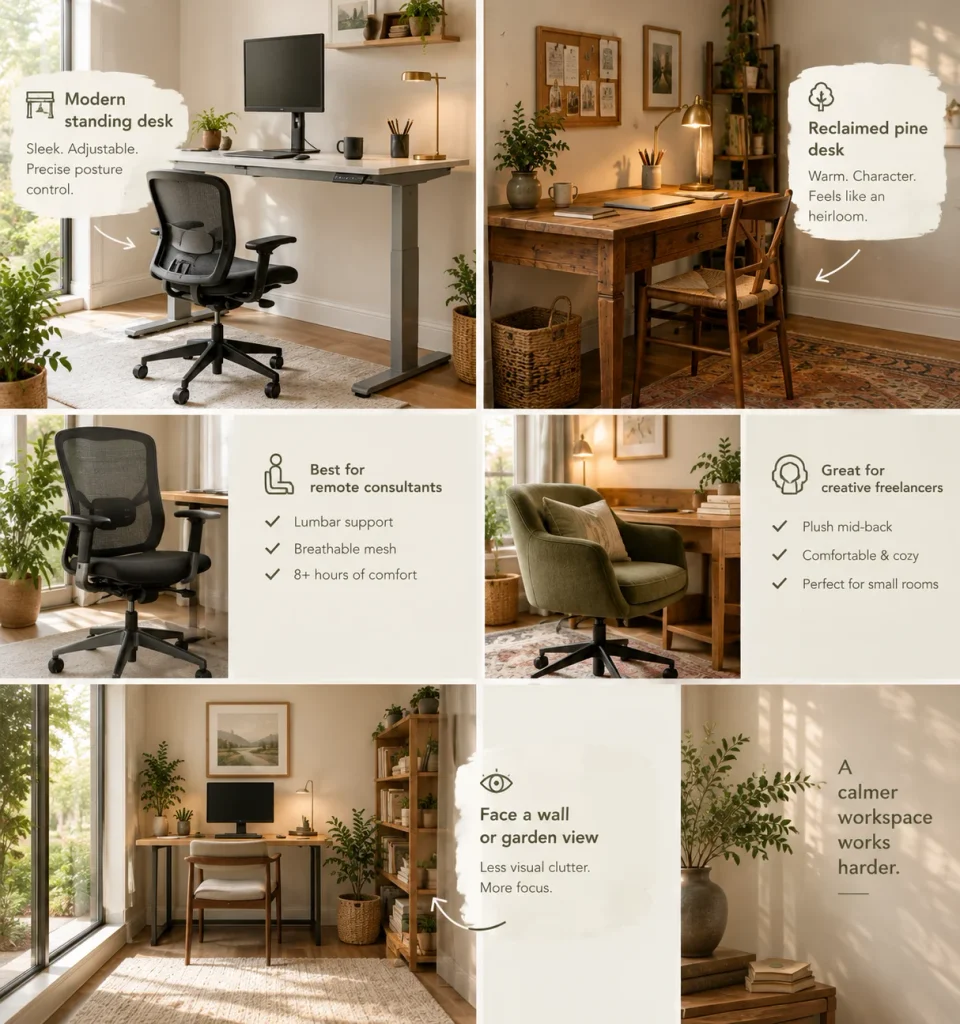
A fully adjustable standing desk looks like a sleek steel console, while a reclaimed pine table feels like a lived‑in heirloom.
The desk gives precise posture control, yet its modern silhouette can clash with classic décor, creating a corporate feel.
Remote consultants who work eight hours benefit from a chair with lumbar support and breathable mesh.
Creative freelancers may opt for a plush mid‑back seat that adds comfort without overwhelming a small room.
Face the desk toward a solid wall or quiet garden view to cut visual clutter.
Entryway/Hallway: Practical Welcome and Necessary Storage
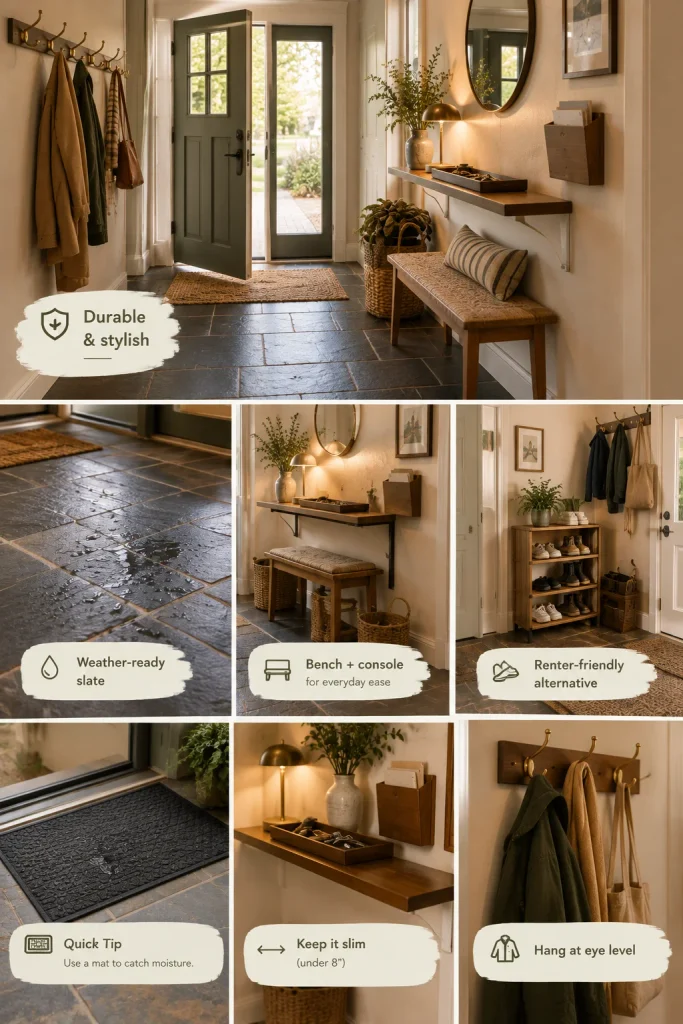
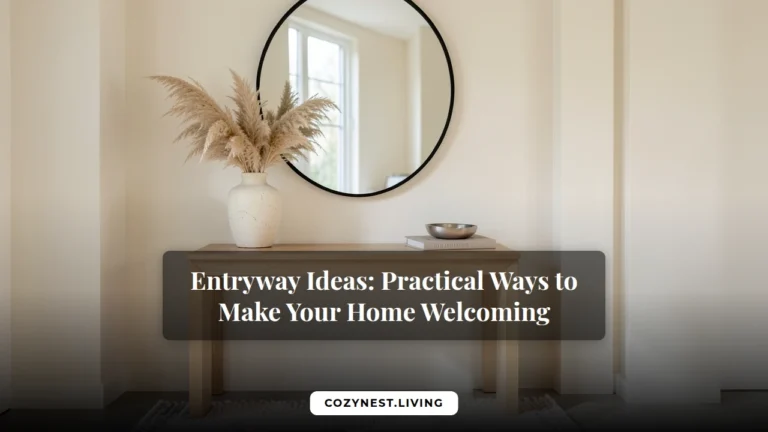
A polished slate floor stretches across the entry, reflecting the brass hooks that line the wall. The slate resists scratches and dries quickly when rain tracks in.
A narrow wooden bench sits against the back wall, giving a place to slip off shoes before heading deeper inside.
A slim console above the bench holds a tray for keys, a lamp, and a mail slot, keeping daily items visible. In a hallway under three feet wide, the bench and console can choke the flow, forcing guests to sidestep.
Renters can replace the bench with a freestanding shoe rack and use removable adhesive hooks to avoid wall damage.
Slate flooring should be sealed annually to prevent water stains and wear from heavy foot traffic.
Place a low-profile rubber mat at the doorway to catch moisture and protect the floor.
If space is tight, choose a console no deeper than eight inches to preserve clearance. Install a wall-mounted coat rack at eye level to keep coats off the floor and maintain a clear path.
Children’s Rooms: Safety, Adaptability, and Cleanup
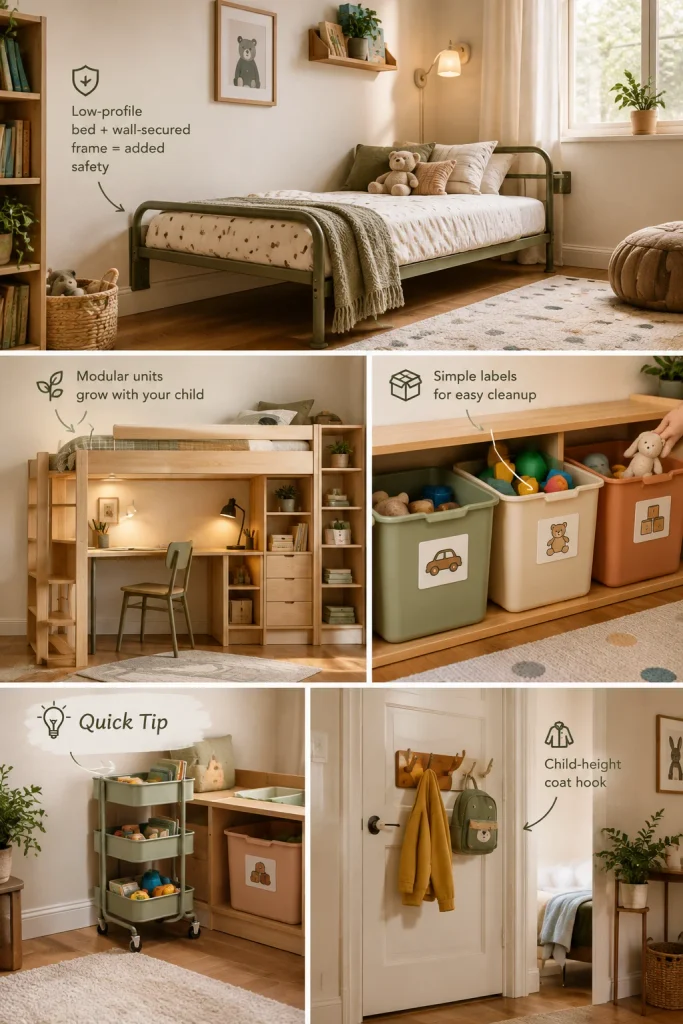
A common issue in kids’ rooms is furniture that tips over when a child leans on it. A low‑profile bed with a metal frame secured to the wall eliminates that risk and works well for families with toddlers.
Modular, grow‑with‑your‑child units let you add a desk or a loft later, but they require a sizable upfront outlay.
Because the joints can loosen after a few years of heavy use, the investment may not last into the teen years.
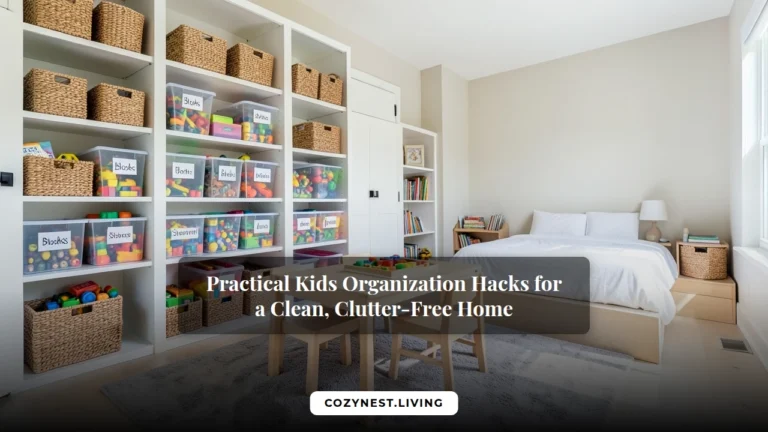
Floor‑level bins with wide openings let a child dump toys in one motion, encouraging quick cleanup. Attach a simple picture label to each bin so the child can match items without reading.
Place a lightweight rolling cart beside the bins to move them for seasonal toy rotation
Install a child‑height coat hook on the door to give the child a designated spot for jackets, reducing floor clutter.
Outdoor/Patio: Durability and Low Maintenance Comfort
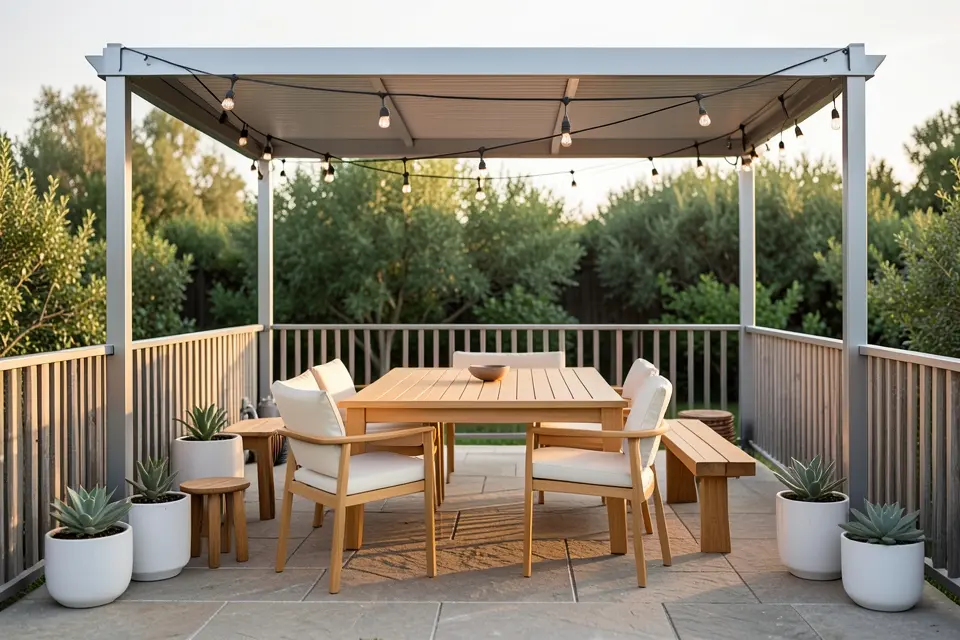
Teak slats, left to age naturally, give patio tables a warm, honey tone that resists rot. The dense grain holds up to rain and UV without warping.
Marine‑grade polyester cushions stay bright after years of sun because UV inhibitors are woven in. A quick wipe with a damp cloth removes spills.
A retractable pergola supplies shade at noon and folds away for night use. Aluminum frames stay rust‑free in humid air.
Weather‑rated LED string lights drape the rail and survive occasional rain. A dimmer lets you set a soft glow for dinner.
Teak and marine‑grade fabrics look refined, but they need off‑season storage and a bi‑annual oiling to keep the finish rich.
Store teak pieces in a dry shed during winter and re‑oil every six months to prevent cracking.
General Tip: Layer Your Lighting for Function and Mood
Fit a dimmable recessed LED strip along the ceiling perimeter to create a soft wash of light. This base layer spreads illumination evenly and makes the room feel larger.
Add a swing‑arm reading lamp on the sofa and a magnetic under‑cabinet light in the kitchen. Both supply focused task light only when you need it.
Place a small directional LED spot on a framed print or built‑in niche. The accent highlights artwork and adds depth without harsh glare.
The layered scheme adds extra fixtures, outlets, and switches, raising upfront costs and electricity use. Expect $150‑$400 for hardware plus higher utility bills.
Renters can mimic this with plug‑in floor lamps, battery‑powered puck lights, and removable adhesive track lighting, avoiding permanent wiring.
DIY dimmer installation saves the electrician’s fee, but a licensed pro ensures code compliance and safety.
Use a smart plug to control each lamp independently and set scenes without adding extra switches.
General Tip: Thoughtful Material Choices Beyond Appearance
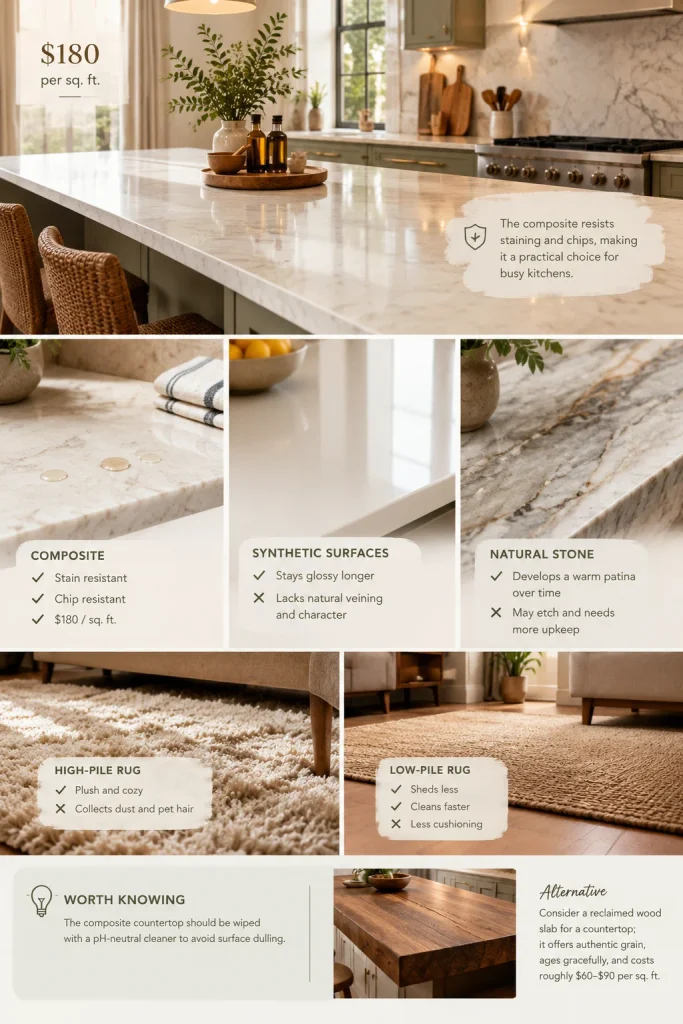
A quartz composite countertop costs about $80‑$110 per square foot, while a marble slab typically ranges from $120‑$180 per square foot.
The composite resists staining and chips, making it a practical choice for busy kitchens.
Synthetic surfaces stay glossy longer, but they miss the natural veining that develops a warm patina over decades. If you love the evolving character of stone, expect occasional etching and higher upkeep.
A high‑pile rug feels plush underfoot, yet its deep fibers collect dust and pet hair quickly. A low‑pile option sheds less and cleans faster, though it offers less cushioning.
The composite countertop should be wiped with a pH‑neutral cleaner to avoid surface dulling.
Alternative: Consider a reclaimed wood slab for a countertop; it offers authentic grain, ages gracefully, and costs roughly $60‑$90 per square foot.
General Tip: Integrate Personal Items Authentically
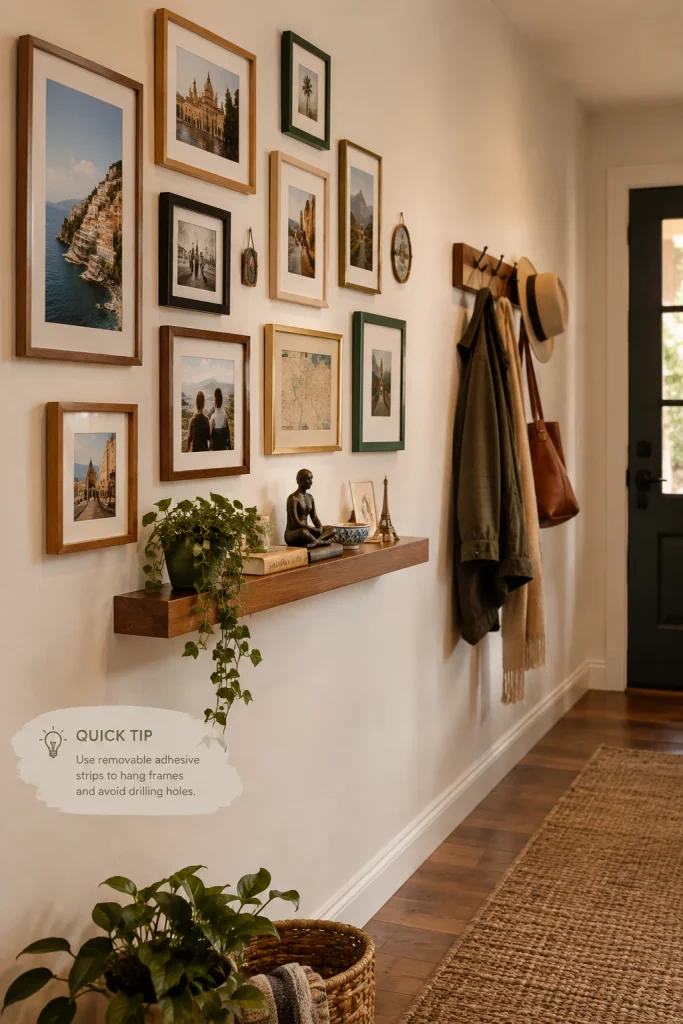
A cluster of mismatched frames holding travel snapshots lines the hallway beside the coat rack, instantly signaling a lived‑in vibe.
The varied sizes and colors create visual interest without demanding a design theme.
Personal photographs and collected objects tell a story that generic décor cannot.
When each piece is chosen for its memory, the space feels anchored to its occupants. Because the items are already owned, the cost stays low.
If you pile too many eclectic pieces together, the wall can become chaotic and distract from the room’s function.
Applying a simple grid or grouping by color keeps the display organized while preserving personality.
Since nothing is nailed to the walls, renters can swap items without leaving marks.
Use removable adhesive strips to hang frames and avoid drilling holes
Add a single shelf at eye level to showcase small sculptures and keep the arrangement tidy.
Your Next Room Refresh
You now have a toolbox of room‑by‑room ideas that fit real life. Remember to keep a cohesive color story, balance furniture scale with the room’s proportions, and layer texture through pillows, throws, or natural materials. Pick one space, try a single tip, and watch the vibe shift.
When the changes feel right, move on to the next room and let the momentum build. Save this guide for your next room refresh and let each idea inspire a small, confident update.
Frequently Asked Questions
What are some effective interior design ideas for making a home practical and appealing?
Effective interior design ideas focus on durable materials, functional layouts, appropriate lighting, and incorporating personal items to create a space that supports daily living and reflects the inhabitants.
How do I start designing my home’s interior if I’m on a budget?
Begin by prioritizing functionality and identifying key pain points in each room. Focus on paint, lighting, and decluttering as cost-effective ways to make a significant impact before investing in larger pieces.
Should all rooms in my home have the same design style?
No, rooms don’t need identical styles. A cohesive feel can be achieved through a consistent color palette, similar material finishes, or carrying a common design element throughout, allowing for individual room character.
What’s a common mistake people make when designing their home, and how can it be avoided?
A common mistake is buying furniture that’s too large or too small for the room. This can be avoided by measuring your space accurately and sketching out furniture placement before making purchases.
What are the most important considerations for choosing materials in home design?
When choosing materials, prioritize durability, ease of maintenance, and how well they will withstand the specific demands of the room (e.g., moisture in bathrooms, foot traffic in entryways).
How important is lighting in home interior design?
Lighting is crucial; it impacts mood, functionality, and how colors appear. A well-designed lighting scheme uses a combination of ambient, task, and accent lighting to provide versatility and address different needs throughout the day.