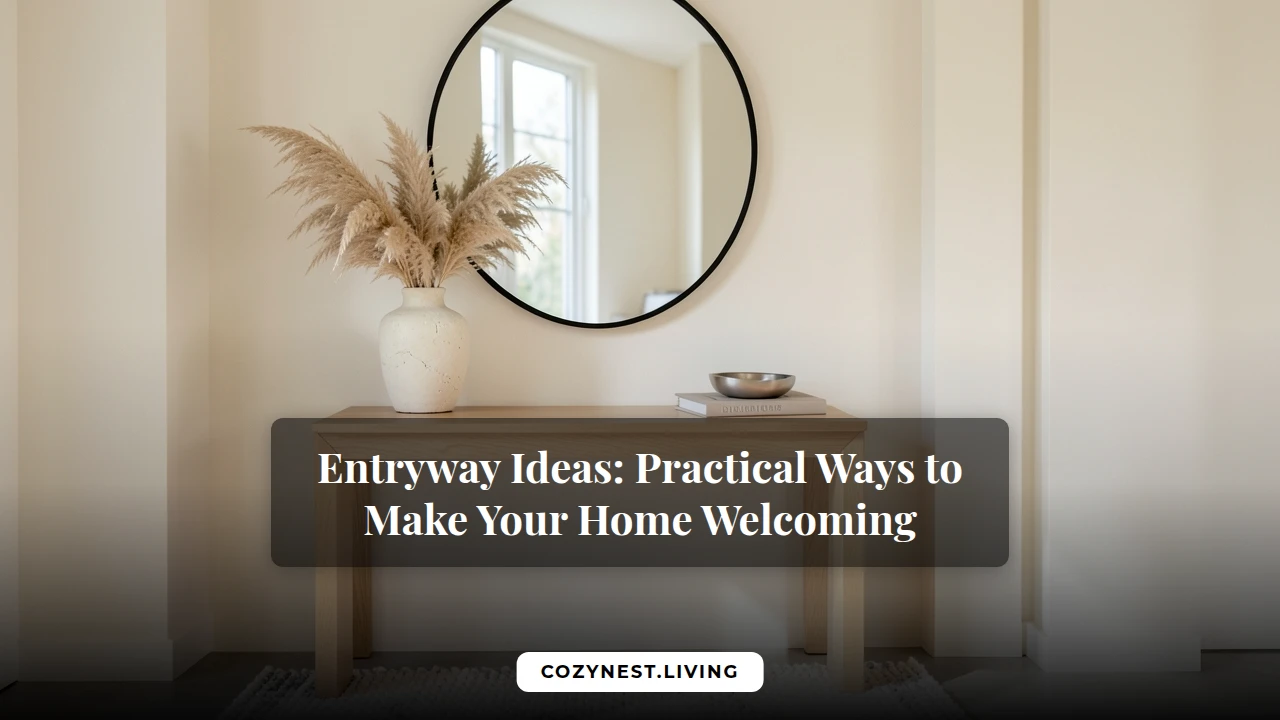
Entryway Ideas: Practical Ways to Make Your Home Welcoming
You pull the front door open, and the first thing you notice is a sleek console table topped with a bowl of fresh lemons, a woven rug underfoot, and a bright mirror that catches the morning light.
That instant impression tells guests the home is both polished and lived‑in. Entryways often get overlooked, yet a few thoughtful tweaks can turn that narrow hallway into a welcoming greeting.
In the list below, you’ll find ten easy swaps, like adding a coat rack with decorative hooks, layering a runner over hardwood, or hanging a statement light fixture above the door.
We’ll also show how to blend storage with style using benches, baskets, and wall shelves, and why a splash of colour or a green plant can make the space feel alive.
Each idea is budget‑friendly and quick to implement, so you can start reshaping your entryway today.
1. The Hard-Working Bench with Hidden Storage
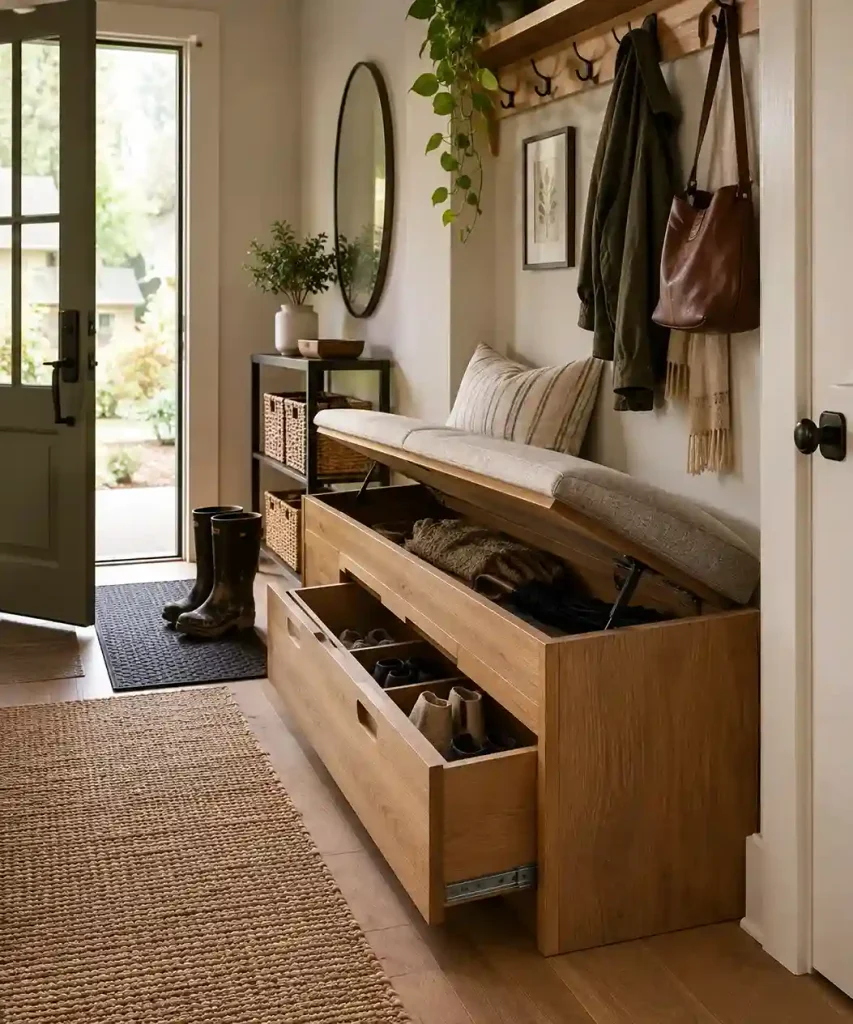
When shoes and bags pile up by the door, the entryway feels chaotic. A bench with hidden storage can tame it.
Choose a bench that lifts its seat or slides out drawers. Solid oak paired with a performance-fabric cushion holds up to daily use. The hidden compartments hide shoes, umbrellas, or mail.
A heavy storage bench can dominate a narrow hallway, making the passage feel cramped. In corridors under four feet wide, keep bench depth to twelve inches or less.
Families with kids appreciate the drop‑off spot for backpacks and muddy boots.
Place a small rubber mat in front of the bench to catch water and dirt
Wood frames need occasional oiling to keep grain from drying out
Alternative: A narrow metal console with woven baskets offers storage without the bulk of a solid bench.
Add a thin shoe tray before the bench to keep wet soles off the wood.
2. Layered Lighting That Works
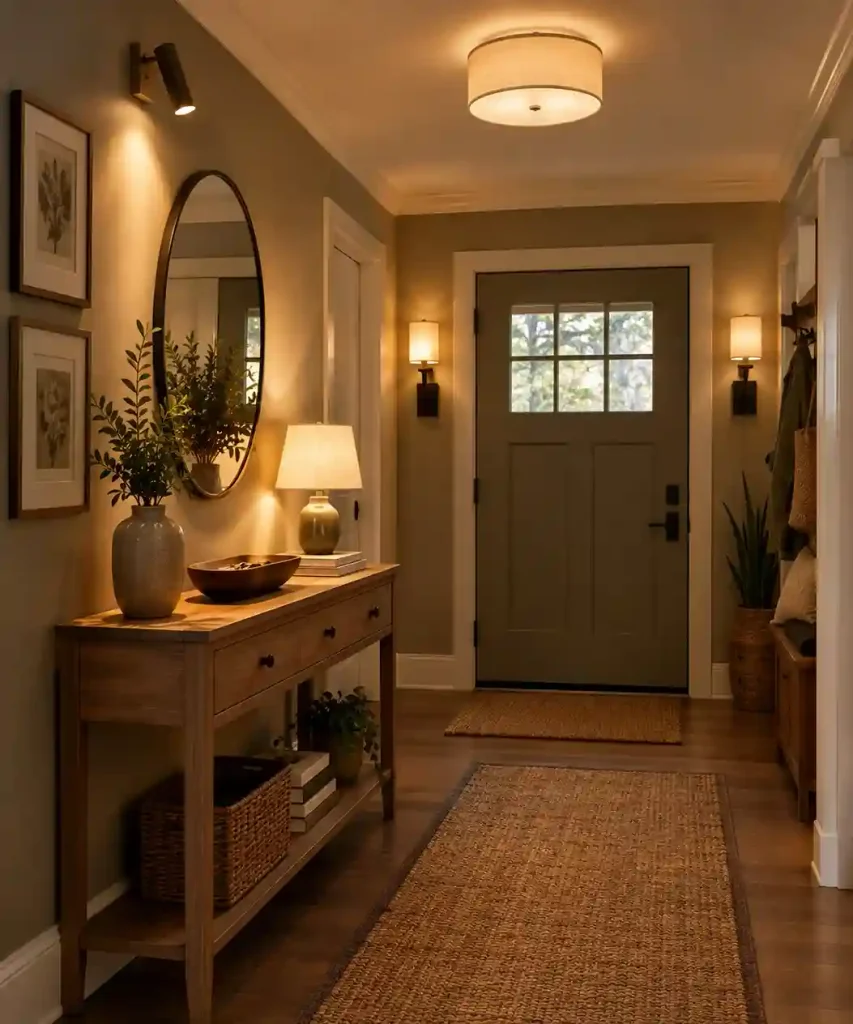
A narrow, adjustable wall spot aimed at the console highlights the entryway’s decorative bowl. Pair it with a low‑profile flush mount that spreads soft light across the floor.
Add task lighting with a small table lamp on the console or a pair of wall sconces by the door. The lamp lets you see mail without squinting.
Each fixture needs its own power source, so you may need an electrician or to hide cords, which can look untidy if left exposed.
Renters can skip hardwiring with plug‑in LED sconces that clamp to studs. DIYers may use a surface power strip, but a pro install keeps wiring tidy.
Paint a cord cover the same shade as the wall to hide visible wires.
Alternative: a battery‑powered floor lamp with a dimmer adds layered light wire‑free.
3. A Rug That Can Take a Hit
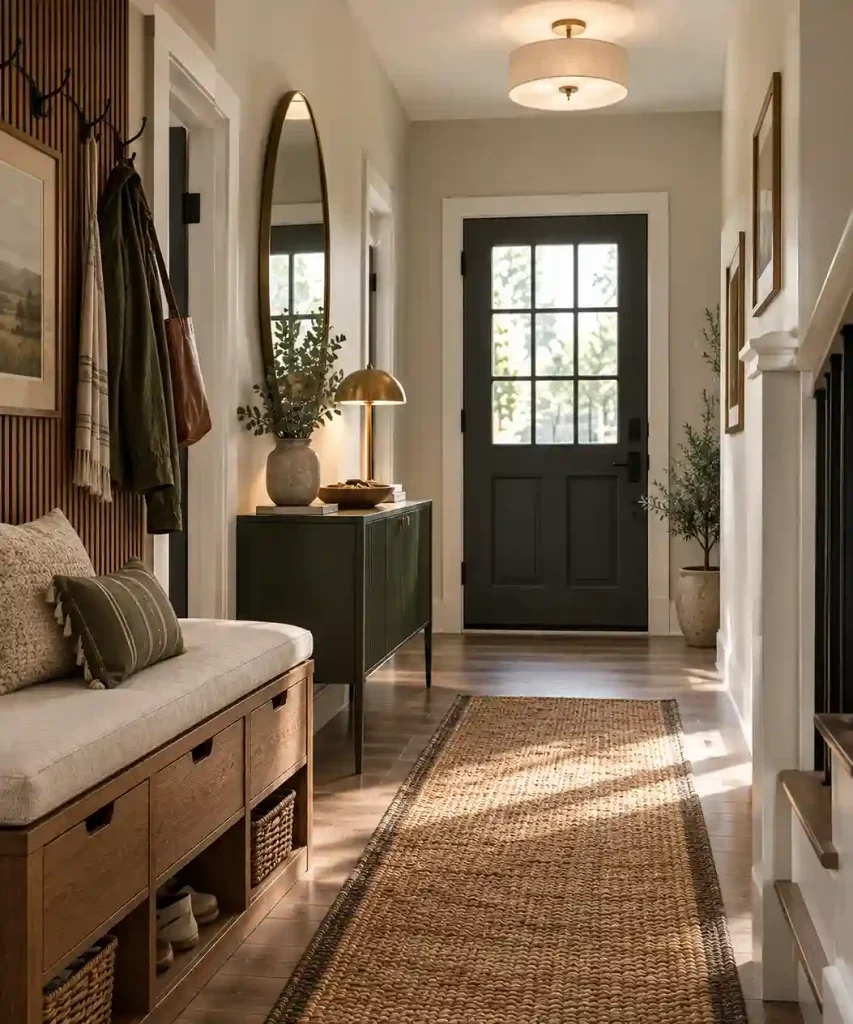
Jute fibers, with their coarse, looped texture, stand up to the daily grind of an entryway. The material tolerates dirt and foot traffic better than most weaves.
It also adds a natural look that blends with wood or painted walls.
Sisal and wool offer similar strength, while low‑pile synthetic blends resist stains and shed less.
A runner can stretch a narrow hallway and define the zone. Secure the runner with a slip‑resistant pad or double‑sided tape to avoid trips.
For a typical front door, choose a runner that covers about two‑thirds of the floor length and 60 % of the doorway width.
This proportion keeps the space feeling open without crowding furniture.
Place a non‑slip rug pad beneath the runner for extra stability.
Natural fibers like jute feel rough underfoot and are hard to spot‑clean; treat mud stains quickly with a mild detergent and blot, then let dry flat.
4. The Functional Mirror
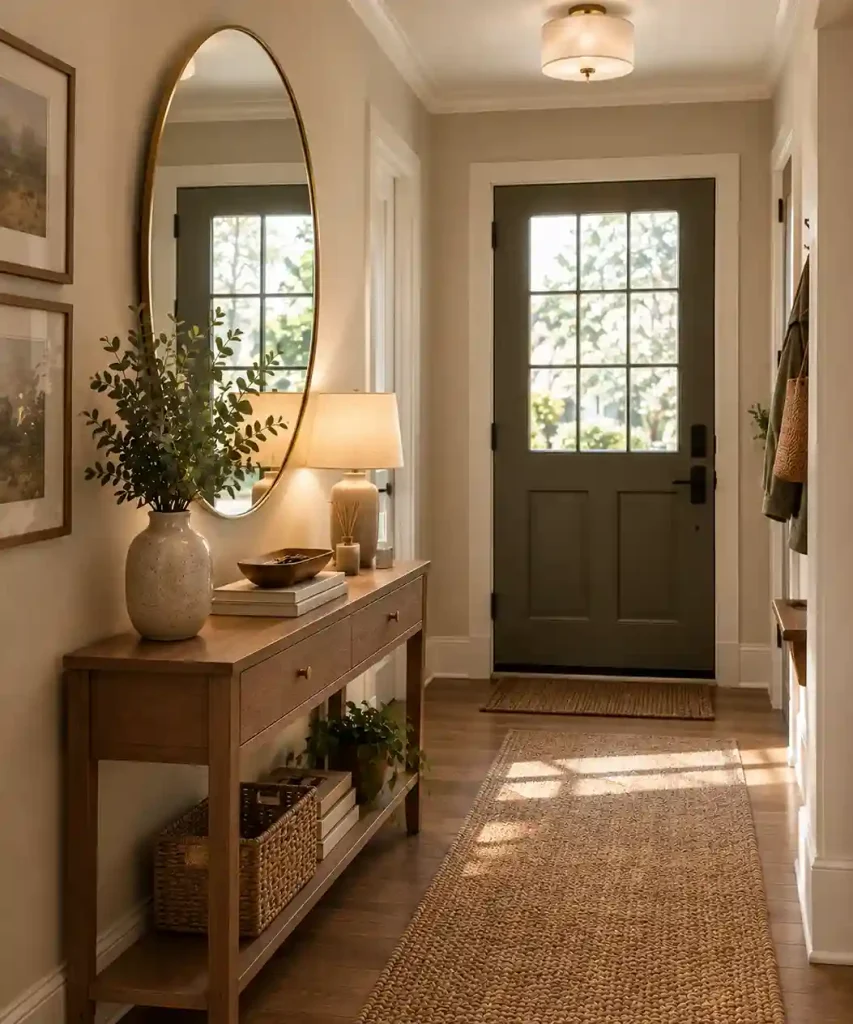
An oval mirror with a brushed‑brass frame hangs above the console, catching morning light. Its surface reflects the doorway, adding depth to a narrow entry.
A glance lets you check your outfit before leaving. The glass bounces daylight, brightening the space without extra lamps.
Cover about two‑thirds of the wall so the mirror feels balanced. A slim matte‑wood frame blends with most décor and stays unobtrusive.
Mounted opposite a cluttered hallway, the mirror merely repeats the mess. Keep the opposite wall clear or use a narrow console to preserve openness.
Renters can use Command strips to avoid drilling holes.
Hang the mirror so its center aligns with eye level for the most natural view.
Clean the glass with a vinegar‑water mix and a soft cloth to prevent streaks.
5. Wall Hooks and a Tray for the Essentials
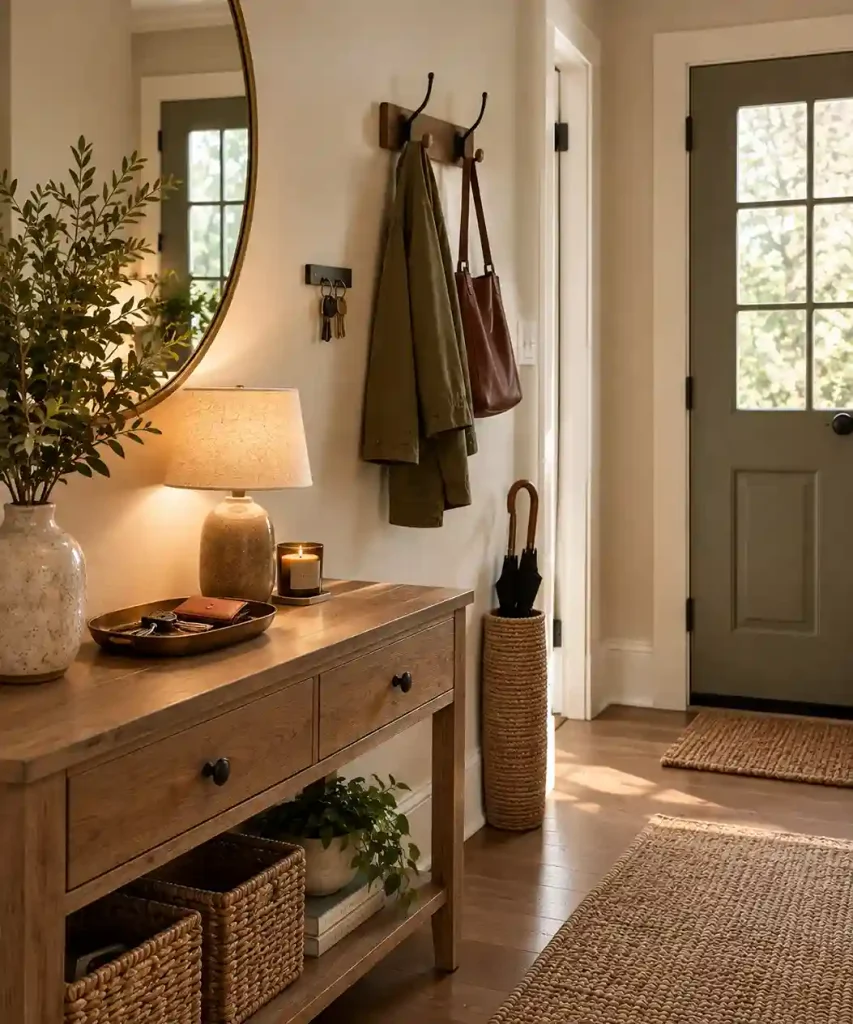
A coat draped over the entry chair and scattered keys on the floor greet guests with confusion.
Install two sturdy wall hooks at eye level and place a shallow metal tray on the console for keys and mail.
Open hooks and trays expose every stray item, so they can look chaotic fast. A quick weekly purge of papers and receipts keeps the area neat.
Renters like this fix because it needs only a few screws and leaves no marks. In a hallway under four feet wide, choose a two‑hook rack and a tray no wider than six inches.
Hang a small magnetic strip beside the hooks to catch metal keys and keep them from slipping off.
Alternative: A small wooden coat stand with a basket holds jackets and mail, and you can move it when needed.
6. Console Table: Your Drop Zone
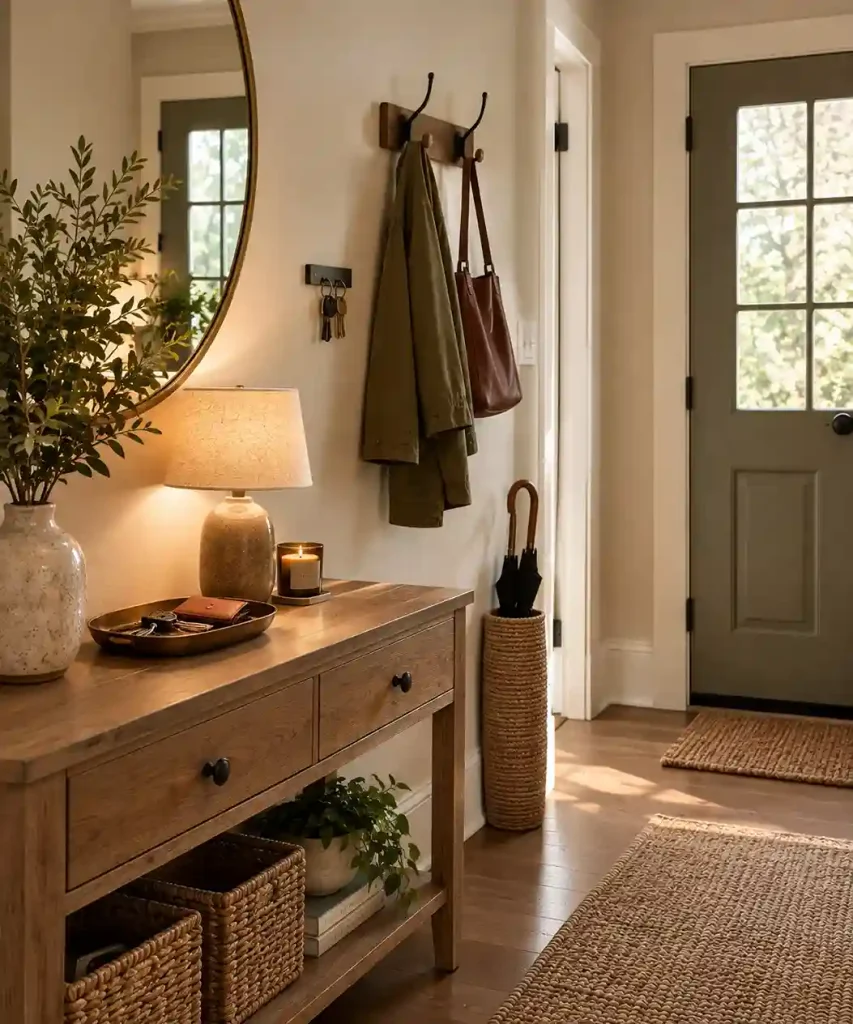
A 30‑inch console fits tighter hallways better than a 48‑inch model, but it loses surface area for mail and keys. Leave at least 30 inches of clear walk‑through so the entry stays unblocked.
Solid wood adds warmth and handles daily wear; metal stays light and resists dents. Renters like metal because removable brackets avoid permanent screws.
Extremely narrow consoles can be top‑heavy, so wall anchoring is essential when you add heavier decor. A picture‑hook kit secures the piece without drilling deep holes.
Place a shallow dish on the far side of the table to catch stray keys and keep the surface tidy
Alternative: A wall‑mounted floating shelf offers the same drop‑zone function without taking floor space, but it limits how many items you can stack.
7. Greenery That Doesn’t Demand Constant Attention
In a narrow entry hallway, a compact snake plant in a matte black pot slides easily onto a console shelf.
A pot no taller than twelve inches keeps the space feeling open and prevents the plant from becoming a traffic obstacle.
Snake plants, ZZ plants, and Pothos thrive in low light and need water only when the soil dries an inch deep. Water sparingly; a cup every six weeks is enough for most indoor climates.
Drafty doorways and low ambient light can still stunt or kill even hardy live plants over time, so rotate the pot to a sunnier room every few months.
Place it near a window for a week each season to reset its rhythm.
Even the toughest foliage shows yellow tips if exposed to cold drafts for weeks.
Alternative: a high-quality faux succulent in a ceramic pot gives the same visual pop without any watering or light concerns.
8. Add Personal Items, But Keep It Lean
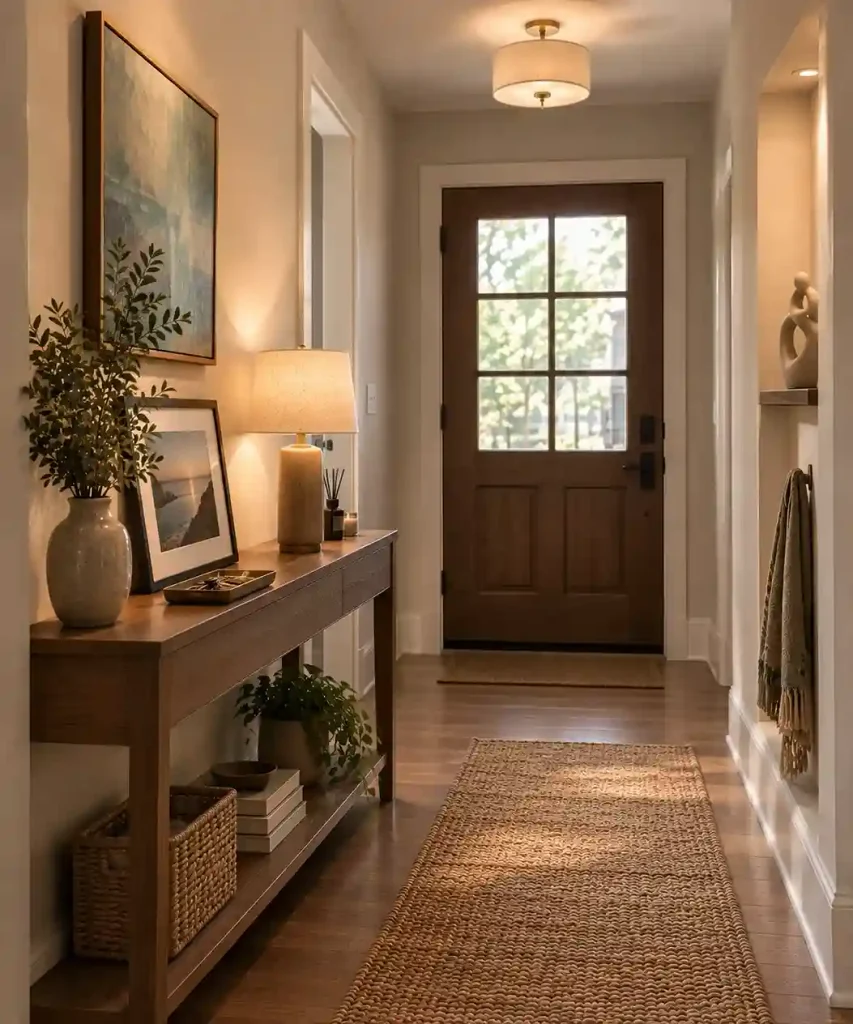
A narrow wooden console holds a single 8×10 black‑frame photo of a coastal sunrise. The image draws the eye without crowding the hallway.
The wood grain matches the front door, tying the entry together.
Choose one piece that tells a story, like a small abstract canvas in muted teal. It signals that the home is lived‑in rather than a showroom.
A single sculpture on a low shelf can add depth without stealing focus.
Placing a fragile heirloom on a high‑traffic ledge invites accidental bumps from guests. The constant foot traffic increases the chance of a broken frame.
Use removable adhesive hooks to hang the frame without drilling
Renters can swap the piece whenever they move by using the same hooks.
Finish the entry with a slim metal tray for keys and mail to keep surfaces clear. Place the tray on a recessed niche to protect it from stray shoes.
9. Smart Layout for Easy Traffic Flow
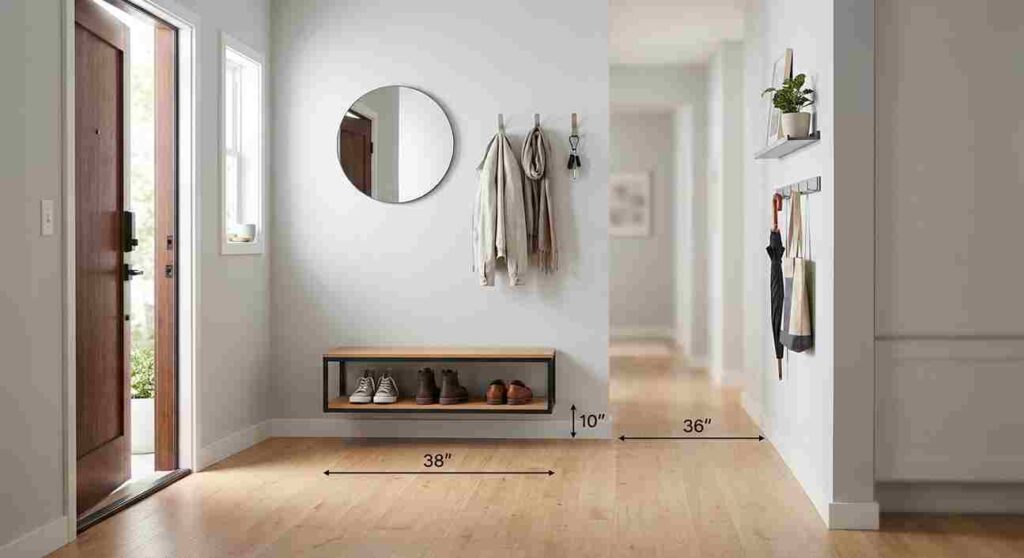
Place a low, wall‑mounted shoe rack directly opposite the door to keep footprints clear. It stays out of the way and offers a visible spot for shoes.
Removing floor clutter lets guests step inside without ducking around obstacles. Families with strollers or grocery bags appreciate the ability to open the front door fully.
Apartment renters benefit because they can mount the rack without drilling into floor studs.
Measure the entryway and keep at least 36 inches clear between the rack and other pieces. If the foyer is under six feet wide, pick a rack no deeper than four inches.
The trade‑off is a bare wall where a console or bench could sit. Without a bench, you lose a seat, but the clear path avoids daily frustration.
Swap a bulky coat stand for a slim metal hook bar to free another foot of walking space.
Your Next Entryway Refresh
From a functional console to a pop of greenery, the ideas above prove that a welcoming entryway doesn’t need a full remodel.
Keep the floor clear, choose pieces that serve a purpose, and add a personal touch like a family photo or a favorite scent.
Pick the tip that speaks to you, try it this weekend, and watch the hallway feel more inviting. Save this guide for your next entryway refresh and share your transformation on Pinterest.
Frequently Asked Questions
How do you make an entryway inviting?
To make an entryway inviting, focus on practical elements like adequate lighting, comfortable landing spots, and a clear path, combined with a few personal touches that reflect the home’s character.
What are the essential elements for a functional entryway?
Essential elements for a functional entryway include a place to sit, storage for coats and shoes, a surface for keys and mail, and a mirror for quick checks before leaving.
How can I style a small entryway effectively?
For a small entryway, use compact, narrow furniture like a floating shelf or a slim console, wall-mounted storage, and lighter colors to maximize the sense of space without impeding traffic.
What kind of lighting works best in an entryway?
A combination of ambient lighting, such as a flush mount or pendant, and task lighting, like a small lamp on a console table, provides the most functional and welcoming light in an entryway.
What colors make an entryway feel welcoming?
Light, neutral colors like warm grays, soft blues, or creamy whites tend to make an entryway feel more open and welcoming, though a well-executed accent wall in a deeper hue can also work if the space allows.