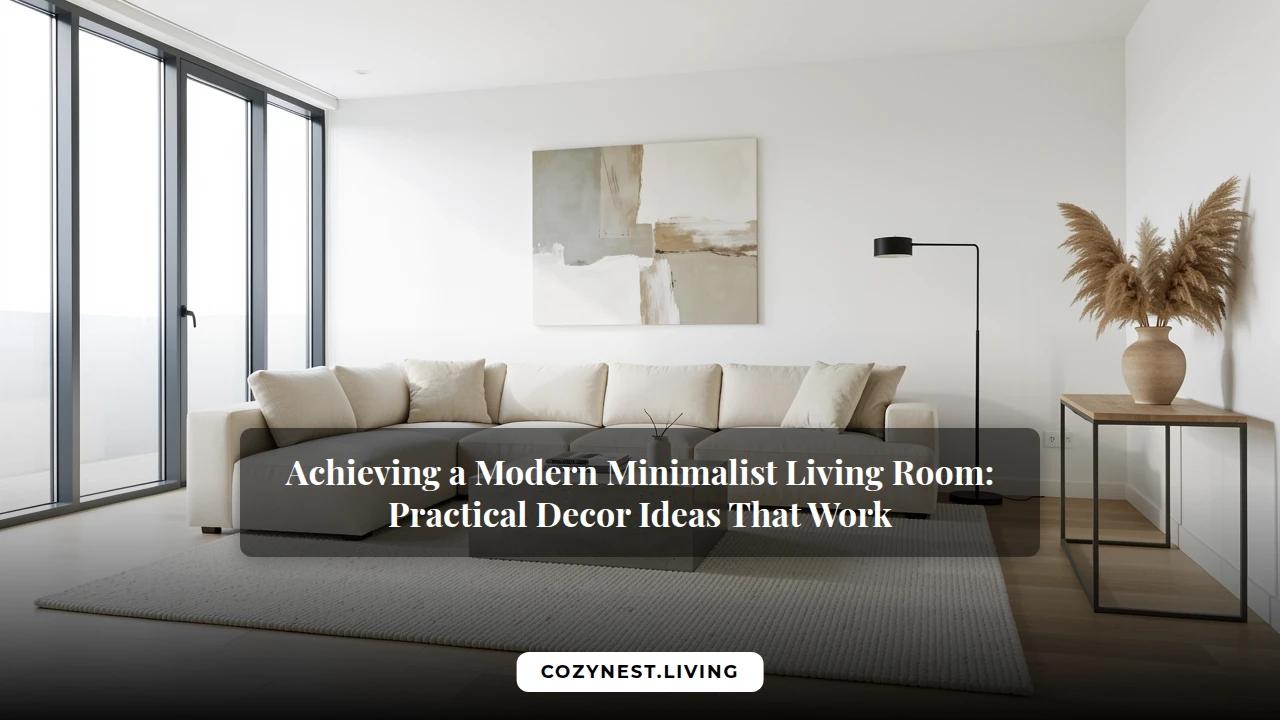
Achieving a Modern Minimalist Living Room: Practical Decor Ideas That Work
On a quiet Saturday afternoon, you might find yourself drawn to the clean lines of a low‑profile sofa set against a crisp white wall. The appeal of modern minimalism lies in its ability to make a room feel spacious without sacrificing comfort, and that sleek, uncluttered vibe has become the go‑to backdrop for many homes.
In the list that follows, we’ll walk through ten practical ideas you can start using today—selecting a muted color palette, choosing multi‑functional furniture, adding subtle texture with a woven rug, and spotlighting a single statement light fixture. You’ll also learn how to bring in natural elements, hide technology neatly, and use wall art sparingly for maximum impact, all while keeping visual noise to a minimum.
Begin with a Thorough Purge
Stacks of mismatched coffee tables and a drawer full of spare cords crowd the living room, blocking any modern minimalist living room decor ideas.
Before you buy a new sofa or sleek floor lamp, pull every object out and ask if it serves a clear function or adds purposeful visual weight. Pure decoration that doesn’t simplify the view should be set aside; the goal is visual breathing room, not just tidiness.
The biggest hurdle is the emotional toll of sifting through years of belongings, and you might unintentionally toss a family photo you later regret.
If a full purge feels overwhelming, try the “one‑box rule”: place everything you’re unsure about in one box, seal it, and revisit in a month.
Quick tip: photograph each shelf before you start so you can compare the before and after. Label three boxes as “keep,” “donate,” and “store,” then fill them before moving on.
Define a Limited Neutral Color Palette
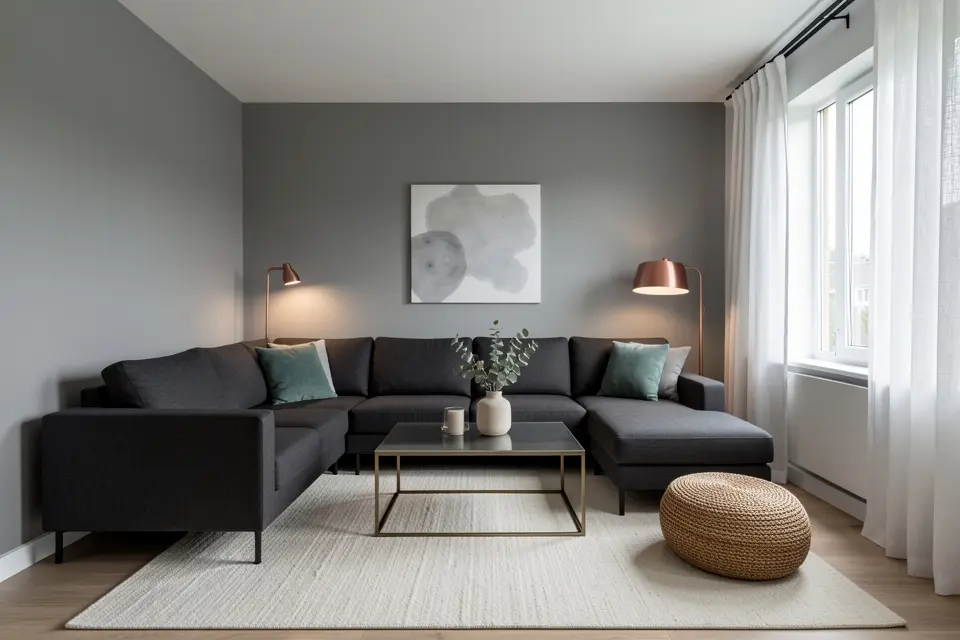
A dove‑grey wall, a charcoal sectional, and a cream‑linen rug form a calm visual baseline. Choosing two to three neutrals for paint, sofa, and main textiles keeps the room feeling open.
A single accent, such as a muted teal cushion, adds interest without disturbing tranquility. If the palette stays too strict, the space can feel cold; layered textures and soft lighting counter that effect.
Quick tip: place a woven jute pouf near the coffee table to introduce tactile contrast.
Maintenance note: matte finishes on walls and upholstery resist fingerprints and are easy to clean with a damp cloth.
Renter‑friendly option: use peel‑and‑stick neutral panels instead of paint for a reversible wall treatment.
Room size advice: in apartments under 250 sq ft, limit the palette to two shades; larger living rooms can introduce a third neutral for depth.
Add a brushed‑copper floor lamp to inject subtle warmth without breaking the palette.
Choose Streamlined, Functional Furniture
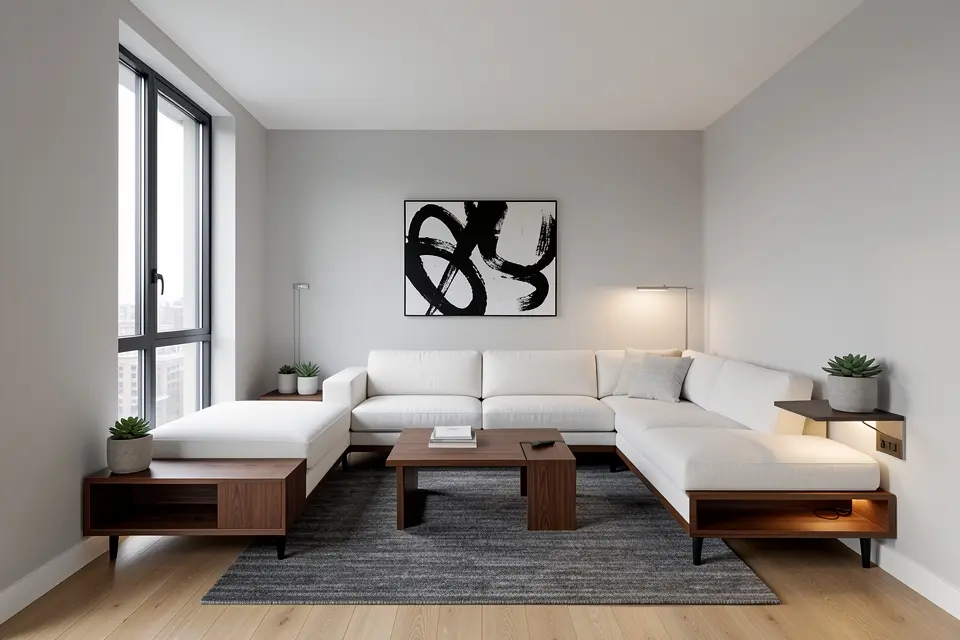
Walnut veneer legs on a low‑profile sofa instantly signal a modern minimalist vibe. Choose pieces that sit close to the floor, with straight edges and no visible hardware, so the room feels open.
A sectional with integrated shelving beneath each seat lets you hide books and remotes without adding extra cabinets.
Modular coffee tables that can be split into side tables give flexibility when you host guests or need a clear pathway.
This approach works best in apartments under 250 sq ft, where every inch counts, and it suits city‑dwelling couples who value sleek aesthetics over ornate décor.
Keep in mind that boxy, low‑sitting frames often lack the deep, plush sink‑in comfort of traditional oversized couches and may be hard for seniors to rise from.
Add a slim, wall‑mounted side table with a hidden cable channel to keep devices tidy.
Prioritize Closed and Integrated Storage
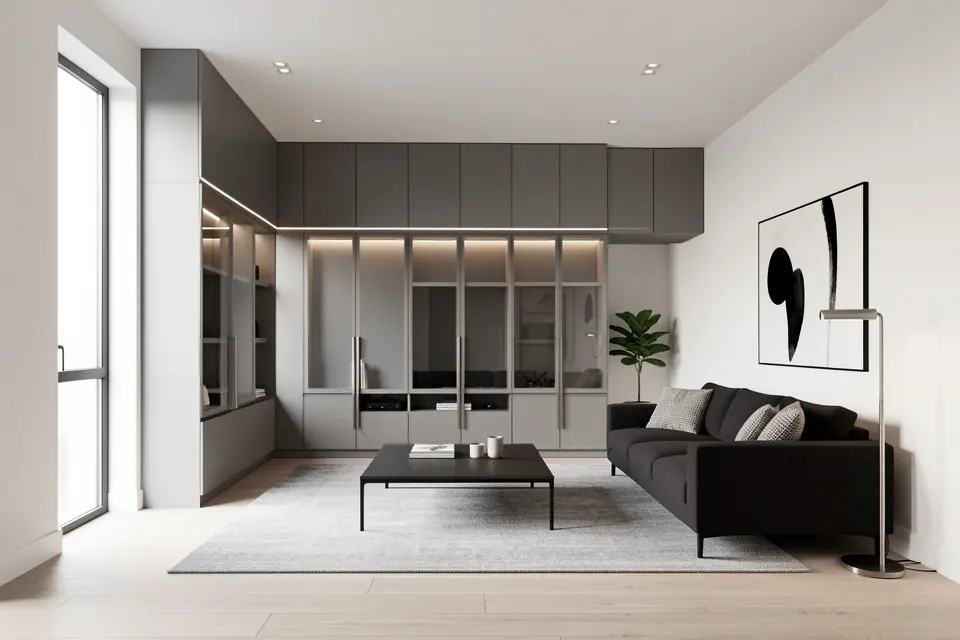
A floor‑to‑ceiling cabinet with push‑to‑open doors hides the TV, gaming console, and wire bundles behind seamless panels.
Closed storage keeps sightlines clean, so the room feels larger even when the furniture is modest. If you prefer a lighter look, a disciplined open‑shelf arrangement works, but it demands strict curation of books and décor.
Quick tip: choose hardware in the same brushed‑nickel finish as your lighting to unify the design. Renters can opt for a freestanding credenza on wheels; it offers the same concealed look without permanent walls.
For a DIY approach, flat‑pack cabinets assemble in a weekend, while custom built‑ins usually require a professional carpenter.
Remember, high‑quality integrated systems often start at $2,000 and can exceed $5,000, far above the $150‑$300 range of open shelving.
Add a soft‑close hinge kit on the cabinet doors to prevent slamming and keep the minimalist vibe intact.
Layer Textures Rather Than Patterns
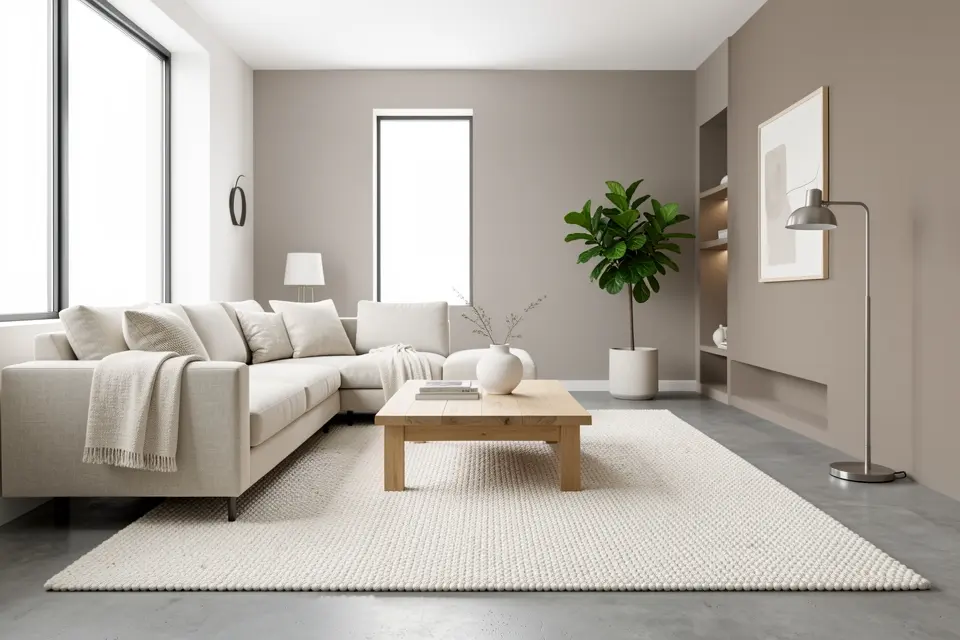
A chunky wool rug underfoot instantly softens a sleek floor while adding tactile warmth. Pair it with a linen‑blend sofa; the raw linen invites you to sink in without overwhelming the space.
Ceramic vases in matte white give cool contrast, and a natural‑finished wood coffee table grounds the room with organic grain.
These textures layer depth without busy patterns, keeping the minimalist vibe serene. Remember, highly textured fabrics like bouclé, chunky wool, and raw linen trap dust, pet hair, and spills more easily than flat‑woven, pattern‑camouflaged options.
For upkeep, vacuum the rug and sofa weekly and spot‑clean any spills within minutes.
Quick tip: choose a low‑pile wool rug and a tightly woven linen to reduce debris buildup. Add a washable slipcover to the sofa for easy protection.
Implement Thoughtful, Layered Lighting
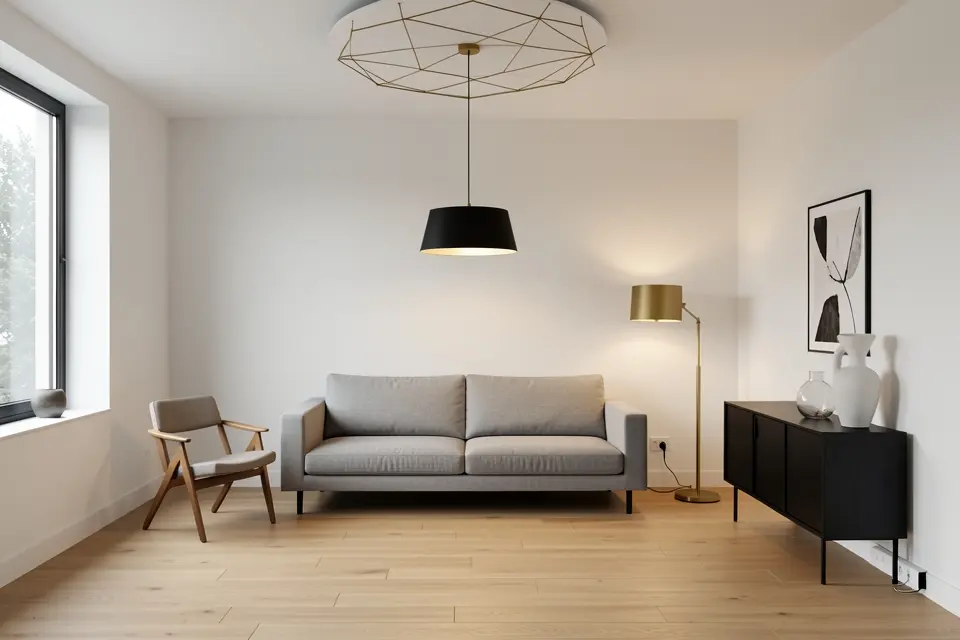
A matte‑black pendant hangs low over the sofa, spilling a gentle pool of light, while a slim brass floor lamp stands beside the reading chair, its adjustable arm pointing to the book.
Pair that glow with a small ceramic table lamp on the sideboard, its warm bulb highlighting a sculptural vase.
The three layers—ambient ceiling, task floor, and accent table—define zones without crowding the space.
Choose fixtures with clean lines; a geometric ceiling disc and a cylindrical floor shade keep the look minimalist.
Quick tip: attach cord clips to the baseboard to hide tangled cords that often appear when multiple fixtures share the same outlet.
Renter‑friendly option: opt for plug‑in LED strips that snap onto the wall instead of hard‑wired sconces.
If you’re unsure about mounting the pendant, hire an electrician rather than attempting a DIY install. Finally, place a small outlet strip behind the floor lamp to keep the cord off the floor.
Select Minimal, Impactful Art and Decor
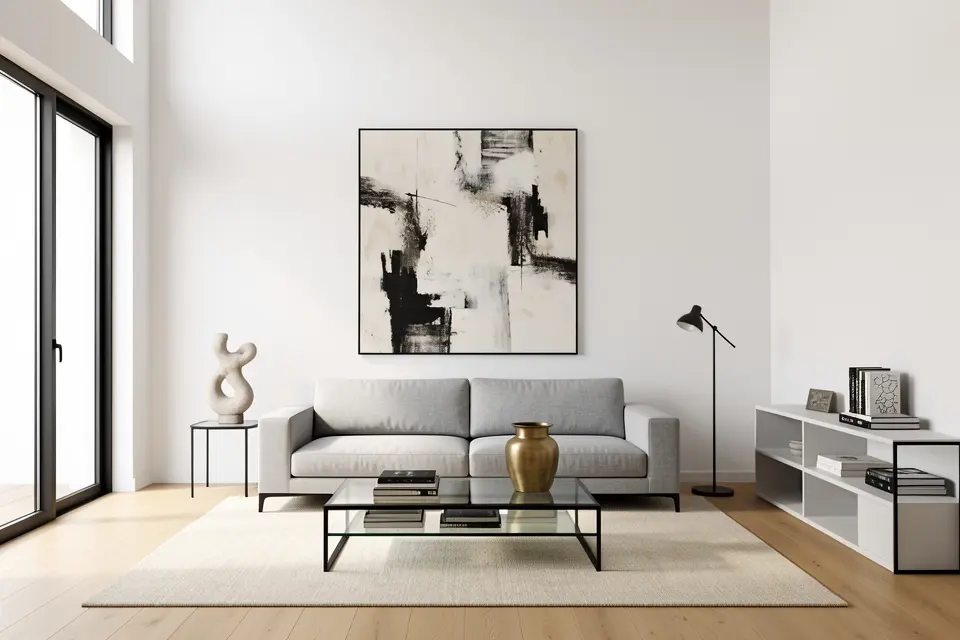
A single 6‑foot abstract canvas costs roughly twice as much as a set of three 12‑inch prints, yet it commands the room’s focus instantly.
The large piece creates a visual anchor that small prints cannot match, especially in a living room with high ceilings. If budget or moving logistics are a concern, a framed metal sculpture that hangs from the wall offers similar impact without the weight of a massive canvas.
For renters, choose artwork that can be removed without drilling, such as a large‑format photograph mounted on a tension‑rod system.
In a compact lounge, keep the piece under 5 feet to avoid crowding the seating area.
Pair the focal work with only two decor items, a sculptural vase and a slim stack of design books, to preserve the minimalist feel.
Hang the piece at a height where the center aligns with a seated eye level, about 57 inches from the floor.
Integrate Strategic Greenery
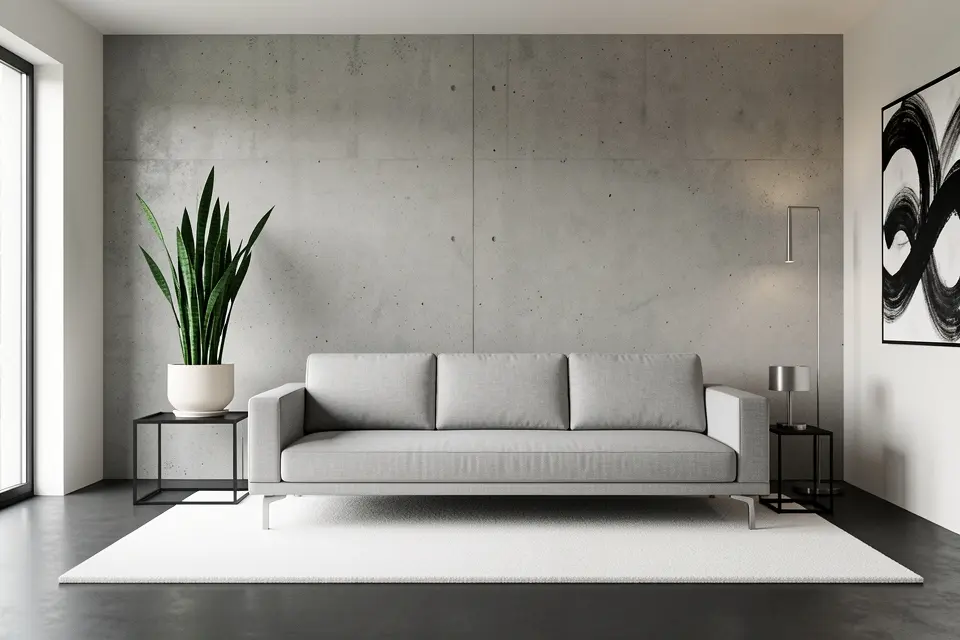
In a living room that features a low-profile sofa, sleek metal legs, and a wall of muted concrete, a single tall plant can become the focal point.
Choose an architectural piece like a Snake Plant, a Fiddle Leaf Fig, or a Monstera and place it in a simple, off‑white ceramic pot.
The clean lines of the foliage echo the room’s minimal aesthetic while adding a subtle splash of green.
If you need a lower‑maintenance option, a ZZ plant offers similar sculptural appeal with less light demand. Keep the plant near indirect sunlight and water only when the top inch of soil feels dry; over‑watering leads to soggy soil that stains the floor.
Quick tip: set a small saucer under the pot and a timer for a brief weekly soak to prevent leaf yellowing.
Position the pot on a mid‑height console to draw the eye without crowding the space. Use a moisture meter each month to catch early stress signs.
Maximize and Embrace Natural Light
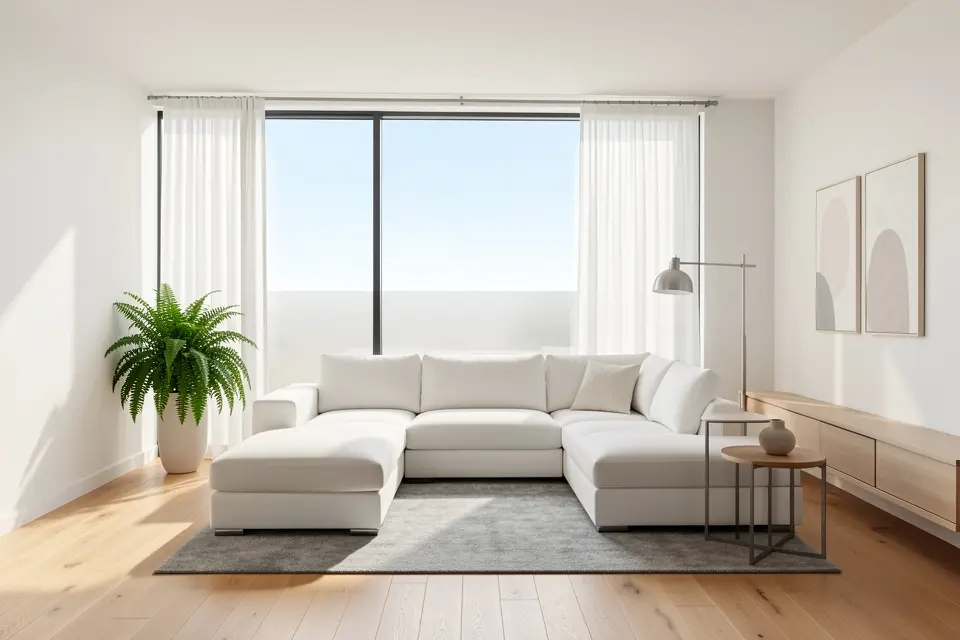
Sunlight pours through the floor‑to‑ceiling window, lighting the white sectional and reflecting off the polished oak floor.
Keep the view clear with a lightweight linen voile or a flat‑fold roller blind that slides fully aside. If privacy isn’t a daily concern, skip curtains altogether and let the glass speak for itself.
For renters, a tension‑rod and clip‑on sheer panel install in minutes without drilling, making the change fully reversible.
Those in busy streets may add a frosted window film as an alternative to heavy drapes; it lets light in while muting prying eyes.
This approach suits compact studios and city apartments where space feels scarce.
Remember, the lack of thick curtains can let heat escape in winter and invite glare in summer, so pair the light treatment with a portable thermal curtain for chilly nights.
Install a 1‑inch tension rod and clip an 84‑inch white voile panel to the window frame for instant brightness.
Consciously Utilize Negative Space
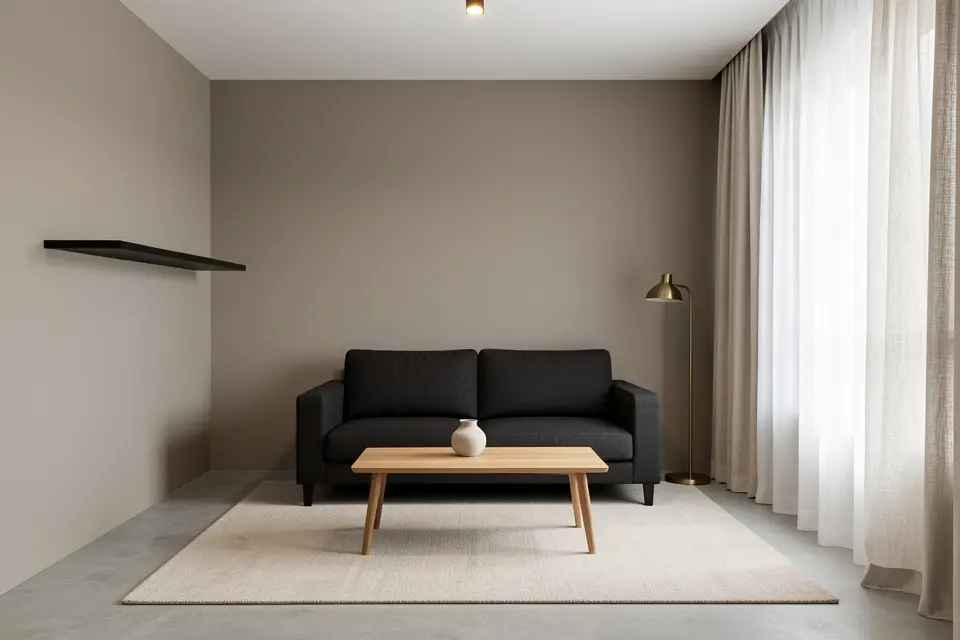
Mount a slim, 2‑inch‑deep floating shelf at eye level on one wall, then leave the rest of the wall untouched.
The empty wall acts as visual breathing room, so the eye can pause rather than scan clutter. In a room under 200 sq ft, this pause feels spacious; larger rooms can stretch the gap even further for a grander sense of openness.
Quick tip: choose a shelf in matte black or brushed nickel to keep the look understated.
Because bare walls reflect sound, pair the space with a soft element, like a floor‑standing linen curtain or a plush rug to tame echo.
This balance preserves the calm of negative space while preventing a stark, reverberant feel.
Add a low‑pile, neutral‑tone rug measuring 4 by 6 feet beneath the sofa to absorb sound and keep the floor uncluttered.
Focus on Quality Over Quantity of Items
A handcrafted leather armchair typically runs $1,800 to $2,500, while a factory‑made fabric version often costs under $600.
The leather piece adds depth and ages gracefully, so a few such items can anchor a minimalist room better than a clutter of cheap decor.
If the budget feels tight, consider a solid‑wood coffee table from a reputable mid‑range brand; it offers durability without the sofa‑level price tag.
This strategy suits homeowners who plan to stay put for several years and value long‑term cohesion over frequent trend swaps.
The downside is the upfront spend, which can curb the flexibility to refresh the space when styles shift.
Keep the leather supple by wiping it with a dry microfiber cloth weekly and applying a conditioner quarterly. Add a protective felt pad under each leg to prevent floor scratches and extend the piece’s life.
Your Next Room Refresh
Remember to keep accessories to a few curated pieces, let natural light be the room’s main highlight, and choose furniture with hidden storage to maintain that clean look.
With these reminders, your modern minimalist living room will feel both airy and functional. Save this guide for your next design sprint, and let each tip guide a purposeful update that feels just right for your everyday living.
Frequently Asked Questions
What are some modern minimalist living room decor ideas?
Focus on streamlined furniture, a neutral color palette with minimal accents, ample closed storage, layered textures, strategic lighting, and selective, impactful art and greenery to create a calm and functional space.
How do I keep a minimalist living room from feeling sterile?
Introduce warmth through varied textures like wool, linen, or wood, incorporate a few personal items, select soft, inviting neutral tones, and use strategic lighting to create different moods within the room.
What kind of furniture is best for a minimalist living room?
Opt for furniture with clean lines, simple forms, and low profiles, often made from natural materials; prioritize pieces that are functional, comfortable, and potentially offer built-in storage to reduce clutter.
Can I use color in a minimalist living room?
Yes, but use it sparingly and intentionally. Stick to a primary neutral palette and introduce a single accent color through a cushion, a throw, or a piece of art to add interest without disrupting the minimalist aesthetic.
How do I declutter a living room effectively for a minimalist style?
Start by removing anything that doesn’t serve a clear purpose or bring you joy, utilize closed storage solutions to hide everyday items, and regularly assess new purchases to ensure they align with your minimalist goals before they enter the space.