11 Practical Entryway Decor Ideas for Busy Homes
The moment you drop your keys on a shallow console by the door, the scuff marks from weeks of hurried foot traffic become obvious. High‑traffic front entries often turn into disorganized drop zones when the decor is chosen for a quick photo rather than everyday wear. Sturdy dimensions, wear‑tested finishes, and built‑in storage keep the threshold welcoming without adding a daily chore.
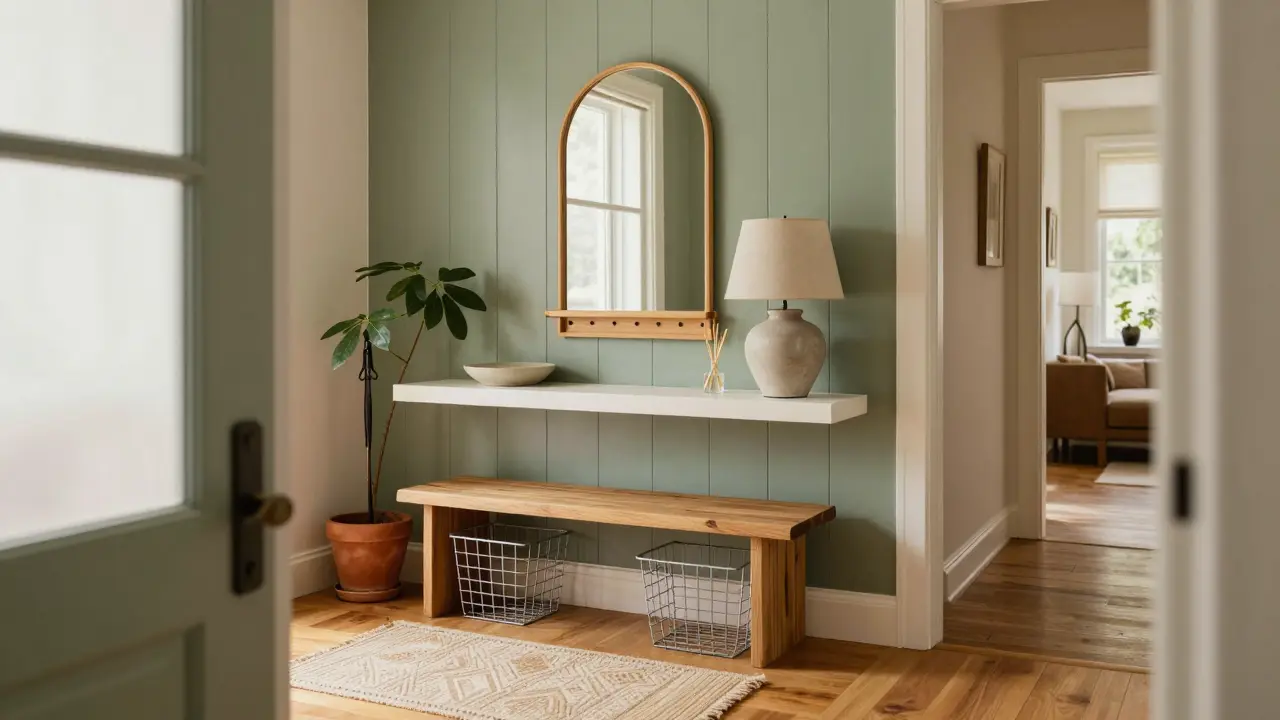
Here are 11 ideas: a wall‑mounted shallow console, a flatweave wool runner on a rubber pad, a double‑tier Shaker peg rail, an open‑slatted bench with wire baskets, low‑glare 2700K sconces with a soft‑shade lamp, a thick‑framed arch mirror near the light, a heavyweight stoneware catchall tray, a cast‑iron umbrella stand with a removable drip pan, low‑light plants in weighted terracotta, tongue‑and‑groove wainscoting in satin enamel, and a subtle reed diffuser. Each one includes its trade‑off and a renter‑friendly alternative. For a broader overview, see our guide to practical entryway ideas, and if your entry doubles as a drop zone, our small mudroom ideas pair well with these.
1. Wall-Mounted Shallow Console with Anchored Metal Brackets
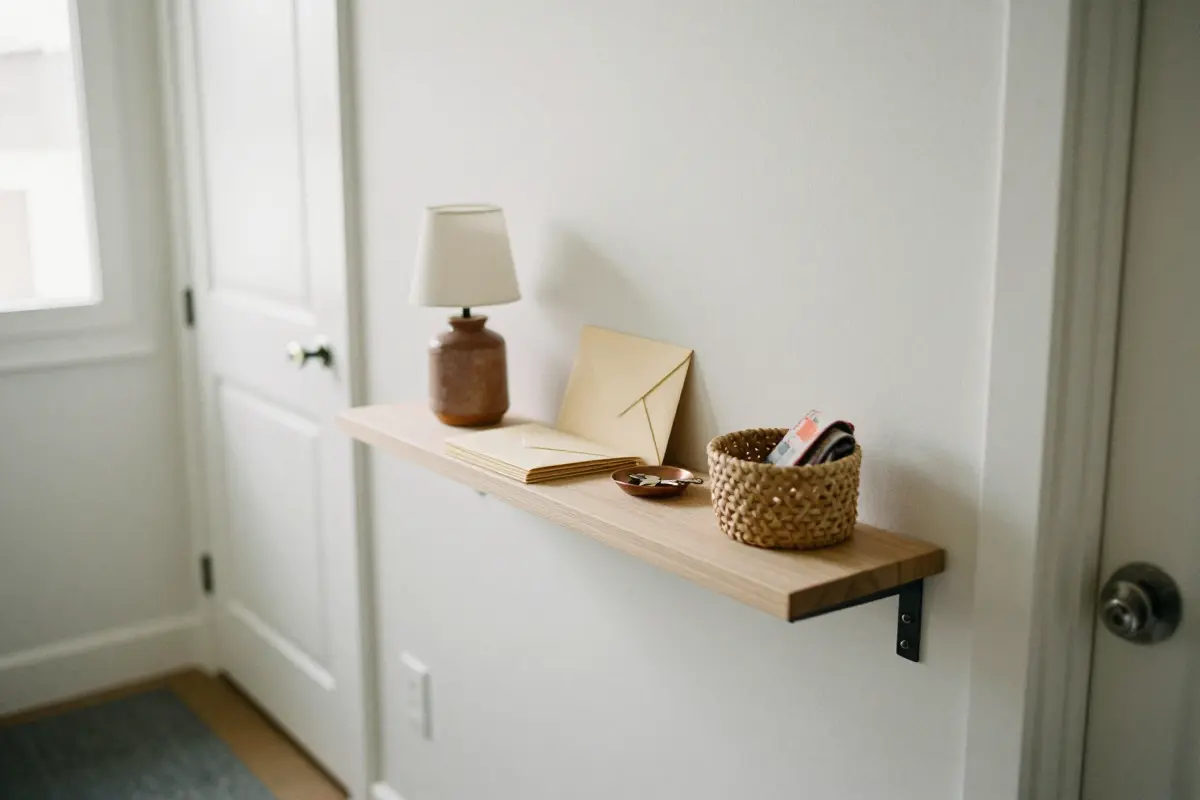
Heavy‑duty metal brackets screwed into wall studs let a 10‑to‑12‑inch‑deep floating console stay level while holding a pile of mail and a stoneware lamp. A solid white oak top hides the hardware and adds a clean line that works in tight foyers where floor space is at a premium.
Because the shelf hangs, you lose the lower storage a traditional entry table provides, so bulky shoes and umbrellas still need another spot.
This setup fits best in apartments or small houses where the entry is under 5 feet wide, and you’re comfortable drilling into studs. The brackets are permanent, but renters can use adhesive‑rated, removable brackets for light loads only. In that case, skip the lamp and keep to a few lightweight items.
Alternative: a slim, freestanding shoe rack can replace the shelf when you need hidden storage without wall work.
Use a stud finder to locate the studs and mark them with painter’s tape before you drill, so every bracket lands on solid backing.
2. Flatweave Wool Runner Over a Custom-Cut Rubber Pad
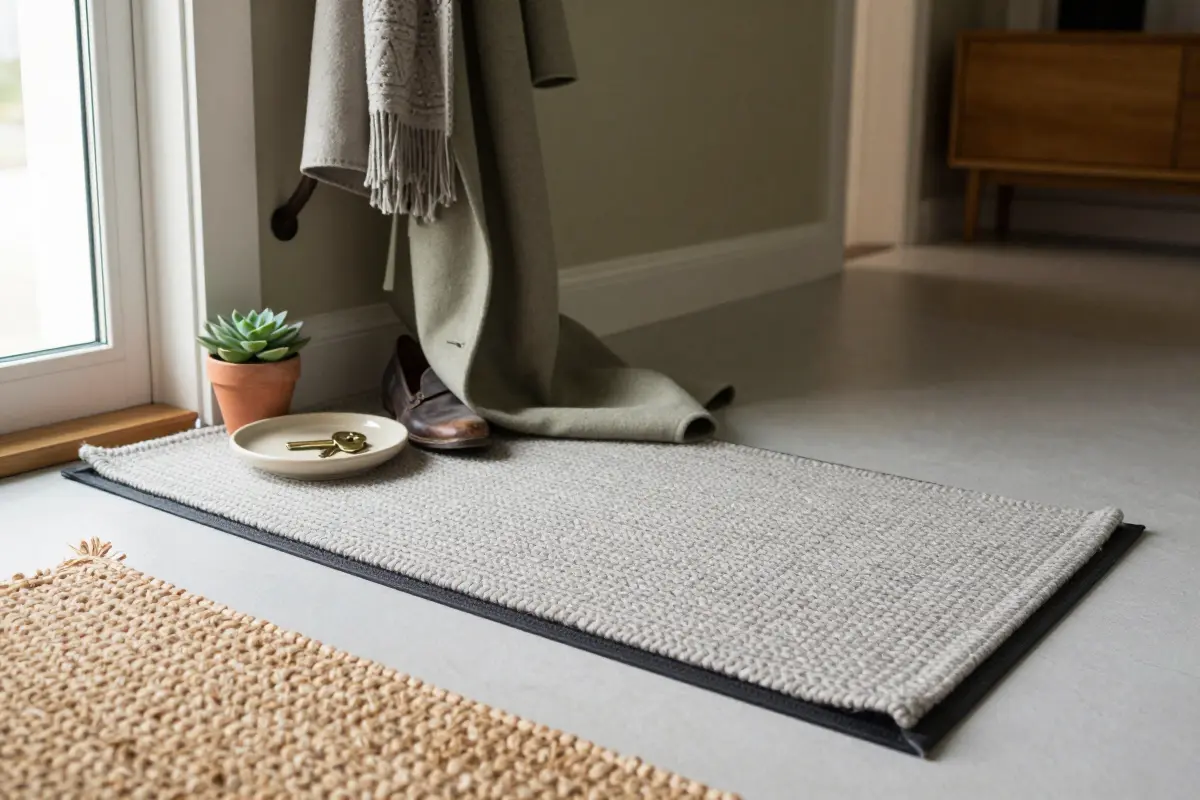
A tightly woven flatweave wool runner holds up to daily front‑hall traffic better than looser jute or open‑loop mats. With no deep pile to trap grit, it vacuums clean quickly and lies flat enough for the door to swing over it, and wool’s natural lanolin gives it some water resistance, so you have a short window to blot spills before they soak in.
A custom‑cut rubber pad underneath stops the runner from slipping and protects the floor from dents.
The main downside is the higher upfront cost of natural wool compared with synthetics. Blot melted snow quickly, and let mud dry before vacuuming it up instead of rubbing it into the weave. Check that the pad is rated for your floor type, since some rubber backings can discolor vinyl or finished wood.
Alternative: A low‑profile polypropylene runner can work in a mudroom where heavy foot traffic and wet shoes are the norm.
Most wool rugs should be spot‑cleaned only. Check the care label before washing, since hot water can shrink and distort wool.
Vacuum or use a lint roller weekly to lift loose fibers, because new wool sheds a little at first.
Leave about 4 to 6 inches of bare floor on each side of the runner. In a very narrow entry, a 2‑foot‑wide runner is usually a better fit than a 3‑foot one.
3. Double-Tier Shaker Peg Rail for Real-World Coat Storage
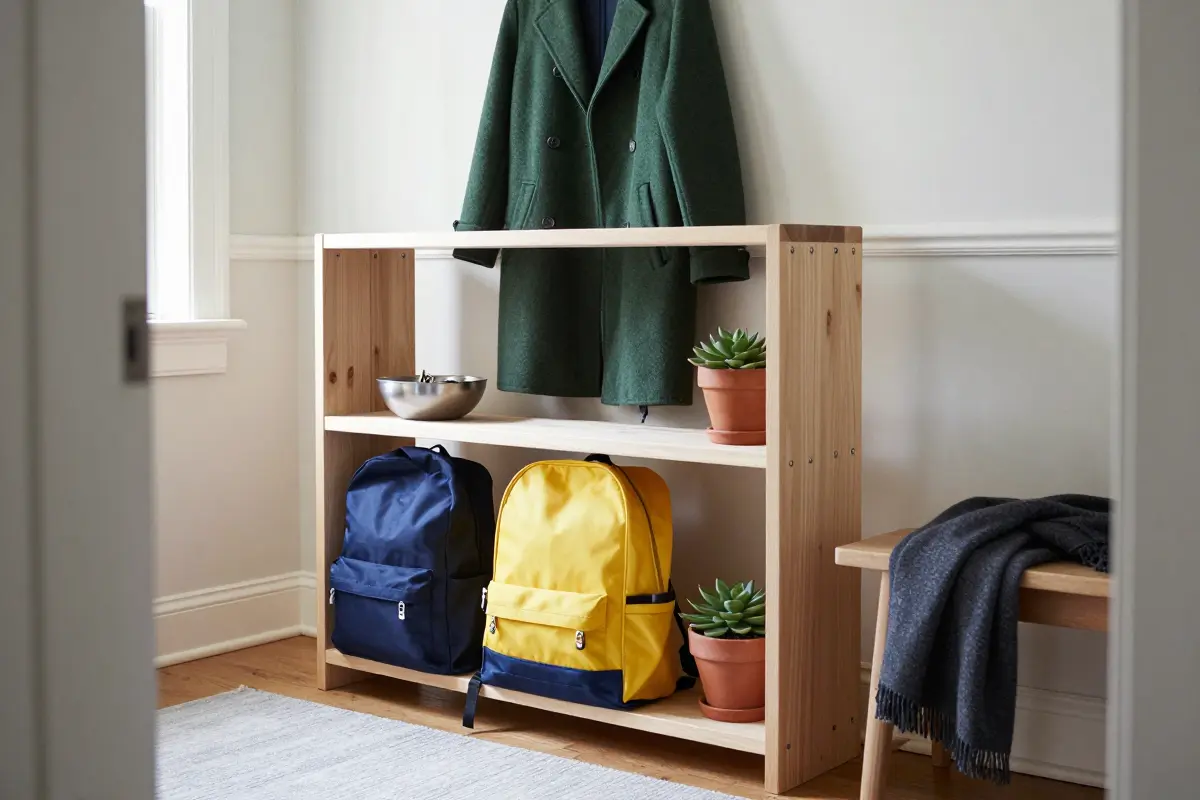
A freestanding coat tree leans and eats floor space, while a double‑tier Shaker peg rail stays flush to the wall. Mount the painted pine rail at about 42 inches for backpacks and school bags, then add a second row at about 66 inches for longer adult coats.
This split height lets each family member grab what they need without digging through one crowded rack, and the open pegs keep outerwear visible instead of buried in a pile.
The rail is a permanent solution for homeowners who can screw into studs. Renters can mount a lightweight pine rail with drywall anchors rated for the load and patch the holes at move‑out, or use removable adhesive hooks for light jackets only.
It works best in a narrow entry hall where floor space is at a premium. The open design can look cluttered when overloaded, so limit each row to one coat or bag per peg.
Alternative: If you cannot mount anything, a slim floor‑standing hall tree with a single vertical pole and a few hooks can hold essentials without wall damage.
Space the pegs 6 to 8 inches apart so bags don’t overlap, and leave about 24 inches between the two rows so coats on the upper row clear the backpacks below.
4. Open-Slatted Wooden Bench with Breathable Wire Baskets
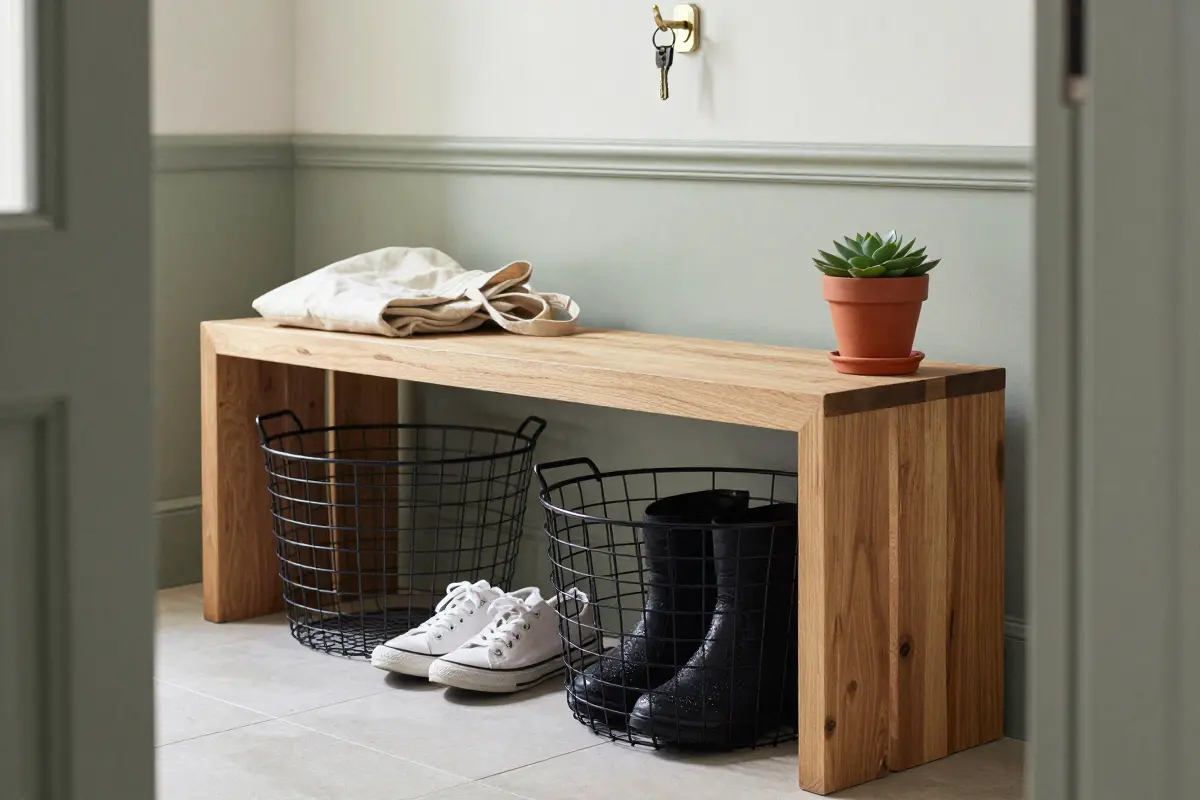
Sealed shoe cabinets trap sweat and rain, leaving the entryway smelling stale and forcing you to air out sneakers elsewhere. A 36‑inch slatted ash bench lets soles breathe, while two heavy‑gauge powder‑coated wire baskets slide under the seat for quick drop‑off.
The open slats and mesh keep moisture from pooling, so boots dry faster than behind a closed door. The trade‑off is that scuffed soles and loose dirt sit in plain view, which can look messy in a polished foyer.
Alternative: If you prefer a tidy look, a low‑profile storage ottoman with a hinged lid hides shoes completely but offers no ventilation.
Wire baskets can bend if overloaded with heavy boots, so check them regularly.
Place a small silicone mat inside each basket to catch water and protect the floor.
This setup works best in a hallway or mudroom about 4 to 5 feet wide, with at least 36 inches of clear walkway left in front of the bench.
5. Low-Glare 2700K Sconce Lighting Paired with a Soft-Shade Table Lamp
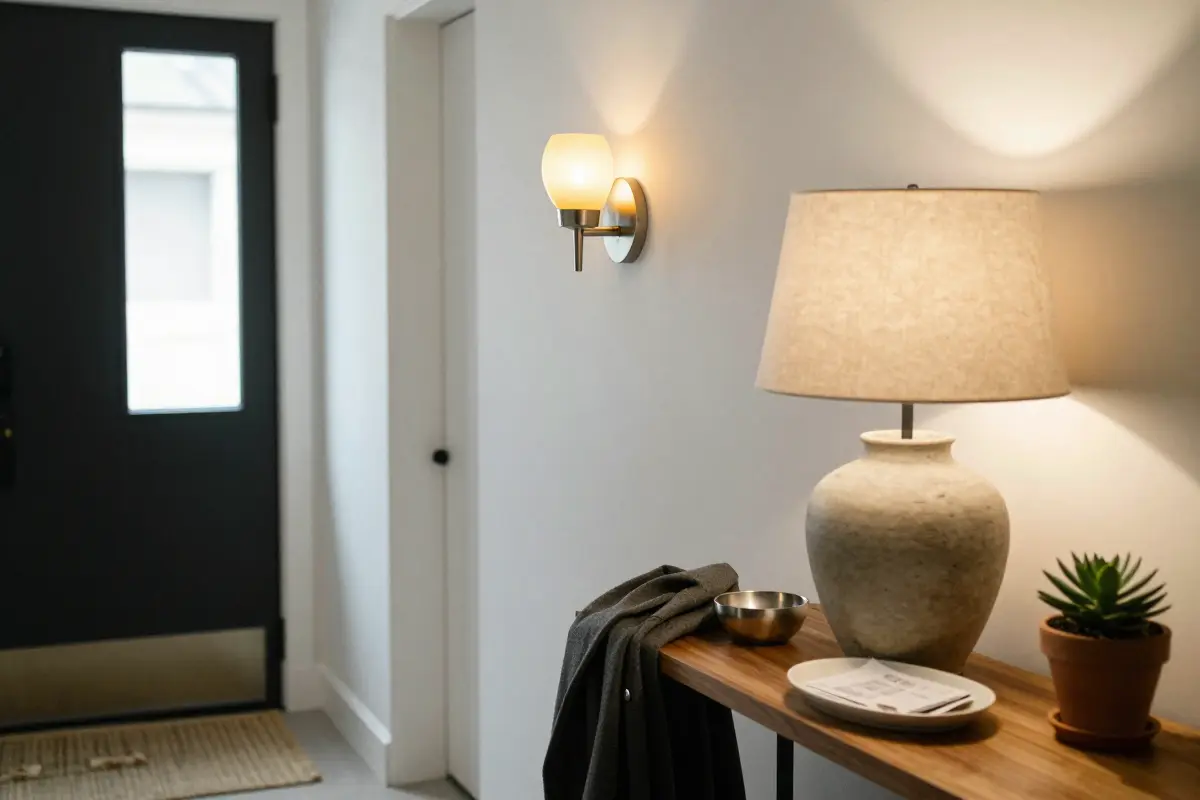
A pair of brushed‑nickel sconces flanking the front door casts a gentle pool of amber light that greets you before you step inside.
The 2700K bulbs sit behind frosted glass shades, spreading a glow across the entry wall and softening the threshold without the harsh glare of a ceiling downlight.
A compact ceramic table lamp on a low‑profile dimmer can echo the same effect on a narrow console, giving you control over brightness as the day changes.
The warm perimeter lighting makes guests feel welcome, yet the overall light can be too low for quick outfit checks or finding something on the floor. For brighter task light, add a slim LED strip above the coat rail, keeping it at 3000K or lower so it matches the sconces.
Alternative: If you prefer a brighter, more focused light, a single pendant with a clear glass shade can provide ample illumination without the subtlety of sconces.
Position the center of each sconce about 60 to 66 inches above the floor to keep the light comfortable for most heights.
Wall‑mounted sconces are permanent when wired into an existing electrical box. Hardwiring is best left to a licensed electrician, since local code may require a permit. Renters can use plug‑in or battery‑powered sconces instead.
6. Thick-Framed Arch Mirror Placed Adjacent to the Light Source
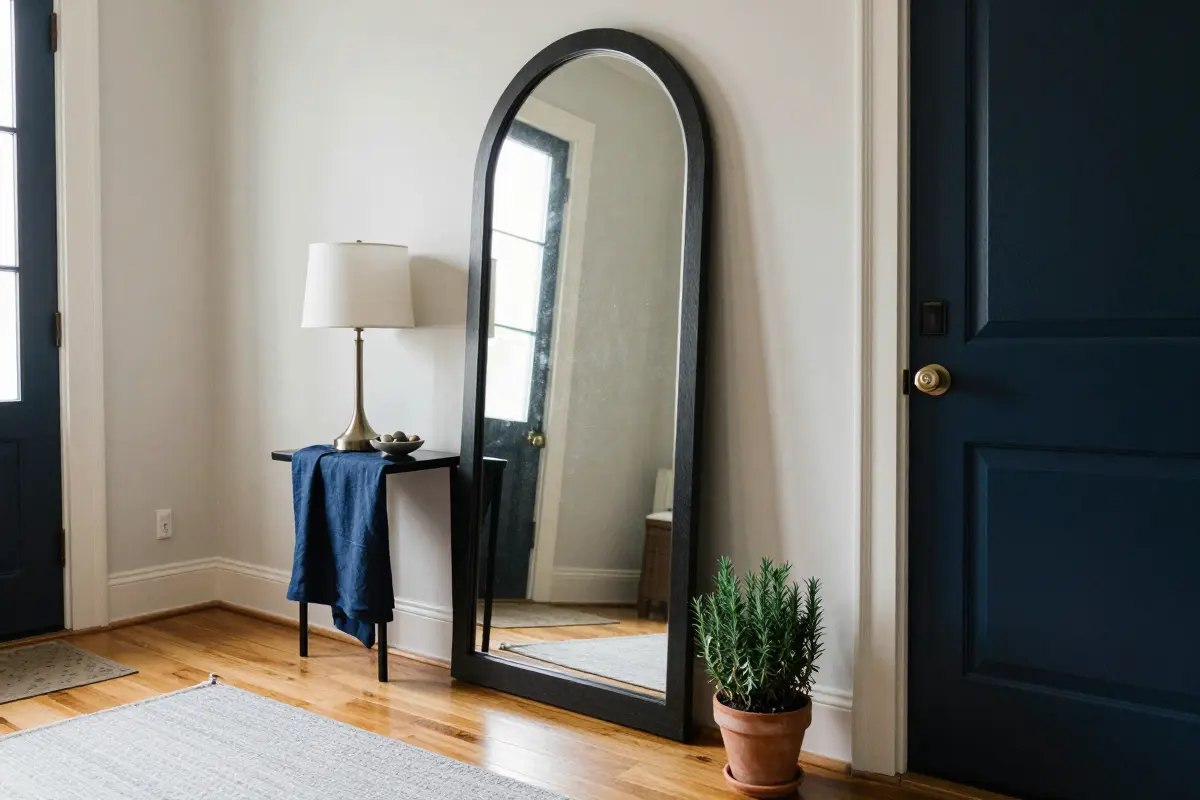
A thick, arched frame lets you catch side‑window light without the glare a mirror placed straight across from the door can produce.
Choose a solid wood or metal arch at least 30 inches wide and hang it on the wall perpendicular to the front door, so the reflection pulls in daylight from the adjacent window.
The heavy frame adds visual weight, but it also shows dust and fingerprints quickly in a high‑traffic hallway.
The frame’s weight means you’ll need sturdy anchors; renters may prefer a removable picture‑rail system instead of drilling into studs. This approach works best in entryways at least 5 feet wide, where the mirror can span the wall without crowding the door swing.
Alternative: A slim, frameless adhesive mirror works in small apartments where drilling isn’t allowed.
Heavy frames can pull drywall anchors out of the wall. Use hardware rated for the mirror’s weight, or ask a professional to hang it.
Hang the mirror with its center about 58 to 60 inches from the floor, then slide it as close to the window or light source as the wall allows to maximize the daylight bounce.
The mirror is a permanent fixture when fastened to studs, but a picture‑rail setup offers a renter‑safe, removable option.
7. Heavyweight Stoneware Catchall Tray for Keys and Mail
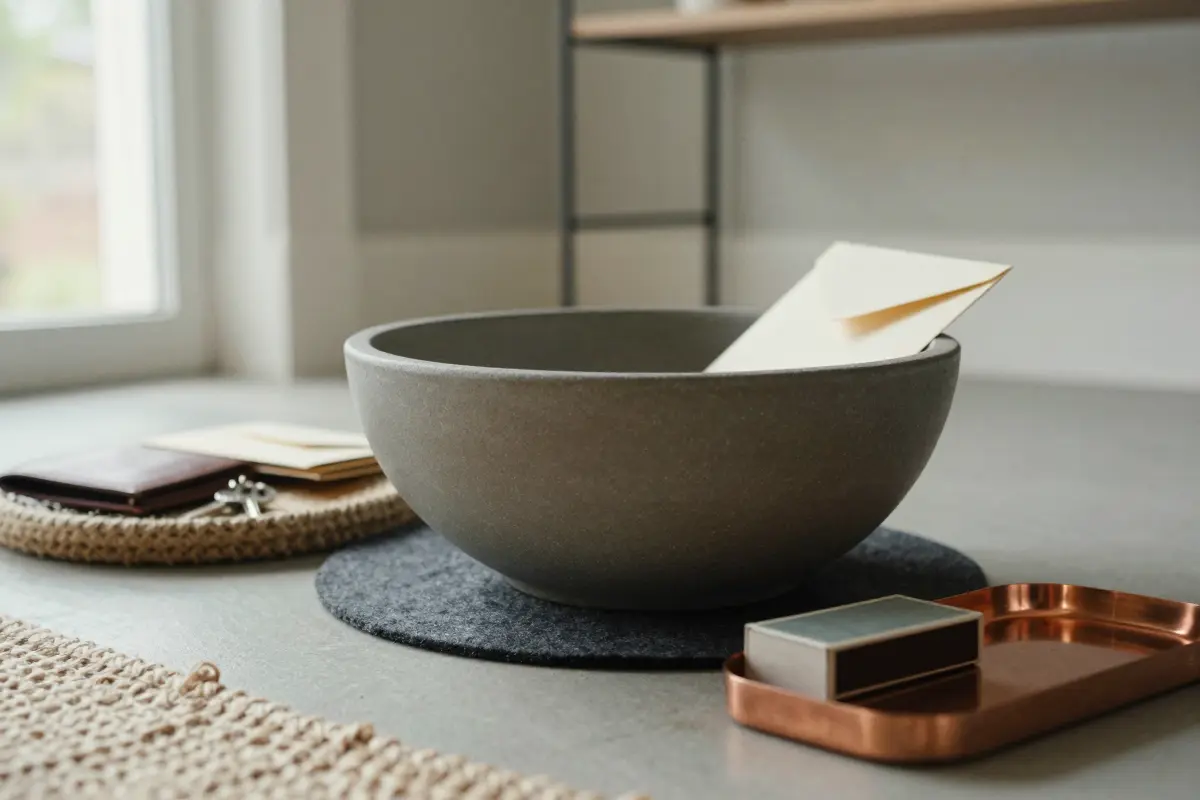
A heavyweight stoneware catchall tray sits solid on a console, its matte glaze resisting fingerprints while a felt backing keeps it from sliding when you drop in a set of chunky keyrings.
The dense material feels sturdy enough to catch mail without wobbling, and it protects nearby wood furniture from the scratches metal hardware can cause.
The single compartment limits organization, so keep it to essentials like keys, a wallet and a few pieces of mail, and add a second small tray if you need to sort smaller items.
Keep the tray within arm’s reach of the door and empty it once a week so it stays a landing spot instead of becoming a pile.
Alternative: If you need separate spots for sunglasses, coins and a phone charger, a wooden valet with built‑in trays may serve you better than a single stoneware tray.
8. Cast-Iron Umbrella Stand with a Removable Drip Pan
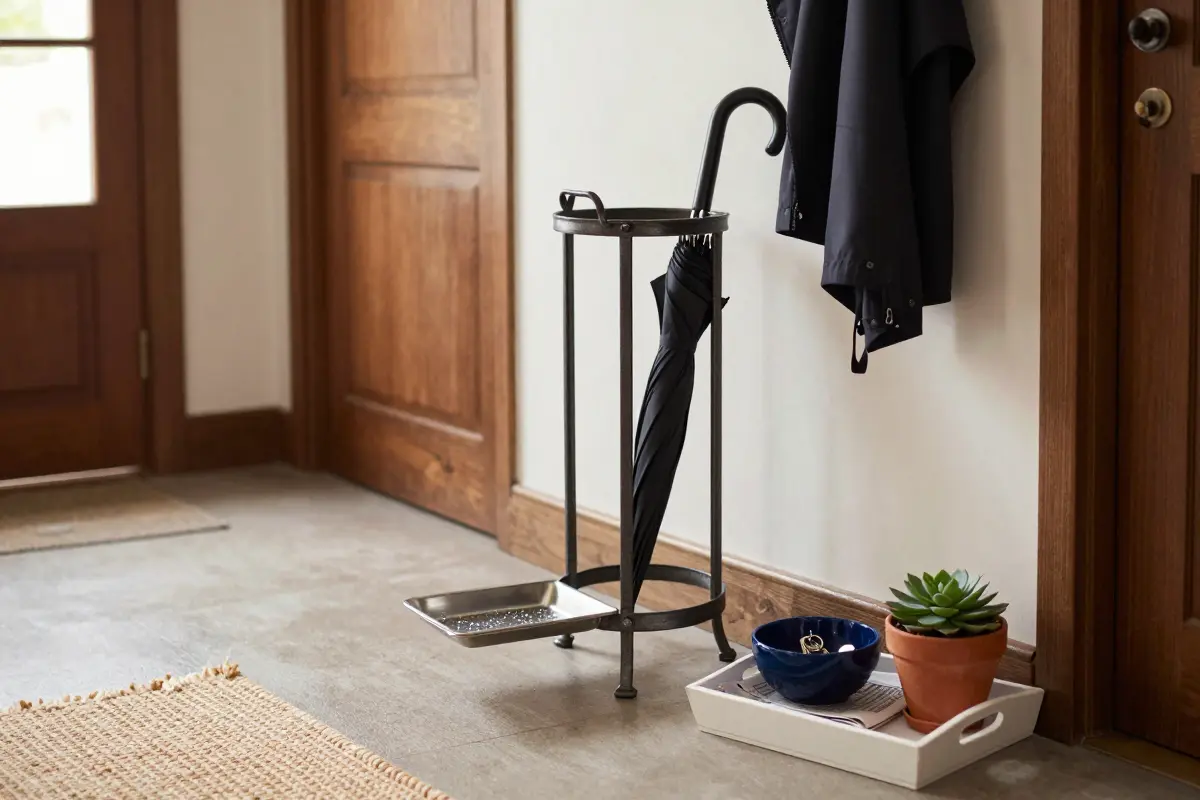
Cast‑iron umbrella stands feel heavier and more permanent than glazed‑ceramic ones, which are easy to knock over.
The iron version holds its shape on a busy entryway floor, and many models include a removable saucer that catches water before it reaches wood trim. Tip the pan out regularly, and the floor stays drier, a real advantage over wicker baskets that soak up every splash.
The downside is the weight: shifting the stand while mopping takes extra effort, and if you forget to empty the pan, standing water can leave rust spots on the iron. Felt pads under the base help protect the floor.
Leaving standing water in the pan for days can lead to surface rust and damage the finish.
Alternative: a sturdy acrylic umbrella holder with a built‑in silicone liner offers lightness and easy cleaning for renters or anyone who likes to rearrange their foyer often. It works best in apartments where space is tight and the floor is tile or vinyl.
9. Low-Light Potted Greenery in Weighted Terracotta
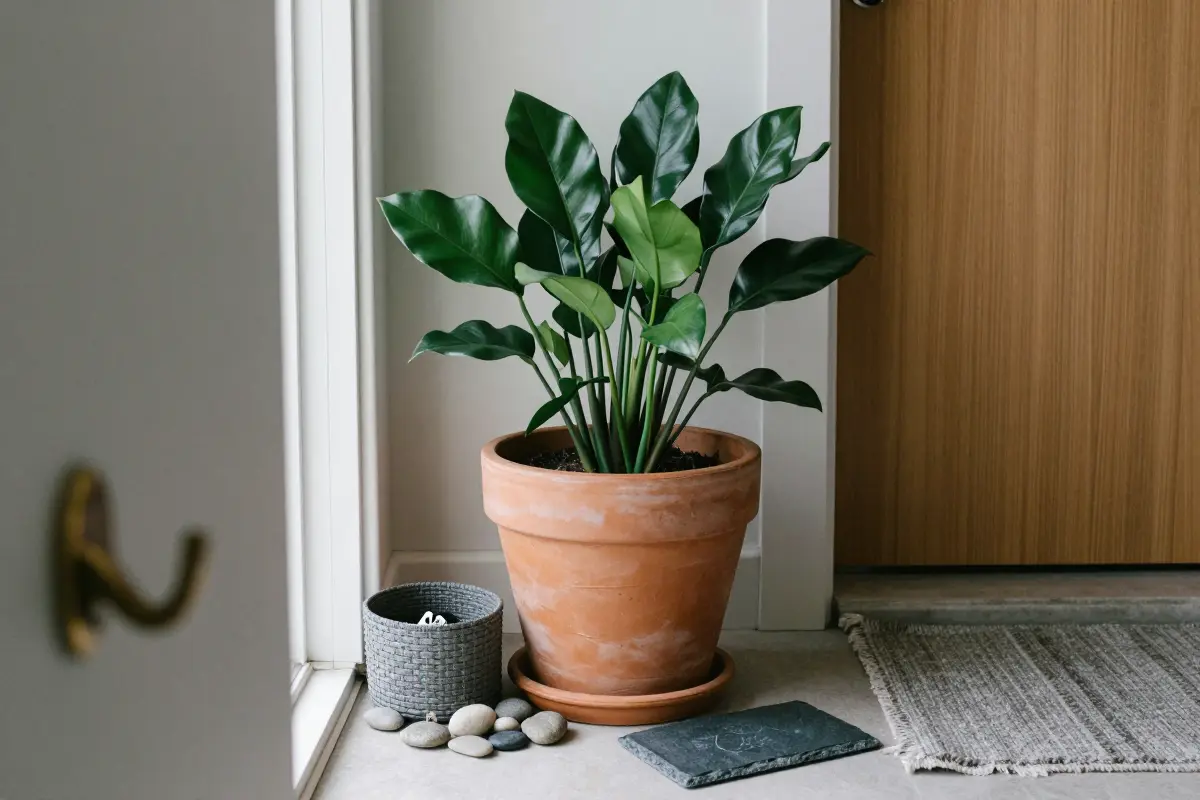
A narrow entryway with constant foot traffic needs decor that can stand up to the hustle while still feeling inviting.
A heavy terracotta pot holding a cast iron plant or a ZZ plant adds green without demanding much light, and the weight of the earthenware keeps the planter steady when doors slam or coats brush past it.
Even these tough plants struggle in windowless entries and cold drafts, so give them a week or two in a brighter room every few months. Both prefer to dry out between waterings, so check the soil every couple of weeks and water only when the top inch or two is dry. That adds a modest maintenance task.
Alternative: A sleek metal basket with a trailing pothos works well if you prefer a lighter look and can keep to a regular watering schedule.
Overwatering is a bigger risk than underwatering in low light, so let the top inch or two of soil dry out before you water.
Terracotta is porous, so set the pot on a small saucer to protect the floor from water spots.
10. Durable Tongue-and-Groove Wainscoting Painted in Satin Enamel
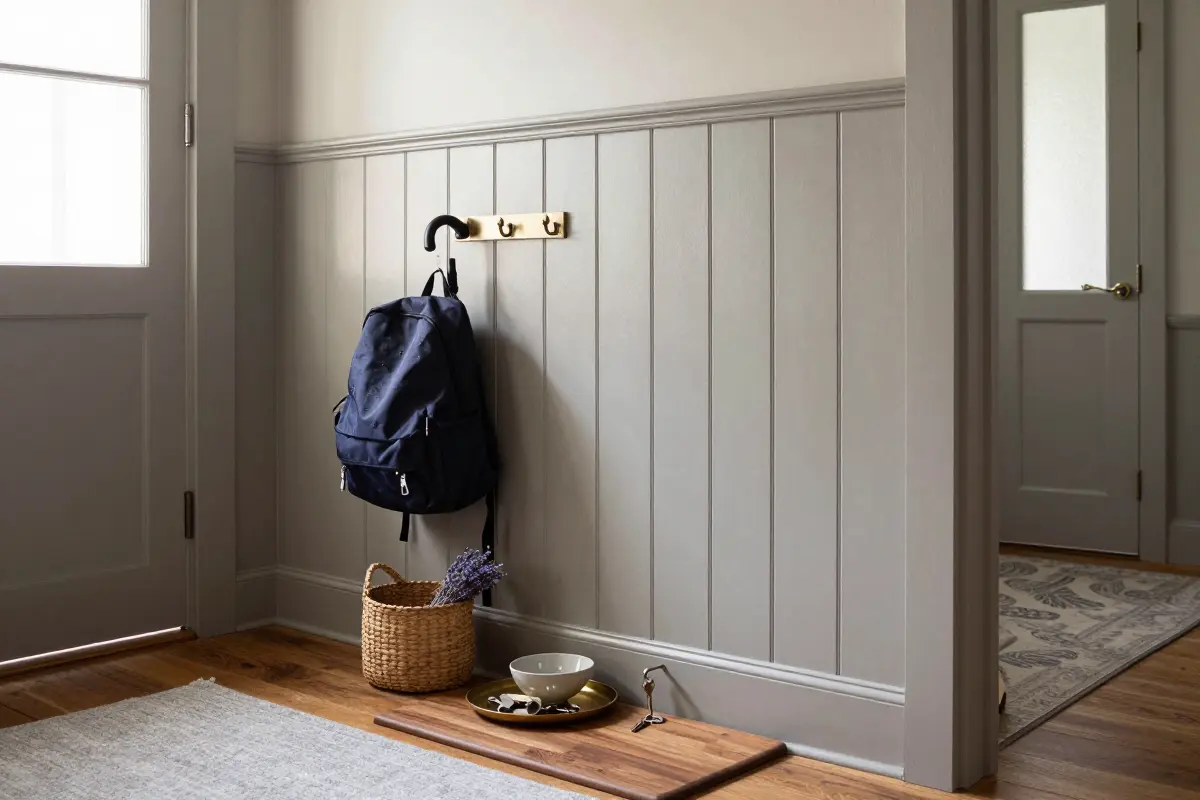
Vertical tongue‑and‑groove panels topped with a simple Shaker‑style cap give the entryway a built‑in shield against scuffs.
The boards are glued and nailed to the wall, sanded smooth, then finished with a satin enamel, a durable urethane‑acrylic paint. The satin sheen wipes clean and tolerates the occasional wet umbrella, bike handle, or school backpack.
The downside is the labor: you must cut each board to fit around baseboards and door trim and nail the panels flush, which can take a full weekend for an experienced DIYer.
Because the panels become part of the wall, removing them later means patching and repainting, so the change is essentially permanent. This approach works best in single‑family homes where the entry sees heavy traffic, and the owner plans to stay for several years.
Alternative: A removable vinyl wall protector can be applied over drywall for a renter‑safe solution.
Peel‑and‑stick vinyl protectors may need replacing over time, especially where moisture weakens the adhesive.
Use a stud finder to locate the studs and a level to set the first board perfectly plumb. Every board after it follows that line.
11. Subtle Reed Diffuser with Wood and Resin Notes
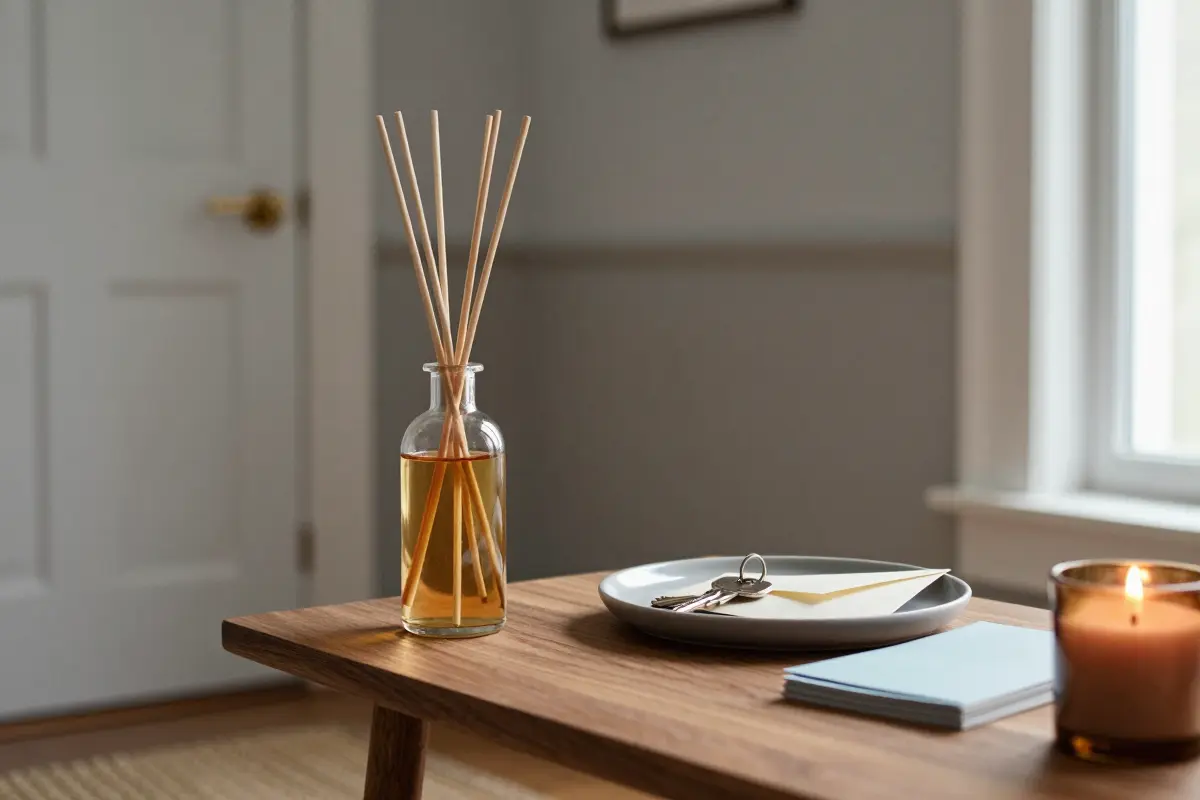
Compared with aerosol sprays, a passive reed diffuser offers a quiet scent that never overwhelms a busy hallway. Place a glass bottle with cedarwood and amber notes on a console set back from the door swing, so drafts don’t blow the fragrance away.
The slow rise of oil through the reeds gives a gentle aroma that suits a small entry but fades quickly in double‑height foyers. The scent radius is limited, so it may not reach the far end of larger entries.
Alternative: If you need scent to travel farther, a timed plug‑in oil warmer can push fragrance across larger, breezy spaces.
Reed diffusers can leak if tipped, and the oils can irritate pets and children, so keep them on a stable surface out of reach.
Flip the reeds once a week to refresh the scent.
Works best in entryways under 10 feet wide with ceilings of 8 feet or less.
What to Measure Before Buying Entryway Furniture
Use this quick list to capture the key clearances that keep your entryway functional and free of traffic jams.
- Door swing arc: ensure furniture does not block the full opening path.
- Floor space width: measure the narrowest point between walls or columns, and keep at least 36 inches clear for walking.
- Ceiling height: check clearance for tall pieces such as arch mirrors and wall‑mounted peg rails.
- Runner size: confirm the door swings freely over it and leave 4 to 6 inches of bare floor on each side.
- Console depth: make sure it leaves at least 36 inches of clear walkway.
- Bench seat height: verify a comfortable sitting height (about 16 to 18 inches) and clearance for shoes.
- Umbrella stand footprint: ensure it fits without crowding the coat rail.
The most common oversight is forgetting the door’s full swing; double‑check that clearance before you order.
Bringing It All Together
You don’t need all eleven ideas. Start with the problem you notice most: a wall‑mounted console or catchall tray for clutter, a peg rail for coats, or a wool runner for wear. Then layer in warm lighting and one low‑light plant. Measure first, and choose the renter‑friendly alternative wherever drilling isn’t an option.
Frequently Asked Questions
How can I make my entryway more welcoming?
Combine warm 2700K accent lighting, a sturdy wool runner that the door can clear, and a designated landing spot for keys, shoes, and bags. Keeping the floor clear and the walkway at least 36 inches wide makes the space feel open and inviting.
What are some good decor ideas for a home entrance?
Focus on durable, functional pieces: a shallow wall‑mounted console, a heavy stoneware key tray, an arch mirror to bounce light, and a two‑tier peg rail instead of a bulky coat rack. Warm sconces and a low‑light plant finish the look.
What rug material is best for high-traffic entryways?
A flatweave wool runner is a strong all‑around choice: it lies flat for door clearance, hides dirt well, and has some natural water resistance. Low‑profile polypropylene is a more affordable, easier‑to‑clean option for wet, muddy mudroom entries.
How do you style a narrow entryway without overcrowding it?
Use wall‑mounted pieces instead of floor furniture and keep at least 36 inches of clear walkway from the door swing to the interior. A shallow console, a peg rail, and a catchall tray cover most needs without crowding the space.
What height should an entryway mirror be hung?
Hang the center of the mirror about 58 to 60 inches from the floor, near average eye level. If it hangs above a console, leave 6 to 8 inches between the tabletop and the bottom of the frame.
How do I decorate an entryway if I rent?
Choose removable options: adhesive‑rated brackets for light loads, a rug with a non‑slip pad, plug‑in or battery‑powered sconces, a freestanding hall tree, and a picture‑rail system for the mirror. These add function without permanent changes.