
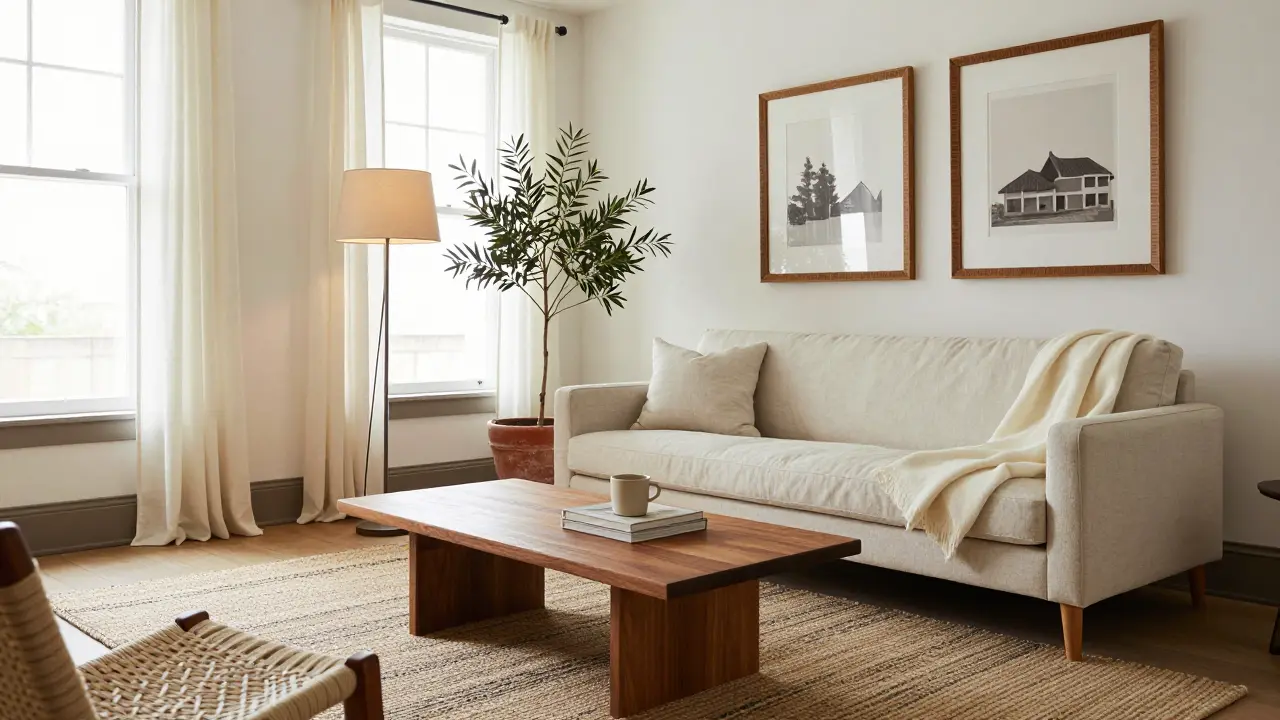
9 Living Room Interior Design Ideas That Look Expensive on a Real Budget
The nine ideas below keep the cost low while raising the room’s perceived value. You’ll learn how swapping stock couch legs for solid wood or tapered metal can change a silhouette, how painting trim a richer shade adds depth, and how ceiling‑height linen drapes on slim black rods create drama without custom tailoring.
We also cover secondhand solid‑wood coffee tables you can refinish, a low‑profile gallery wall built from ribbed frames, fabric‑drum floor lamps for layered lighting, oversized terracotta pots with easy‑care greenery, and a heavy wool or linen throw to dress worn cushions.
Each tip is chosen for its visual punch and modest price tag, so you can enjoy an upscale look without breaking the bank.
1. Anchor the Room with an Oversized Flatweave Rug
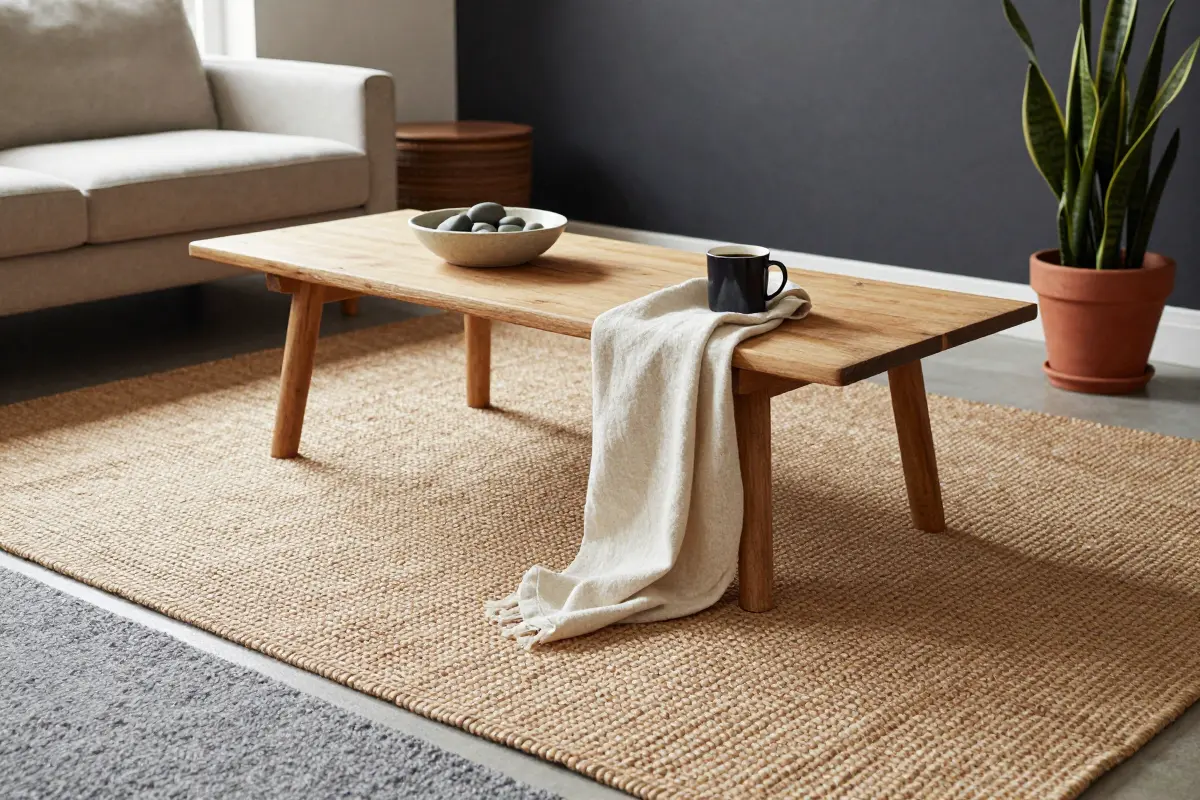
A natural jute flatweave rug spreads across the floor, its low‑pile texture keeping the room feeling open and anchored.
Because the fibers are woven tightly, the rug can cover a 9‑by‑12‑foot area for the price of a small plush runner, making it a budget‑friendly way to define a seating zone.
The lack of cushioning means you’ll feel the floor underfoot, so a good rug pad is essential to prevent slipping and to protect both the rug and the hardwood.
Choose a pad that’s at least ¼‑inch thick and matches the rug’s dimensions for maximum stability.
Flatweave rugs can show footprints and dirt more quickly than high‑pile options, so they need frequent vacuuming.
Alternative: If you need a soft, cozy surface for a family room with kids, a low‑pile wool rug offers cushioning and better stain resistance, though it typically costs twice as much.
Flatweave and jute rugs are renter‑safe because they can be lifted and replaced without wall damage, and they work best in medium‑sized living rooms between 250 and 400 sq ft. Flatweave and jute rugs lack plush cushioning and require a quality rug pad to stay stationary.
2. Swap Stock Couch Legs for Solid Wood or Tapered Metal
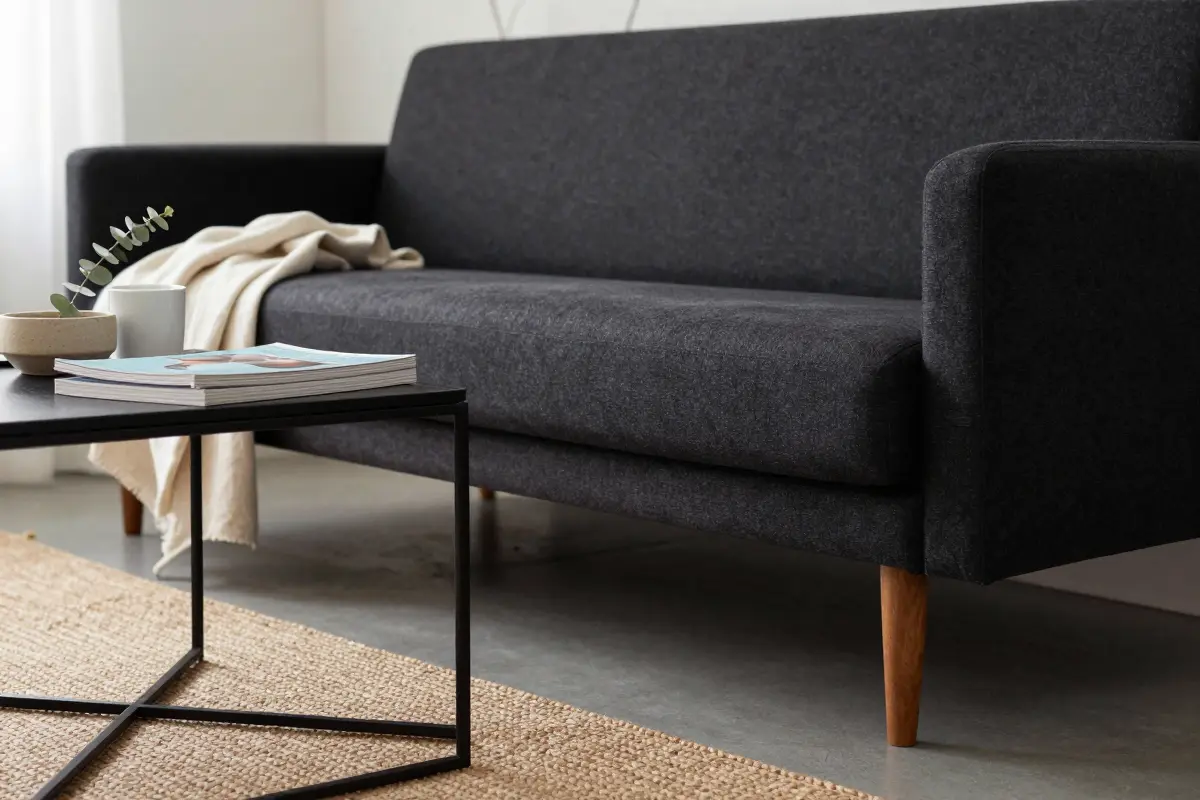
A low‑cost sofa often arrives with thin plastic feet that make the whole piece look cheap and unstable.
Swapping those feet for a set of mid‑century wooden pegs or slim iron legs instantly lifts the silhouette, giving the couch a more refined, grounded look without re‑upholstering.
Measure the existing bolt diameter, then buy a leg kit that includes a ½‑inch universal mounting plate for easy installation.
The trade‑off is that bolt thread sizes differ between manufacturers, so you may need the extra plate or a short adapter to match the new legs. This upgrade works best in small apartments or first homes where a single statement piece can define the living area.
The change is semi‑permanent; screws can be removed without damaging the frame, making it a renter‑friendly refresh.
Replacing sofa legs elevates visual style, but bolt thread sizes vary across furniture manufacturers and may require universal mounting plate installation.
3. Paint Trim and Baseboards in a Darker Tone Than the Walls
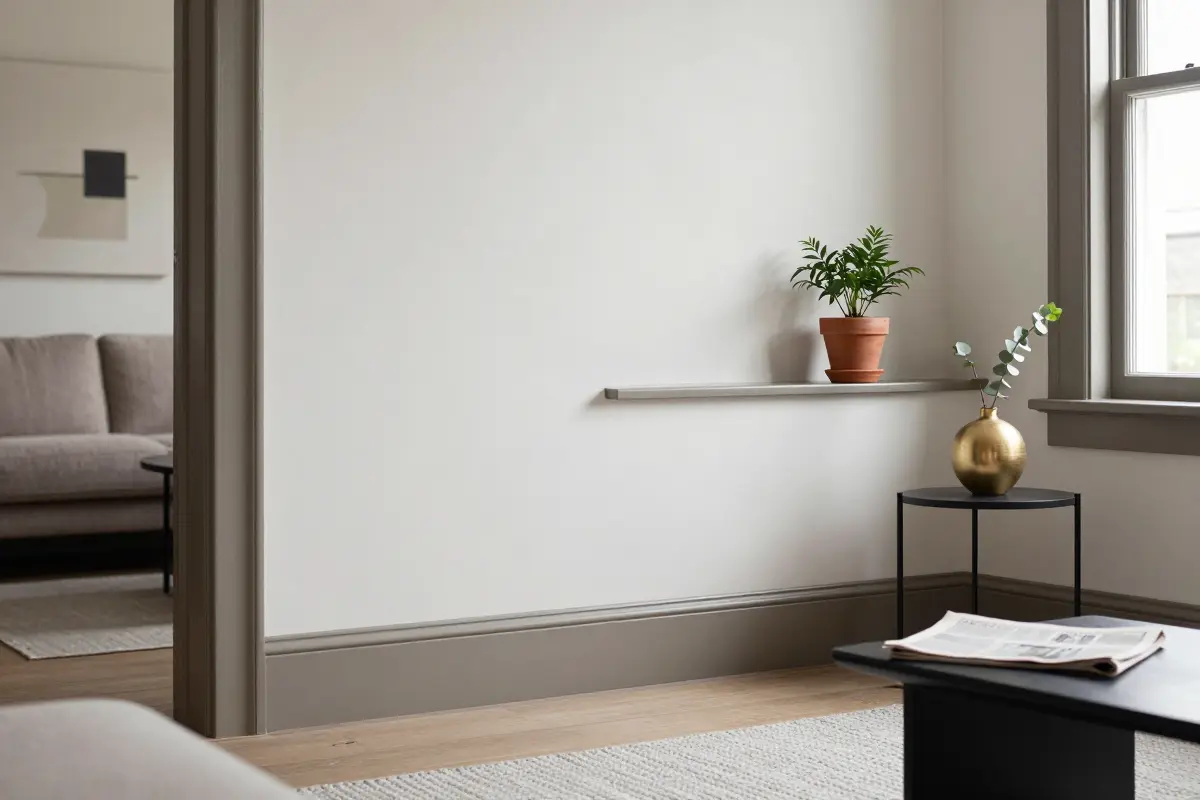
Using a brush‑on “shadow line,” where you paint the baseboards and window trim a shade like warm charcoal gray while the walls stay off‑white, creates instant depth without buying crown molding.
The darker woodwork frames the room and makes the ceiling feel higher, but any scuff or a stray line of tape shows up more sharply than on white trim.
This effect is permanent once the paint cures, so it works best in homes you own; renters can use removable painter’s tape and a low‑sheen enamel that washes off more easily.
The color stays neutral through seasons, pairing with both cool winter fabrics and sunny summer cushions. DIY is doable with a quality angled sash brush and steady hand, though a professional will guarantee clean edges.
Darker trim will reveal nicks and tape lines more readily, requiring touch‑ups more often.
Tape the trim with painter’s tape rated for smooth surfaces and pull it off at a 45‑degree angle while the paint is still tacky.
Darker trim adds architectural contrast but demands more frequent maintenance.
4. Hang Ceiling-Height Linen-Blend Drapes on Slim Black Rods
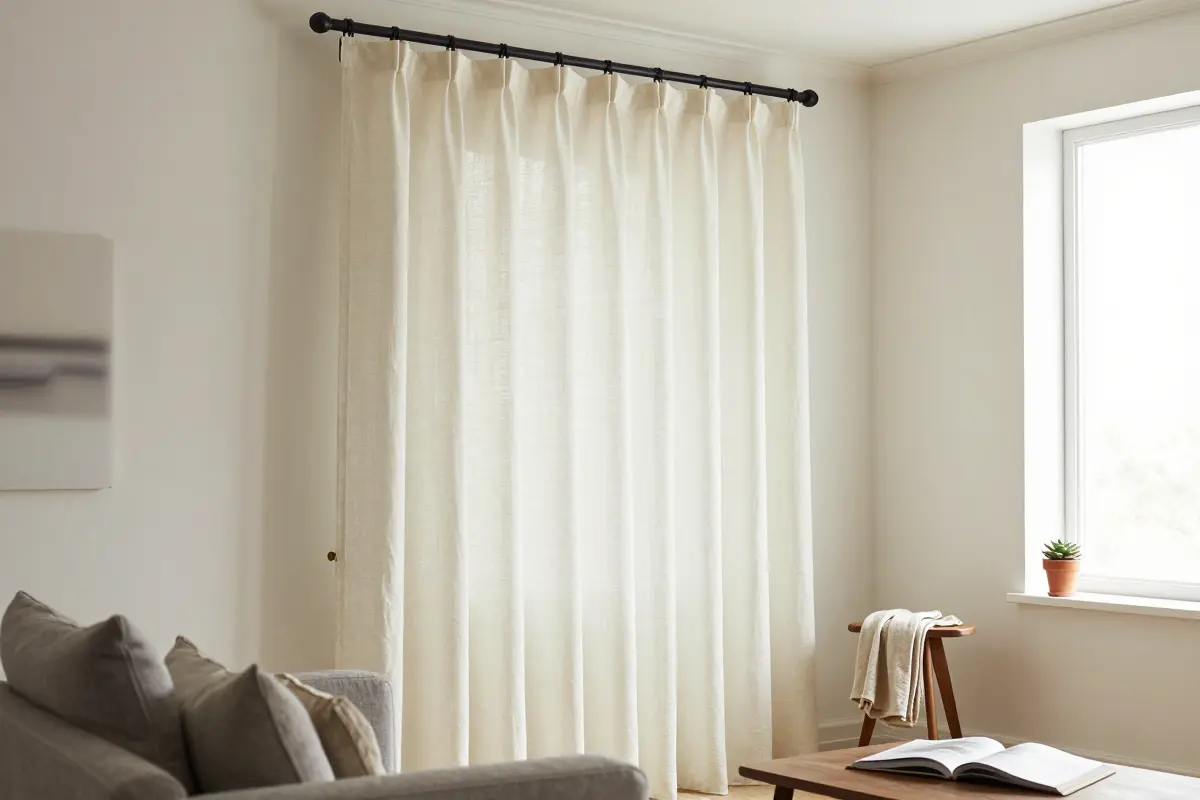
A floor‑to‑wall linen‑blend panel hangs from a slim black rod just two inches below the crown molding, its soft off‑white folds catching the light and stretching the room upward.
Placing the rod near the ceiling pulls the eye upward, but you’ll need panels that are at least 96 inches long or have the bottom hem retaped to reach the floor without a gap.
Measure the exact distance from ceiling to floor, add two inches, and order panels that are at least that length to avoid a DIY hem.
A brushed‑nickel screw mount is permanent, yet you can use removable Command brackets for a renter‑safe install that still holds the thin rod securely.
This trick works best in rooms 12 feet wide or less, where the drapes can span the full window without overwhelming the wall. For a polished finish, add a single hidden pleat at the center of each panel before hanging.
5. Source Secondhand Solid-Wood Coffee Tables for Refinishing

Oak or pine coffee tables you pull from a thrift store make perfect candidates for a fresh matte lime‑wash.
A hand‑held orbital sander removes the old finish in about an hour, then a wire‑brush rub highlights the grain before you seal with a water‑based polyurethane. The result feels like solid‑wood craftsmanship, outlasting cheap veneer that swells when water hits it.
Refinishing real timber gives you durability that particle board can’t match, but you must budget several evenings for sanding, stripping, and careful sealing. If you lack the time or the space for dust‑filled work, a professional refinisher can finish the job in a day for a modest fee.
The surface will need regular dusting and occasional touch‑up coats to keep the finish from dulling.
Alternative: If you prefer a no‑work option, buy a ready‑made laminate top with a wood‑grain print; it won’t age like real wood, but it stays level and low‑maintenance.
Refinishing real timber furniture offers superior longevity over particle board, but demands several hours of sanding, stripping, and protective sealing.
6. Build a Low-Profile Gallery Wall Using Matable Ribbed Frames
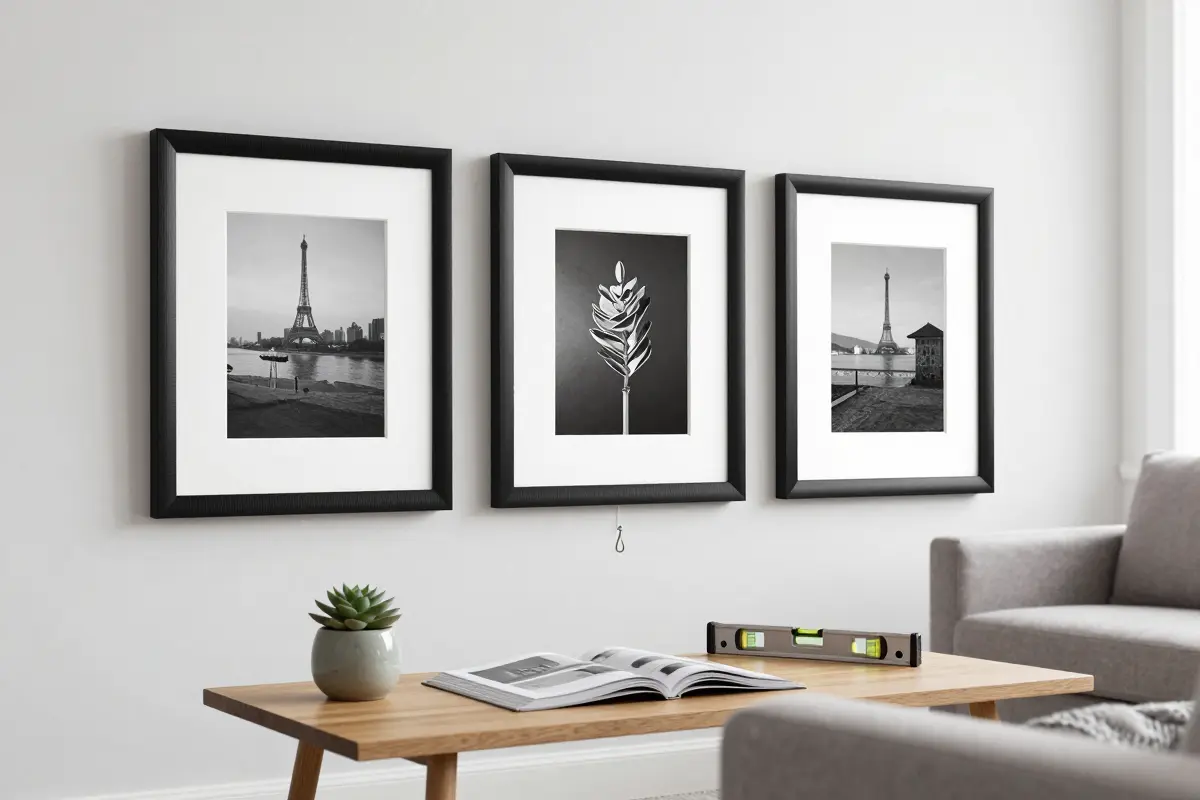
Unlike a ready‑made canvas set, a gallery wall of matte black or light‑oak frames feels custom and high‑end.
Pair each frame with an oversized white mat to let black‑and‑white photos breathe, and the uniform border makes the collection look curated rather than random.
The biggest hurdle is keeping the spacing even; a simple 2‑inch grid measured with a laser level prevents crooked gaps that ruin the polished look.
Alternative: If you lack the tools or patience for precise layout, a single large framed print on a floating shelf can give a similar visual impact without the need for exact spacing.
Use painter’s tape on the wall to mark each frame’s top and side edges before hanging.
The frames themselves are permanent, but the hanging hardware can be removed without damage, making the wall renter‑safe.
Custom‑matted photography walls look far higher‑end than mass‑produced prints, but getting consistent frame spacing and level alignments takes meticulous measuring.
7. Integrate Floor Lamps with Fabric Drum Shades for Layered Lighting
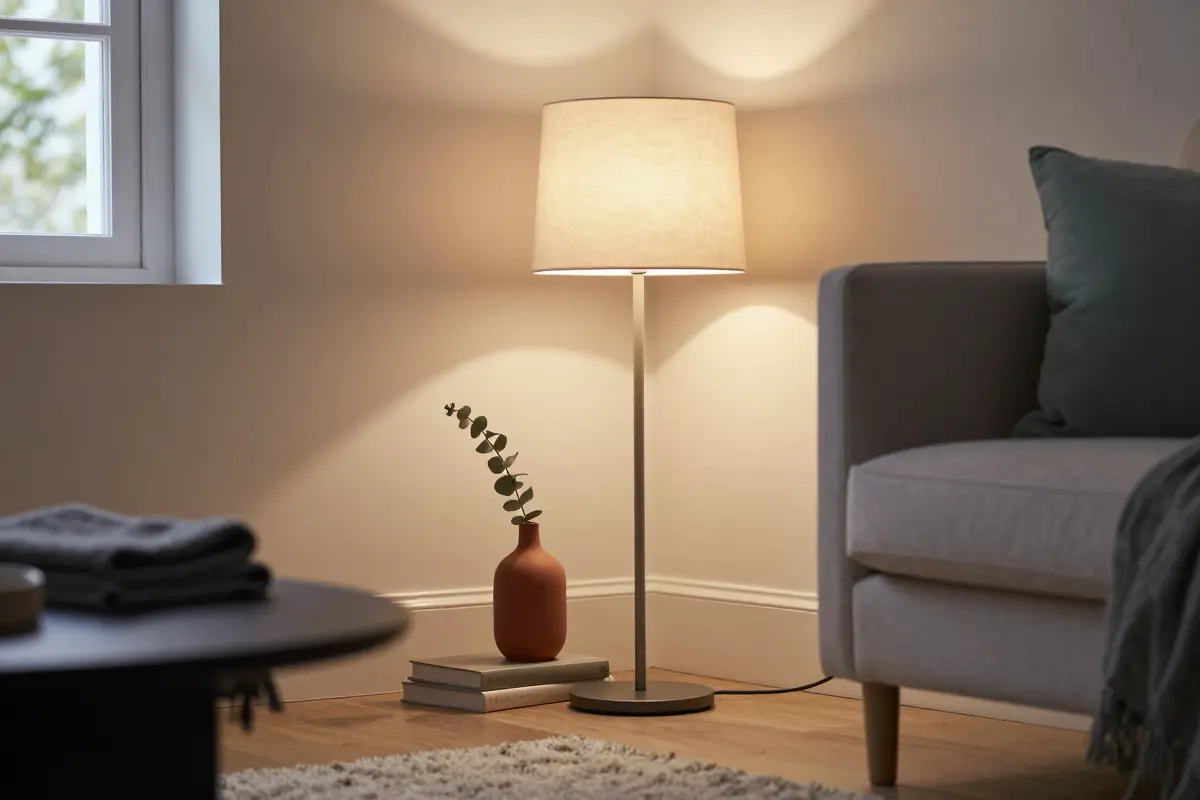
Harsh overhead lights make a living room feel clinical and draw attention to the ceiling rather than the furniture. Placing a floor lamp with a soft fabric drum shade in each corner adds warm, diffused light that softens the room’s edges. Warm‑tone LED bulbs in the 2700‑3000 K range keep the glow inviting without raising the electricity bill.
The trade‑off is the visible cords that run from the plug to the lamp base; they can look cluttered unless you route them behind a baseboard or use a low‑profile cable‑clip system.
Because the lamp sits on the floor and plugs into an existing outlet, it’s renter‑safe and can be moved later. This approach works best in medium‑sized rooms of 200 to 300 sq ft where corner spaces are otherwise empty.
Alternative: If you dislike cords altogether, consider battery‑powered LED floor torches with built‑in rechargeable packs; they provide similar illumination without any wiring.
Choose a drum shade in a neutral tone like dove gray to blend with most color schemes while still diffusing light effectively.
Layered floor lamps add warmth but introduce visible electrical cords that require thoughtful hiding or cable management.
8. Use Oversized Terracotta Pots with Low-Maintenance Greenery
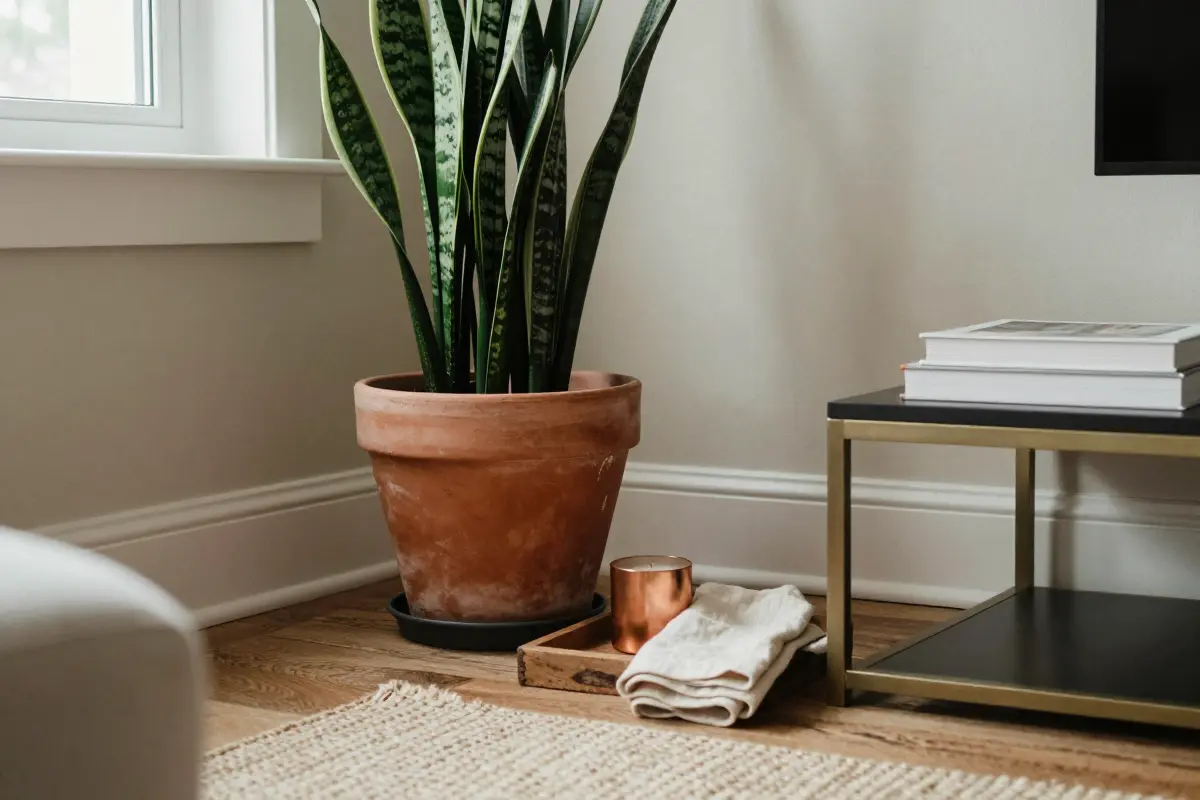
Unlike a collection of tiny potted succulents, a single oversized terracotta pot makes a bolder, more architectural statement in the living room.
A snake plant or rubber tree in a raw clay vessel fills the space with height and texture, letting the floor plan breathe without a forest of small pots. The heavy pot and damp soil can scratch or stain unprotected wood, so a waterproof saucer or a rug underneath is essential.
This approach works best in rooms larger than 200 sq ft where the plant can become a focal point without crowding seating.
Alternative: If your floor can’t handle weight or moisture, try a large woven basket with a lightweight artificial ficus.
Clay pots can chip if knocked, and water spillage may seep into seams of hardwood flooring.
Place a 12‑inch rubber mat under the pot to catch drips and protect the floor.
A single large terracotta planter eliminates small clutter, but heavy clay vessels combined with damp soil can damage unprotected wood floors without a waterproof saucer.
9. Drape a Heavy-Weight Wool or Linen Throw Over Worn Cushion Seams

Your sofa’s cushion seams are showing wear, and the frayed edges make the room feel tired. A heavy‑weight wool or linen throw draped across the high‑traffic area instantly masks the damage while adding a soft, tactile layer.
The bulk of the fabric holds its shape, so the sofa looks fuller and more intentional. Because the throw is loose, it will shift when people sit down, so you’ll need to smooth it out and tuck it back into place each day.
Alternative: If you prefer a low‑maintenance look, consider swapping the worn cushions for slipcovers that fit snugly and stay put.
Loose throws can become a tripping hazard if not regularly smoothed and re‑tucked.
Choose a throw with a fringe or tassel edge; the extra length makes it easier to pull back into place without disturbing the cushions.
Drapery textiles conveniently hide sofa wear and tear, but loose throws shift during daily use and require frequent smoothing and re‑tucking.
Living Room Budget Decorating Audit Checklist
Use this audit before you buy anything new to keep your budget on track and ensure every piece fits your space.
- Measure the room’s length, width, and ceiling height to confirm that rugs, furniture, and drapes will fit.
- Note the footprint of existing pieces and the clearance needed for doors and hallways.
- Inventory all hardware such as screws, brackets, and lighting fixtures you already have.
- Inspect walls for studs or anchors to determine where a gallery wall or heavy lamp can be safely mounted.
- Check floor load capacity if you plan to place large terracotta pots or a solid‑wood coffee table.
- Record the current trim and baseboard color so paint decisions stay cohesive.
- Measure window height and width to size ceiling‑height drapes without excess fabric.
The most common slip is forgetting to measure doorways, so double‑check clearances before ordering.
Frequently Asked Questions
What are some budget-friendly interior design ideas for a living room?
Focus on high-impact structural adjustments like hanging ceiling-height drapes, swapping out plastic sofa legs, and buying solid secondhand wood furniture to refinish yourself.
How much should you spend to redecorate a living room on a budget?
A realistic low-budget living room refresh ranges between $300 and $1,000 when prioritizing thrifted key pieces, paint, and updated lighting over new major seating.
How can I make my cheap living room look more expensive?
Eliminate clutter, use oversized mats in art frames, stick to a muted three-color palette, and replace overhead lighting with layered warm floor lamps.
Is it cheaper to buy vintage or new living room furniture?
Vintage solid wood furniture is generally cheaper and significantly higher quality than new particle board items at equivalent budget price points.