Modern, Cozy, and Stylish: Practical Decor Ideas for a Lived-In Home
We’ll walk through ways to layer soft fabrics like chunky knits and linen cushions, mix metal finishes for subtle contrast, and choose lighting that adds function and mood.
You’ll also see how a muted neutral palette can be brightened with a splash of deep teal or mustard, how indoor plants bring texture without clutter, and how clever storage, think woven baskets and floating shelves, keeps the look sleek yet welcoming.
A statement rug anchored under a sofa defines the space, while a curated gallery wall adds personality without overwhelming the clean aesthetic.
Together, these ideas let you keep a modern edge while inviting the comfort of a lived‑in home.
Idea 1: Build on a Warm Neutral Base
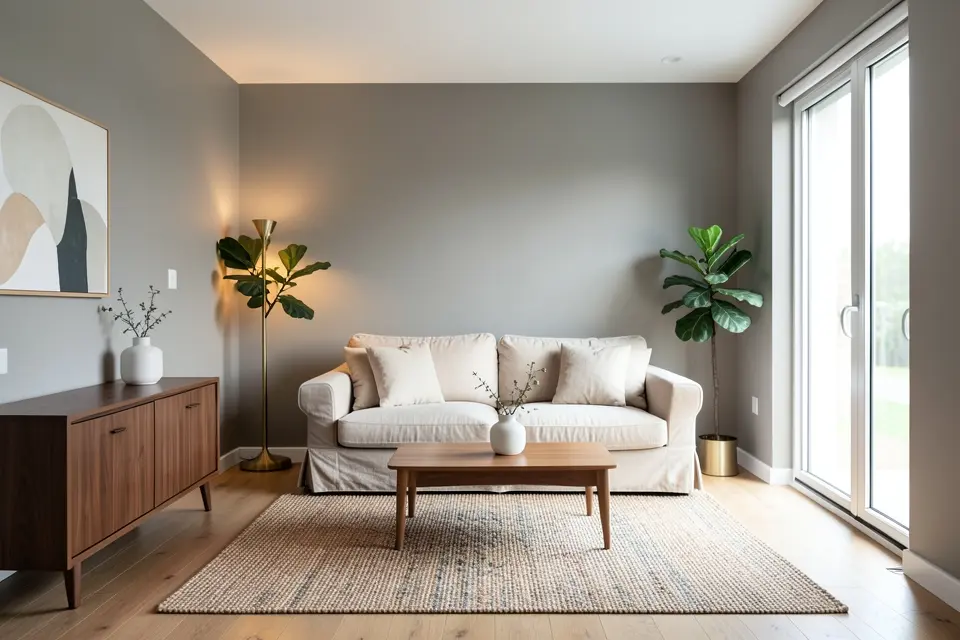
A wall brushed in soft dove gray with a faint sand‑kissed finish immediately softens the room. Pair it with a plush, light‑tan sofa that blends into the backdrop without competing for attention.
These warm neutrals act like a quiet canvas, letting art, textiles, and plants become the focal points.
The risk is that the room can feel washed‑out if you skip the later layers of texture or contrasting accents.
For renters, a neutral paint is easy to touch up and works with removable wall decals for added personality. Choose slip‑covered cushions in linen to swap colors without harming the original upholstery.
Start with one neutral sofa, then add a patterned rug for instant depth.
Alternative: If you prefer a cooler vibe, a muted blue‑gray can replace the warm neutral and still offer a soothing backdrop. Balance it with warm wood tones to keep the space from feeling too clinical.
Idea 2: Master Intentional Lighting
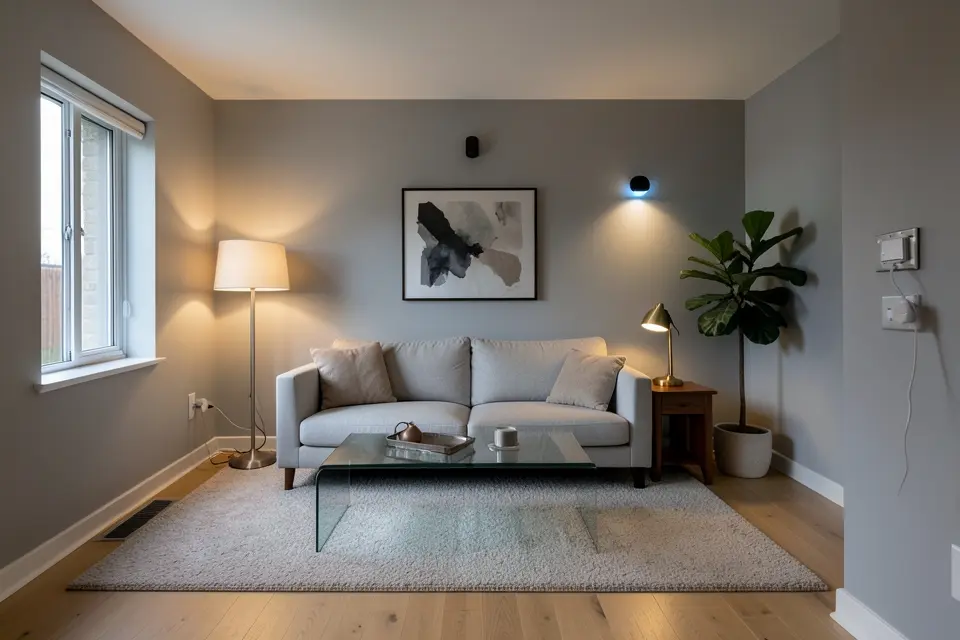
A single overhead fixture leaves the room feeling flat and cold. It offers only general illumination, so corners stay shadowed.
Layered lighting solves that. Place a tall floor lamp with a linen shade for soft ambient glow, add a brass table lamp for reading, and mount a small LED puck to highlight art.
A dimmer switch lets you shift from bright to mellow with a twist, matching morning chores or evening relaxation.
More fixtures need extra outlets, visible cords, and higher electricity use, so budget for plugs and bulb swaps.
Renters can choose plug‑in floor lamps and use adhesive cord clips to keep wires out of sight, avoiding any permanent changes.
If you can wire a dimmer yourself, follow the guide; otherwise, hire an electrician for a quick, safe install.
Swap a 60‑watt bulb for a 9‑watt LED in each lamp to cut energy use without losing brightness.
Idea 3: Embrace Natural Materials with Purpose
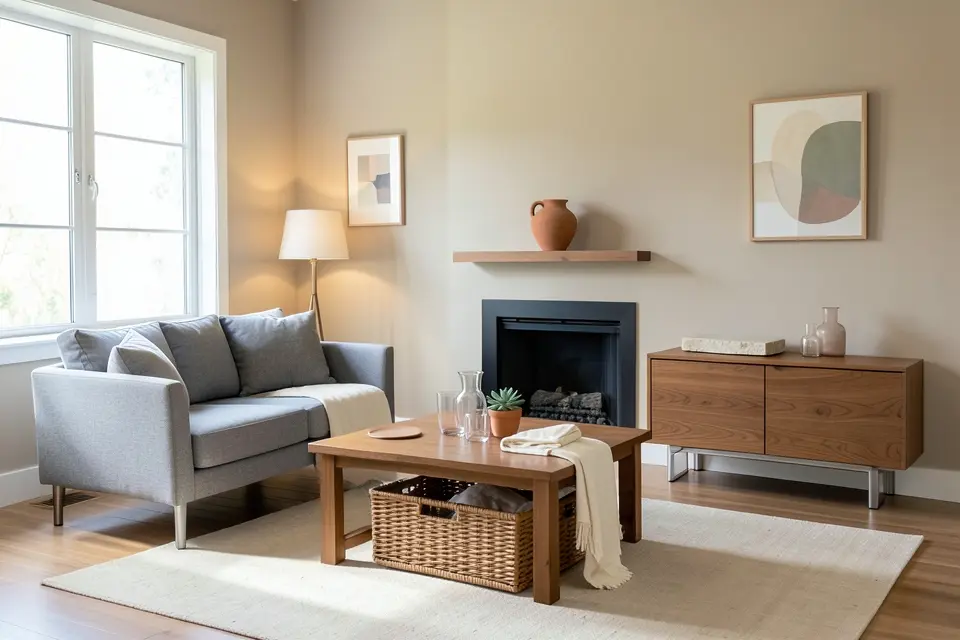
A solid walnut coffee table anchored in the living room draws the eye and grounds the sleek sofa. Its natural grain adds warmth that softens sharp metal legs on a nearby sideboard.
A hand‑thrown ceramic vase in muted terracotta sits on the mantle, offering a tactile contrast to glass décor.
A woven rattan basket beneath the coffee table stores blankets, proving that natural fibers can be both decorative and functional.
High‑quality wood and stone command a higher price and will show water rings if spills aren’t wiped promptly.
Avoid placing hot mugs directly on the wood surface to prevent heat stains.
Alternative: Choose a high‑grade engineered oak tabletop with a protective finish; it mimics solid wood grain at a lower cost and resists moisture better.
Add a clear silicone coaster under each drink to safeguard the table while preserving the natural look.
Idea 4: Prioritize Comfortable, Well-Proportioned Furniture
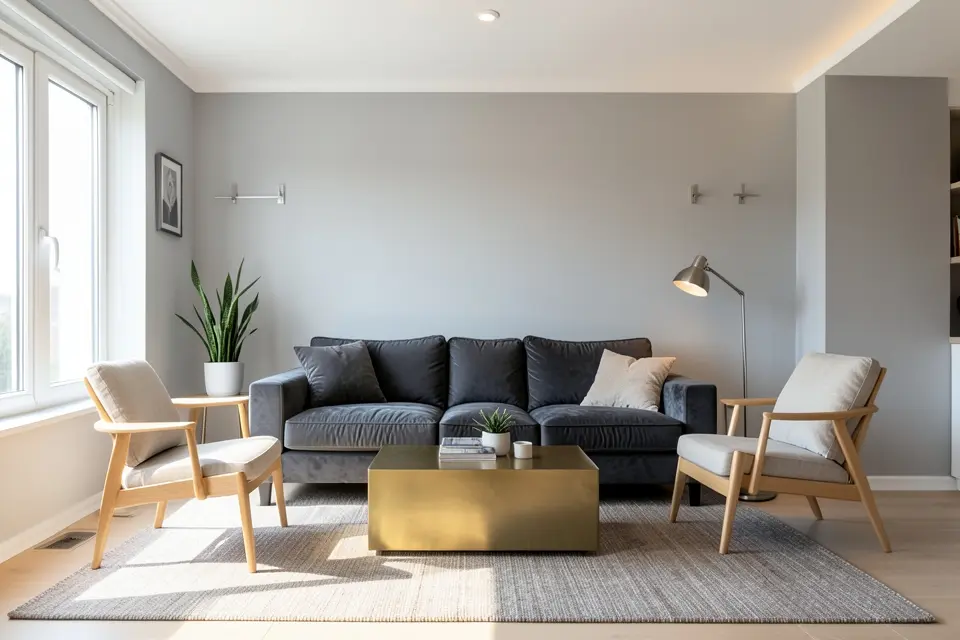
A deep, plush sofa that hugs you differs dramatically from a sleek, low‑profile sectional that prioritizes visual thinness.
The former invites you to sink in after a long day, while the latter often feels like a decorative sculpture.
When choosing a piece, test seat depth; 22‑24 inches usually supports thighs without cutting circulation.
Cushions with high‑density foam wrapped in down rebound quickly for a balanced feel. A minimalist silhouette that lacks lumbar support will still need a pillow.
In a 10‑by‑12‑foot living area, a three‑seat sofa with a 35‑inch depth can dominate the floor plan and block traffic flow.
That visual weight is the trade‑off for true comfort, so consider pairing the piece with a slim side chair or a floating rug to preserve openness.
Measure the width of your doorway before buying to avoid delivery headaches.
Idea 5: Curate Art and Decor, Avoid Clutter
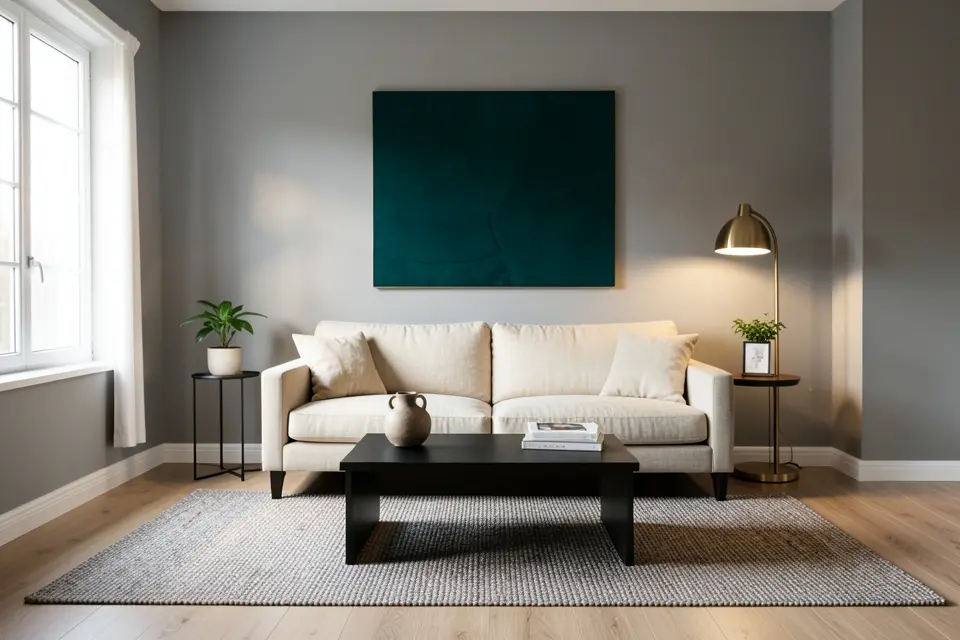
A living room cluttered with mismatched frames and tiny trinkets feels chaotic instead of inviting. Clearing the surfaces instantly opens the space for a calm, modern vibe.
Pick one large abstract canvas in deep teal or a single sculptural vase that reflects your taste and fits your modern, cozy, stylish home decor plan.
That focal piece creates a stylish anchor while the remaining walls stay breathing.
Curating takes patience and a higher per‑item budget, but the result feels personal, not staged. Renters can use removable adhesive hooks to hang the piece without damaging paint.
Photograph the wall before hanging, then mark the center point to ensure balanced placement.
Alternative: Use a lean‑against easel for a rotating gallery, keeping walls untouched. Place the easel at eye level, about 57 inches from the floor, for optimal viewing.
Idea 6: Introduce Soft Edges and Subtle Curves
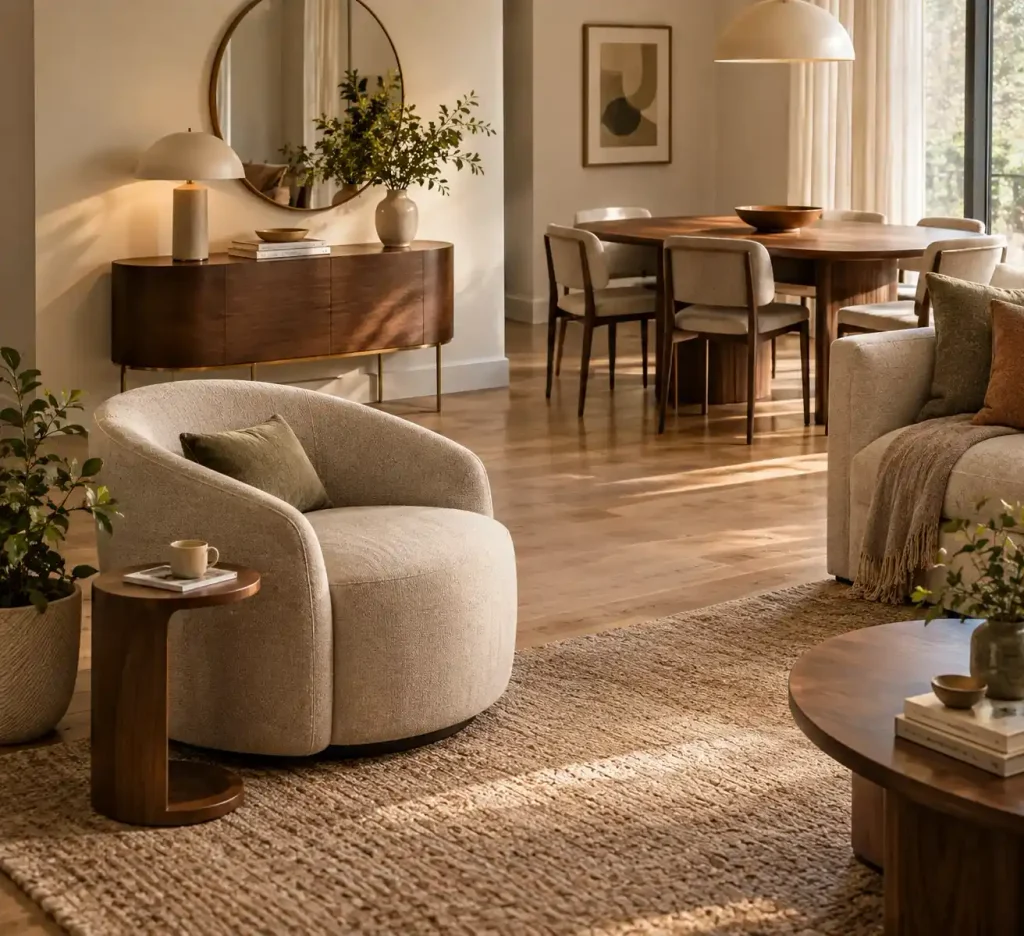
Select a low-back, rounded armchair upholstered in a muted linen to introduce softness without breaking the modern vibe. Its gentle curve invites you to sink in while keeping the silhouette sleek.
Pair the chair with an oval dining table finished in matte walnut; the elongated shape frames the room without harsh corners. The table’s subtle arc balances the linear legs of contemporary chairs.
A curved console placed behind the sofa adds visual flow and offers a soft landing for décor items. Choose a piece with thin metal legs to keep the footprint light.
Because curved furniture rarely sits flush against walls, tight floor plans can develop dead space around the base. In rooms under 150 sq ft, limit curves to one accent piece to preserve circulation.
Magazines note that soft curves are trending this spring, pairing well with cool greys and warm wood tones. Position a curved side table beside a reading chair and use a plant pot to anchor the shape.
Idea 7: Smart Storage for a Calm Atmosphere
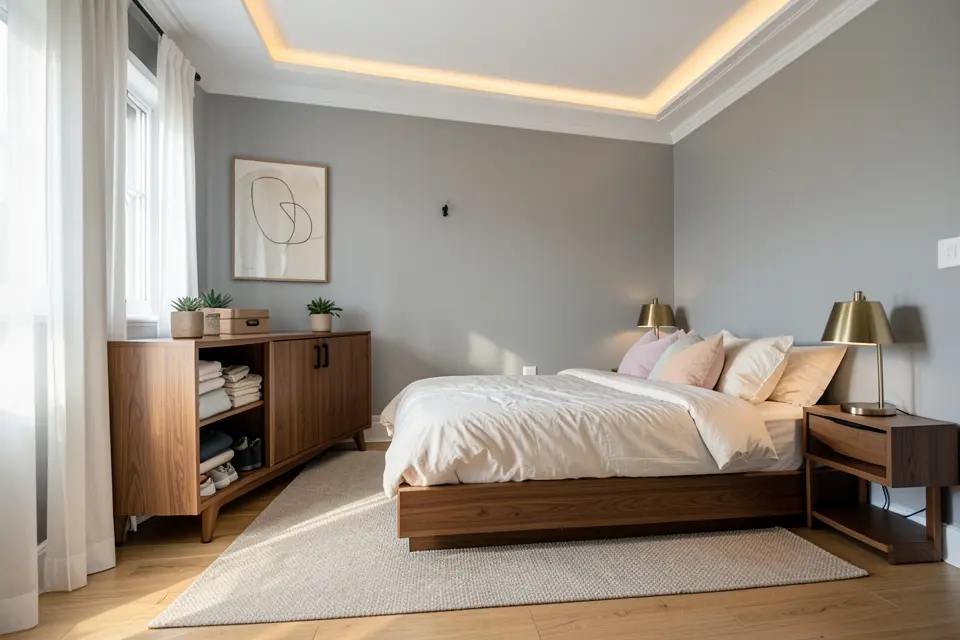
In a compact bedroom, a floor-to-ceiling sideboard anchors the space while swallowing everyday clutter. Its solid doors keep linens, shoes, and seasonal items hidden, preserving the room’s calm vibe.
The downside is the piece’s weight and price; a full-height unit can cost $800 to $1500 and requires two people to move.
Because it occupies wall length, the room may feel tighter compared with floating open shelves.
This solution suits homeowners who prioritize a tidy look over frequent rearranging, especially families with kids who generate daily mess.
Choose a sideboard with adjustable interior shelves to store both bulky blankets and slim photo albums without extra furniture.
Alternative: A pair of wall-mounted floating shelves can display a few decorative boxes and a curated book stack, offering visual lightness while still providing limited storage. They work well in apartments where floor space is at a premium.
Idea 8: Add Life with Intentional Greenery
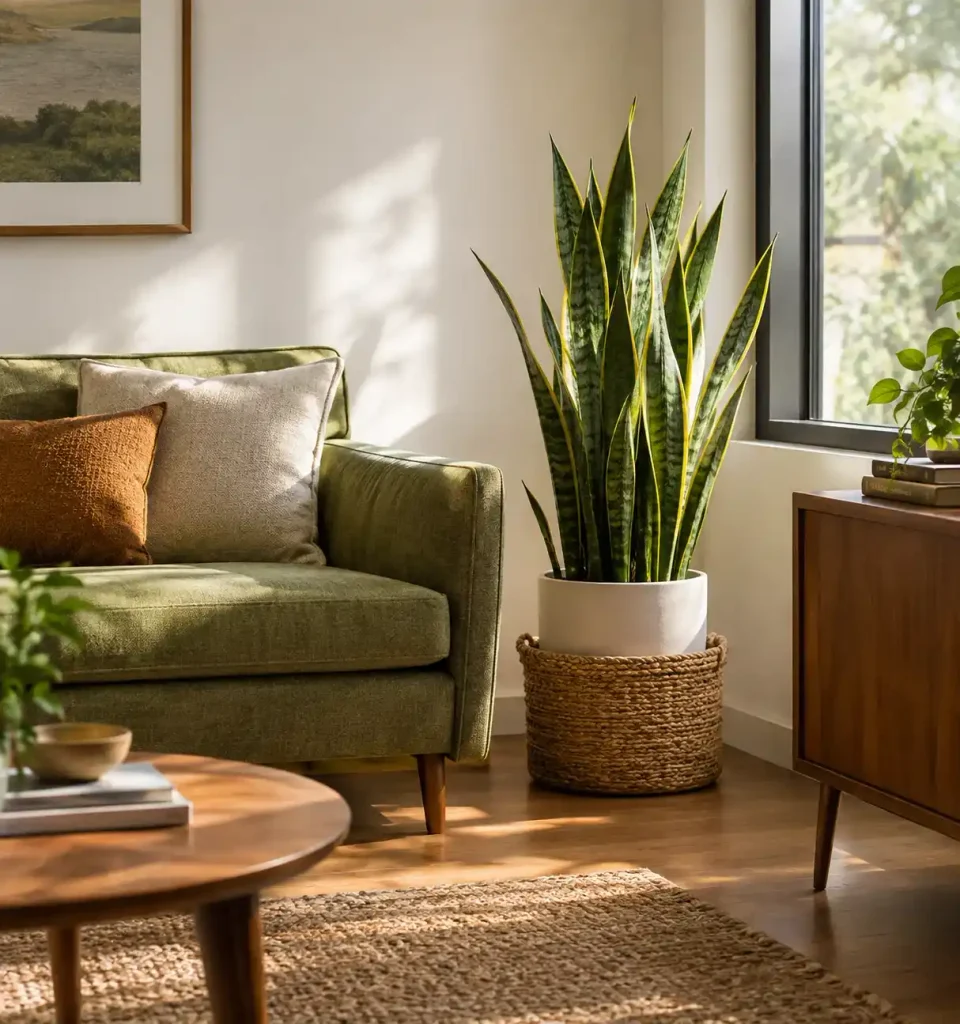
A tall, jade‑green snake plant stands beside the mid‑century sofa, its upright leaves catching the morning light. The plant’s sleek silhouette adds a quiet punch of nature to the room.
Choose species that match the room’s exposure; a pothos thrives in low light, while a fiddle leaf fig needs bright, indirect sun. If you travel often, a ZZ plant tolerates neglect better than most.
A simple white ceramic pot frames the foliage without competing for attention. A woven basket introduces texture that echoes the cozy, natural vibe.
Living plants demand ongoing care, specific light conditions, and regular watering, with the constant risk of pests or plant death.
Expect to check soil moisture every few days during summer.
Over‑watering is a common mistake that can lead to root rot and attract fungus gnats.
Alternative: A high‑quality silk foliage arrangement offers the same visual lift without watering or sunlight requirements.
Idea 9: Use Subtle Metallic Accents
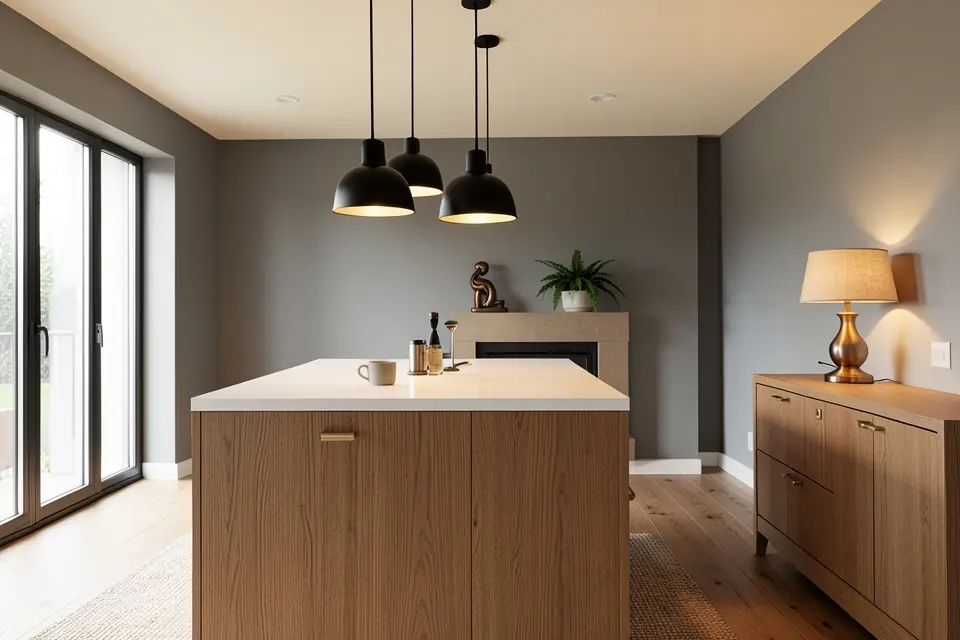
Brushed brass drawer pulls add a quiet gleam to a kitchen island, catching morning light without demanding attention.
The warm tone softens sleek countertops, making the space feel lived‑in yet refined. Because the hardware is removable, renters can upgrade the look without altering walls or cabinets.
Matte black pendant lights create a subtle contrast that anchors the room’s palette. Their low‑gloss finish resists fingerprints, handy in high‑traffic zones.
A small bronze sculpture on the mantel adds depth without overwhelming the view. Place it near a plant to blend metal warmth with organic texture.
Mixing too many metal finishes in one room can feel chaotic rather than curated. Limit yourself to one or two shades and let each piece serve as a focal point.
Choose hardware matching your fixture finish to streamline the metallic theme.
Add a bronze table lamp on the sideboard to unite the accents.
Your Next Room Refresh
Mixing clean, modern silhouettes with soft textiles, thoughtful lighting, and a splash of color creates a space that feels lived‑in yet polished.
Remember to start with a neutral backdrop and let cushions, throws, or a rug introduce your favorite hue; pair two metal tones, such as brushed brass and matte black, to add depth without clutter; and layer at least one plush element, like a knit blanket or a velvet pillow, for instant coziness.
Even a single swap can shift the mood of a room, so pick one tip and watch the change unfold. Keep this inspiration saved for your next room refresh.
Frequently Asked Questions
How do I make a modern space feel cozy without losing its modern edge?
Focus on layering textures, incorporating warm neutral colors, using strategic soft lighting, and integrating natural materials to introduce warmth while maintaining clean lines and functional design.
What color palette works best for a modern cozy style?
Warm neutral palettes consisting of off-whites, soft greiges, muted earth tones like sage green or terracotta, and rich browns or charcoals are ideal for a modern cozy aesthetic.
Are minimalist spaces considered cozy?
Purely minimalist spaces can sometimes feel stark; however, modern cozy design adapts minimalist principles by adding layers of texture, warmer tones, and intentional lighting to bring comfort into a simplified setting.
How can I introduce warmth into a predominantly grey or white modern room?
Introduce warmth through wood tones, textured fabrics like wool or faux fur, warmer metallic accents (e.g., brushed brass), subtle pops of color in soft furnishings, and varied lighting, including lamps with warm-toned bulbs.
What’s the difference between modern and contemporary decor?
Modern decor refers to a specific design movement from the early to mid-20th century with clean lines and natural materials, while contemporary decor refers to what is currently popular and evolving, often incorporating elements from various styles including modern.